Yin Jun, Zhao Jian, Hu Weimin, Yang Guangping, Yu Hui, Wang Ruihao, Wang Linjing, Zhang Guoqian, Fu Wenfan, Dai Lu, Li Wanzhen, Liao Boyu, Zhang Shuxu
Department of Radiotherapy, Affiliated Cancer Hospital & Institute of Guangzhou Medical University, Guangzhou, Guangdong, China.
Department of Chest Surgery, Affiliated Cancer Hospital & Institute of Guangzhou Medical University, Guangzhou, Guangdong, China.
PLoS One. 2017 Feb 24;12(2):e0172787. doi: 10.1371/journal.pone.0172787. eCollection 2017.
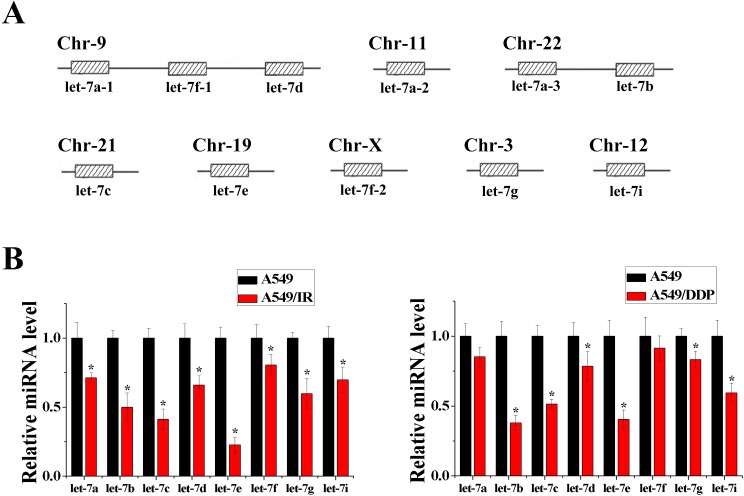
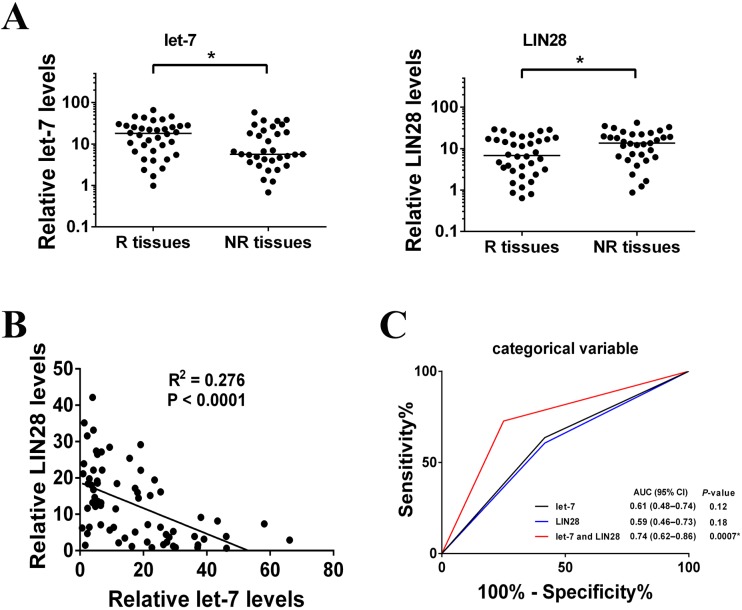
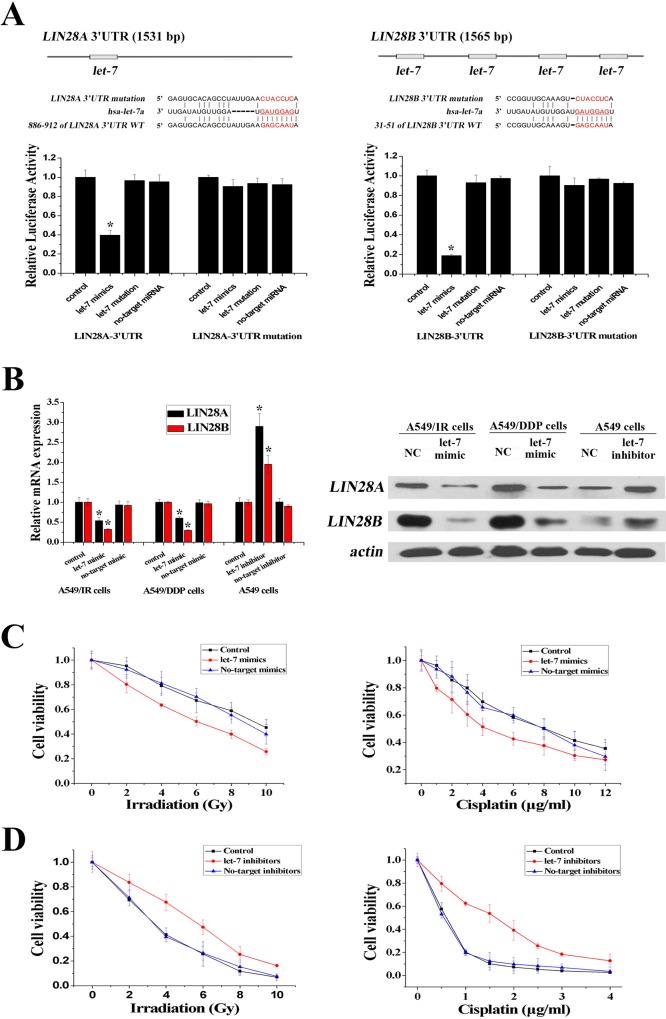
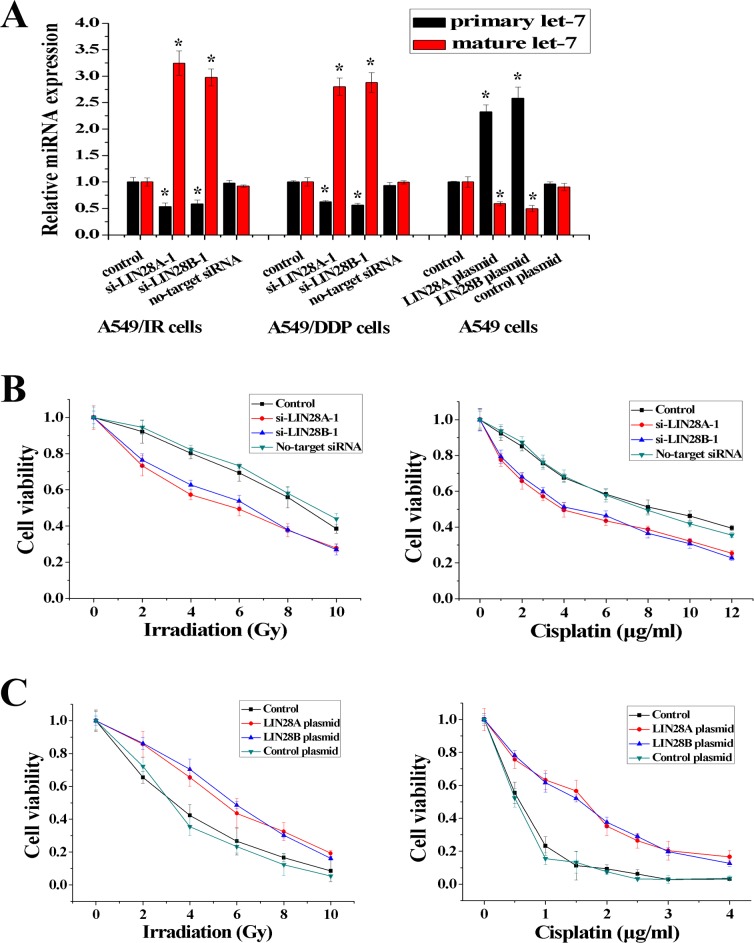
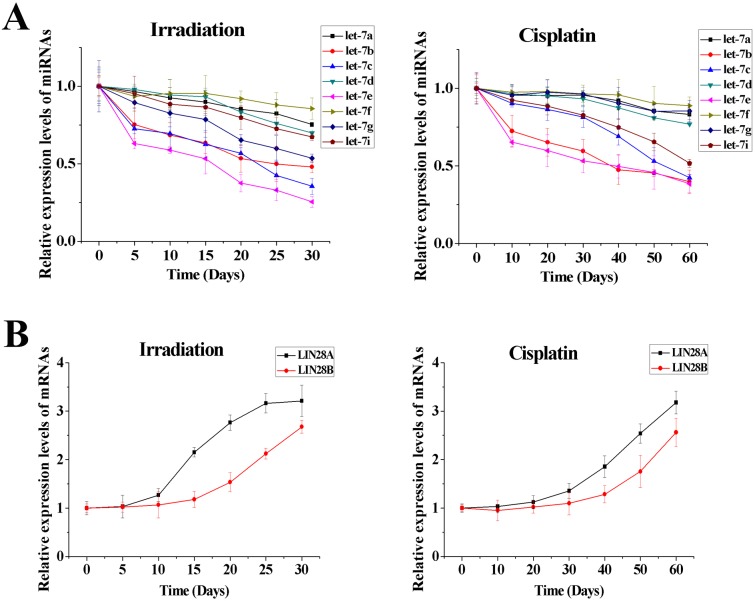
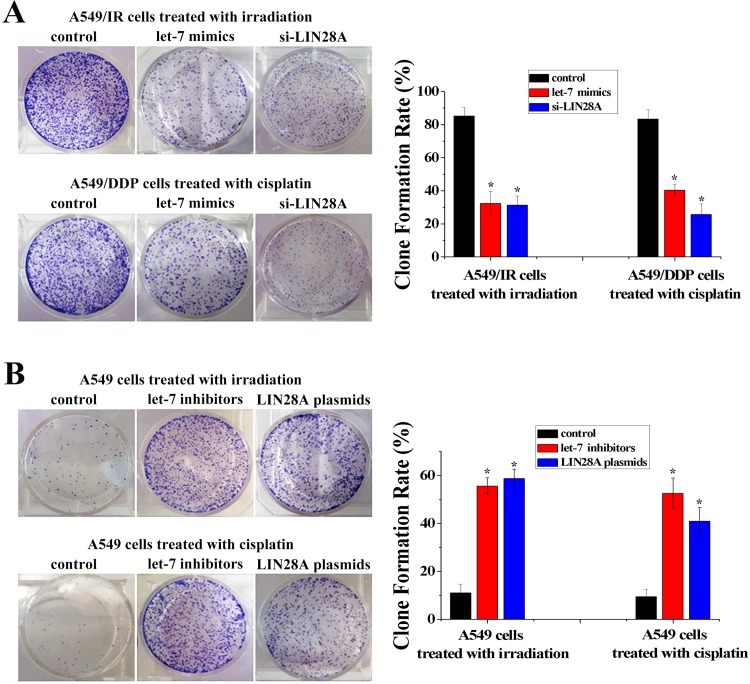
Radio- and chemo-resistance represent major obstacles in the therapy of non-small-cell lung cancer (NSCLC) and the underlying molecular mechanisms are not known. In the present study, during induction of radio- or chemo-resistance in NSCLC cells, dynamic analyses revealed that decreased expression of let-7 induced by irradiation or cisplatin resulted in increased expression of its target gene LIN28, and increased expression of LIN28 then contributed to further decreased expression of let-7 by inhibiting its maturation and biogenesis. Moreover, we showed that down-regulation of let-7 and up-regulation of LIN28 expression promoted resistance to irradiation or cisplatin by regulating the single-cell proliferative capability of NSCLC cells. Consequently, in NSCLC cells, let-7 and LIN28 can form a double-negative feedback loop through mutual inhibition, and disturbance of the let-7/LIN28 double-negative feedback loop induced by irradiation or chemotherapeutic drugs can result in radio- and chemo-resistance. In addition, low expression of let-7 and high expression of LIN28 in NSCLC patients was associated significantly with resistance to radiotherapy or chemotherapy. Therefore, our study demonstrated that disturbance of the let-7/LIN28 double-negative feedback loop is involved in the regulation of radio- and chemo-resistance, and that let-7 and LIN28 could be employed as predictive biomarkers of response to radiotherapy or chemotherapy in NSCLC patients.
放疗和化疗耐药是非小细胞肺癌(NSCLC)治疗中的主要障碍,其潜在分子机制尚不清楚。在本研究中,在诱导NSCLC细胞产生放疗或化疗耐药的过程中,动态分析显示,辐射或顺铂诱导的let-7表达降低导致其靶基因LIN28表达增加,而LIN28表达增加又通过抑制let-7的成熟和生物合成导致let-7表达进一步降低。此外,我们发现let-7下调和LIN28表达上调通过调节NSCLC细胞的单细胞增殖能力促进对辐射或顺铂的耐药。因此,在NSCLC细胞中,let-7和LIN28可通过相互抑制形成双负反馈环,辐射或化疗药物诱导的let-7/LIN28双负反馈环紊乱可导致放疗和化疗耐药。此外,NSCLC患者中let-7低表达和LIN28高表达与放疗或化疗耐药显著相关。因此,我们的研究表明,let-7/LIN28双负反馈环紊乱参与放疗和化疗耐药的调控,let-7和LIN28可作为NSCLC患者放疗或化疗反应的预测生物标志物。