Munteanu Alexandru M, Stocker Martina, Stöwe Mareike, Massen Jorg J M, Bugnyar Thomas
Department of Cognitive Biology University of Vienna Vienna Austria; Haidlhof Research Station University of Vienna and University of Veterinary Medicine Vienna Bad Vöslau Austria.
Department of Biomedical Sciences Unit of Physiology, Pathophysiology and Experimental Endocrinology University of Veterinary Medicine Vienna Vienna Austria.
Ethology. 2017 Feb;123(2):123-135. doi: 10.1111/eth.12580. Epub 2016 Dec 28.
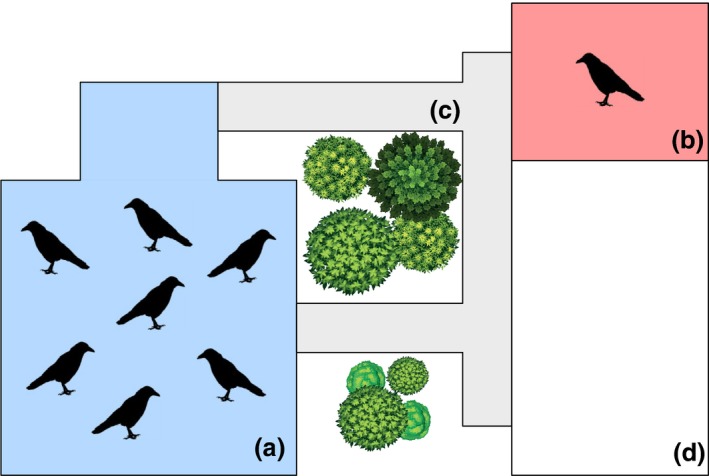
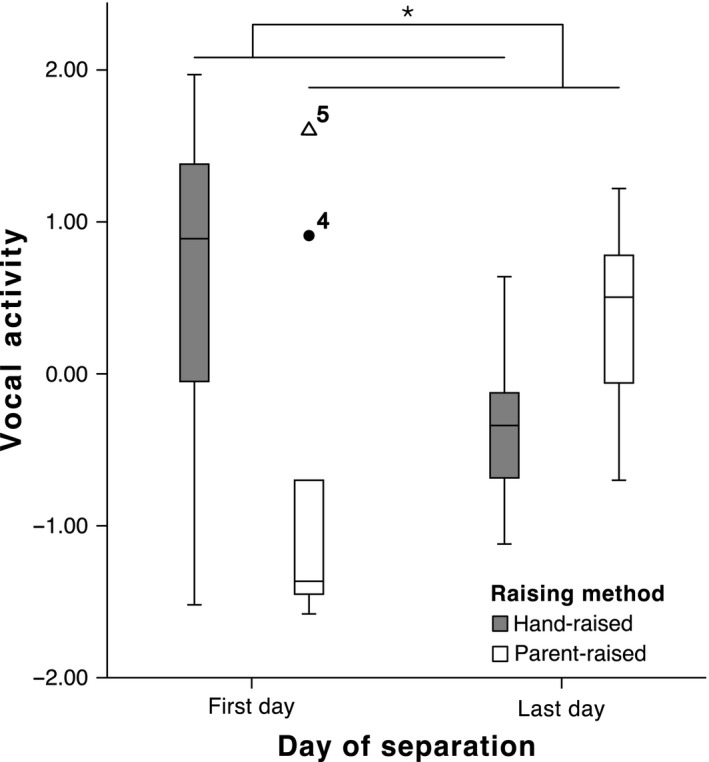
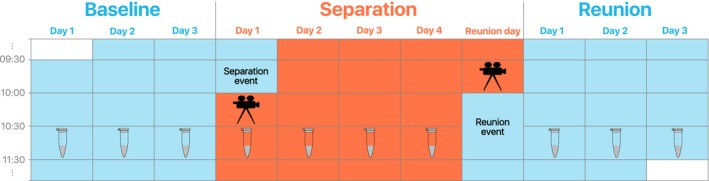
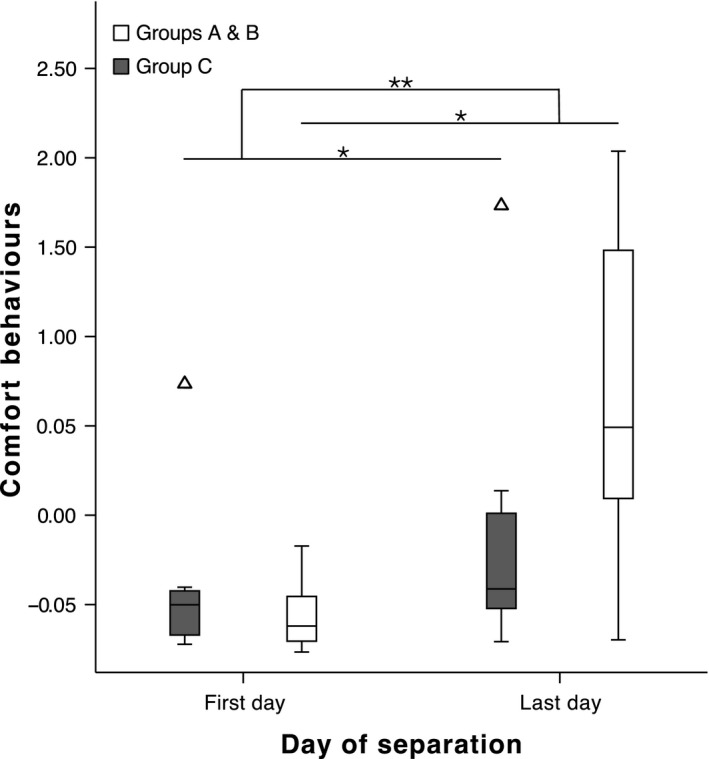
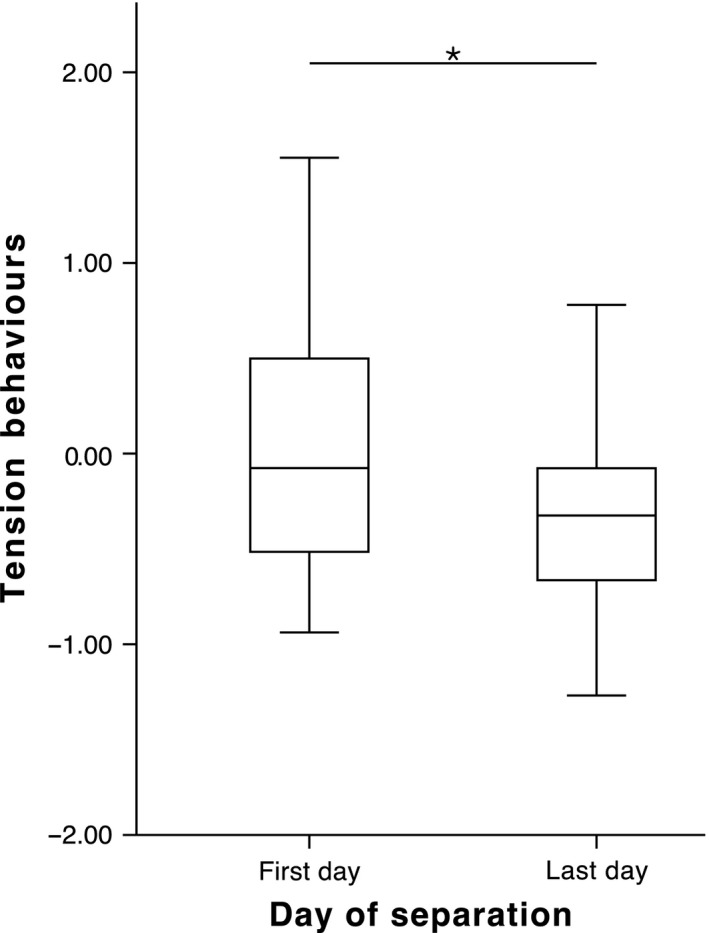
Social life is profitable, but it facilitates conflicts over resources and creates interdependence between individuals. Separating highly social animals triggers intense reactions aimed at re-establishing lost connections. Less is known, however, about behavioural and physiological responses to separation in socially facultative species, where individuals temporarily form groups and may subsequently leave them. Non-breeding common ravens () gather in large numbers at feeding and roosting sites, but otherwise spend time seemingly solitary or in small subgroups. We here studied how ravens cope with being socially isolated, and investigated the life characteristics that might explain potential individual differences. For this, we individually separated captive subadult ravens (n = 25) and housed them in physical and visual isolation from their group members across 4 d. During the separation period, we collected behavioural data and measured the amount of immunoreactive corticosterone metabolites from bird droppings to assess the ravens' physiological stress response. We found behavioural indicators of stress at the start of the separation, when ravens showed higher levels of tension than of comfort - a pattern that reversed at the end of the separation. Furthermore, we found that the upbringing of ravens affected their behaviour during separation. Hand-raised birds produced more vocalisations in the beginning of the separation, and were less active at the end, while the reverse pattern occurred with parent-raised ravens. Contrary to our predictions, we did not find differences in hormonal responses between the beginning and end of the separation period or any link between hormonal responses and behaviours. Ravens' behavioural responses to social separation stress seem to be dependent on their arousal states, although possible links with hormonal reactions remain unclear. Our results show that behavioural reactions are not always linked with hormonal responses to stress, and further emphasise the importance of investigating effects of early-life experiences.
社交生活是有益的,但它会引发对资源的冲突,并在个体之间产生相互依赖。将高度社会化的动物分开会引发旨在重新建立失去联系的强烈反应。然而,对于社交兼性物种中分离的行为和生理反应了解较少,在这些物种中,个体临时组成群体,随后可能离开群体。非繁殖期的普通渡鸦会大量聚集在觅食和栖息地点,但其他时间似乎是单独行动或形成小群体。我们在此研究了渡鸦如何应对社交隔离,并调查了可能解释潜在个体差异的生活特征。为此,我们将圈养的亚成年渡鸦(n = 25)单独分开,并在4天的时间里将它们与群体成员进行物理和视觉上的隔离饲养。在隔离期间,我们收集行为数据,并测量鸟类粪便中免疫反应性皮质酮代谢物的量,以评估渡鸦的生理应激反应。我们发现,在隔离开始时存在应激的行为指标,此时渡鸦表现出的紧张程度高于舒适程度——这种模式在隔离结束时发生了逆转。此外,我们发现渡鸦的成长经历会影响它们在隔离期间的行为。人工饲养的鸟类在隔离开始时发出更多叫声,在结束时活动较少,而由父母抚养长大的渡鸦则出现相反的模式。与我们的预测相反,我们没有发现隔离期开始和结束时激素反应的差异,也没有发现激素反应与行为之间的任何联系。渡鸦对社交隔离应激的行为反应似乎取决于它们的唤醒状态,尽管与激素反应的可能联系仍不清楚。我们的结果表明,行为反应并不总是与对应激的激素反应相关联,并进一步强调了研究早期生活经历影响的重要性。