Schneider Jaime L, Miller Ann M, Woesner Mary E
Department of Psychiatry & Behavioral Sciences, Albert Einstein College of Medicine, Bronx NY.
Department of Psychiatry & Behavioral Sciences, Albert Einstein College of Medicine, Bronx NY.; Bronx Psychiatric Center, Bronx, NY.
Einstein J Biol Med. 2016;31(1-2):34-39. doi: 10.23861/EJBM201631752.
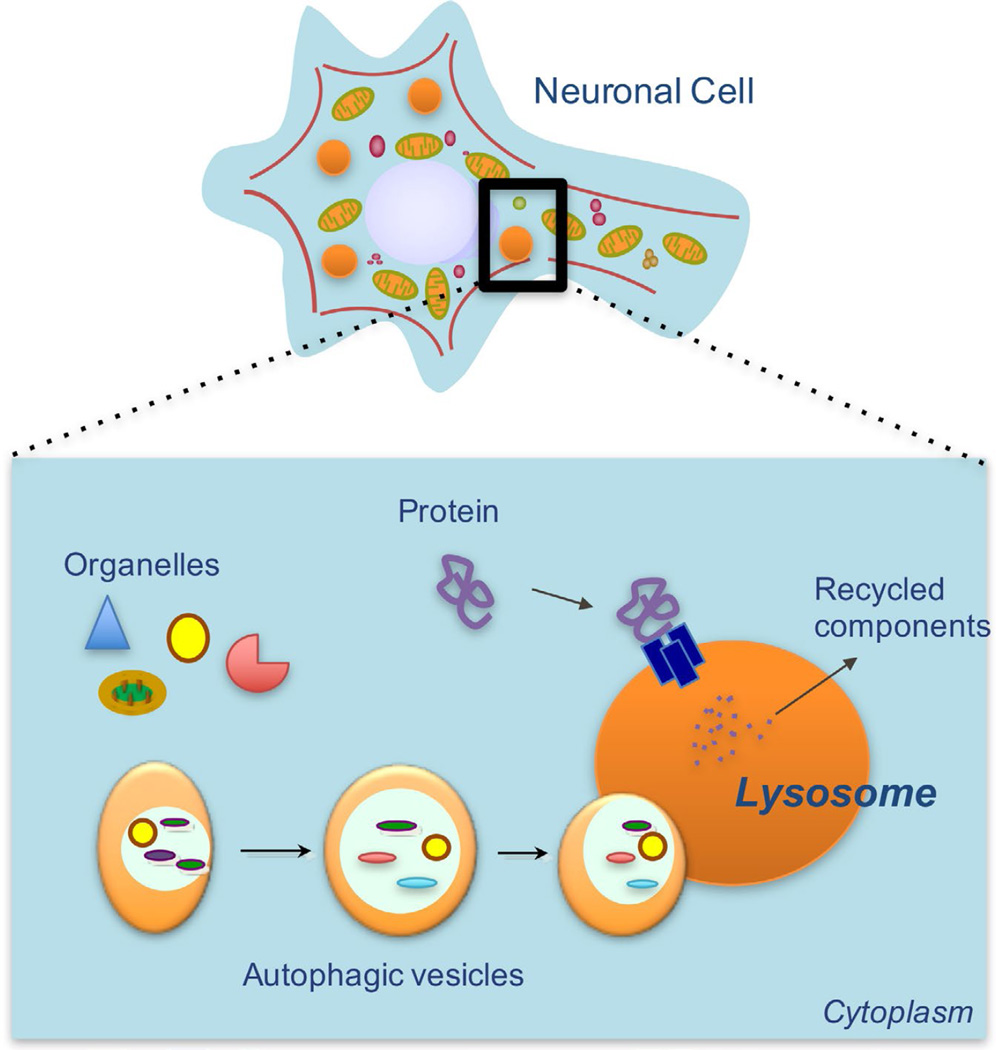
Autophagy, the process of degrading intracellular components in lysosomes, plays an important role in the central nervous system by contributing to neuronal homeostasis. Autophagic failure has been linked to neurologic dysfunction and a variety of neurodegenerative diseases. Recent investigation has revealed a novel role for autophagy in the context of mental illness, namely in schizophrenia. This article summarizes the phenomenology, genetics, and structural/histopathological brain abnormalities associated with schizophrenia. We review studies that demonstrate for the first time a connection between autophagy malfunction and schizophrenia. Transcriptional profiling in schizophrenia patients uncovered a dysregulation of autophagy-related genes spatially confined to a specific area of the cortex, Brodmann Area 22, which has been previously implicated in the positive symptoms of schizophrenia. We also discuss the role of autophagy activators in schizophrenia and whether they may be useful adjuvants to the traditional antipsychotic medications currently used as the standard of care. In summary, the field has progressed beyond the basic concept that autophagy impairment predisposes to neurodegeneration, to a mechanistic understanding that loss of autophagy can disrupt neuronal cell biology and predispose to mood disorders, psychotic symptoms, and behavioral change.
自噬是一种在溶酶体中降解细胞内成分的过程,通过维持神经元内环境稳定在中枢神经系统中发挥重要作用。自噬功能障碍与神经功能障碍及多种神经退行性疾病有关。最近的研究揭示了自噬在精神疾病(即精神分裂症)中的新作用。本文总结了与精神分裂症相关的现象学、遗传学以及大脑结构/组织病理学异常。我们回顾了首次证明自噬功能异常与精神分裂症之间存在关联的研究。对精神分裂症患者的转录谱分析发现,自噬相关基因的失调在空间上局限于大脑皮层的一个特定区域,即布罗德曼22区,该区域此前被认为与精神分裂症的阳性症状有关。我们还讨论了自噬激活剂在精神分裂症中的作用,以及它们是否可能成为目前作为标准治疗药物使用的传统抗精神病药物的有用辅助药物。总之,该领域已经超越了自噬损伤易导致神经退行性变的基本概念,发展到对自噬缺失会破坏神经元细胞生物学并易引发情绪障碍、精神症状和行为改变的机制性理解。