Tamirisa Srinath, Vudem Dashavantha R, Khareedu Venkateswara R
Centre for Plant Molecular Biology, Osmania University Hyderabad, India.
Front Plant Sci. 2017 Feb 10;8:165. doi: 10.3389/fpls.2017.00165. eCollection 2017.
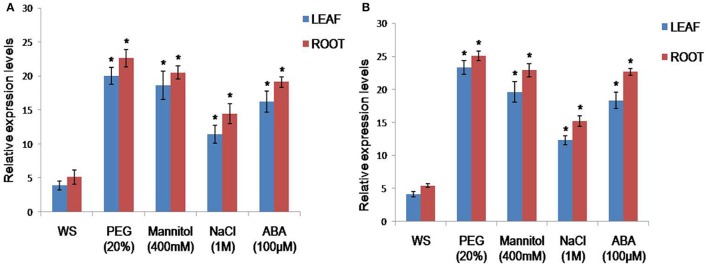
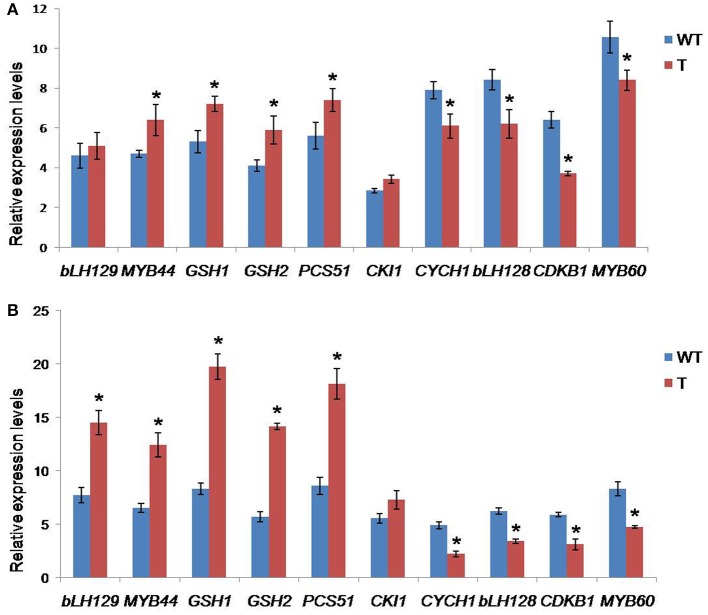
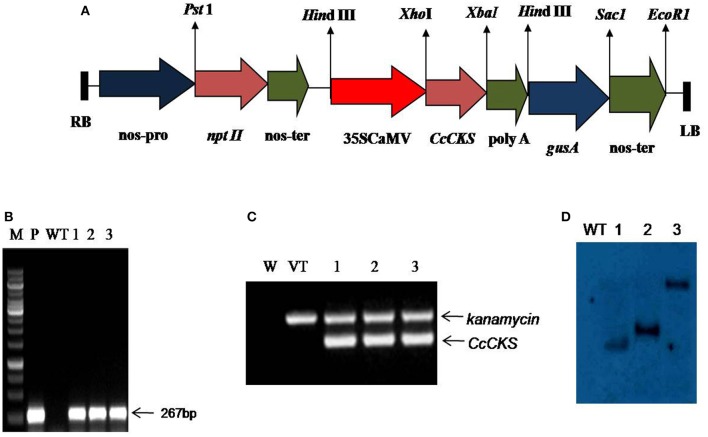
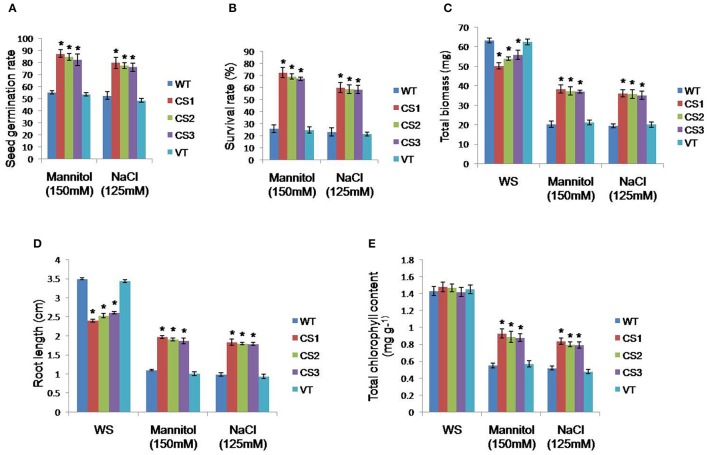
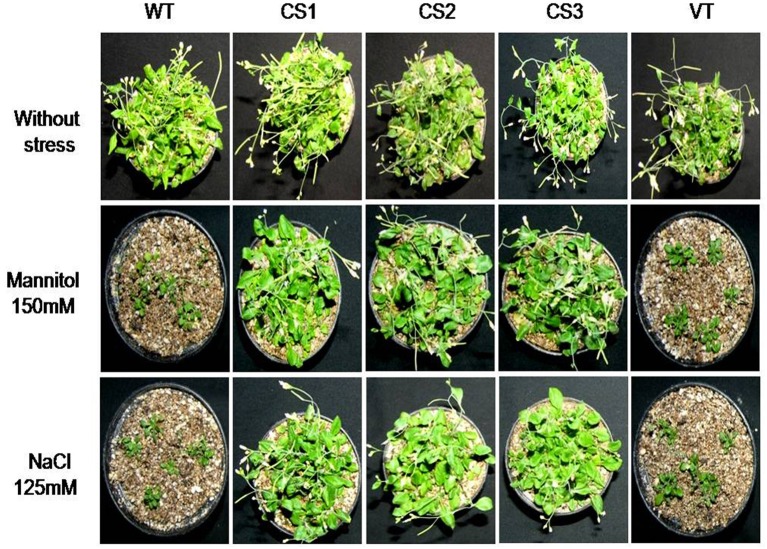
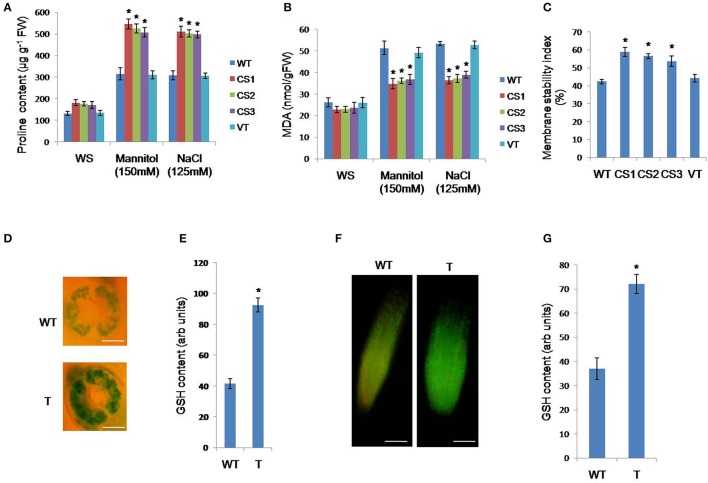
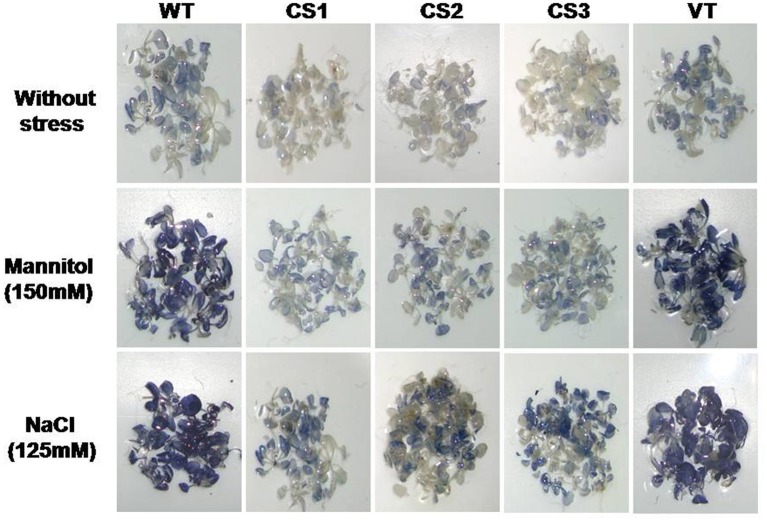
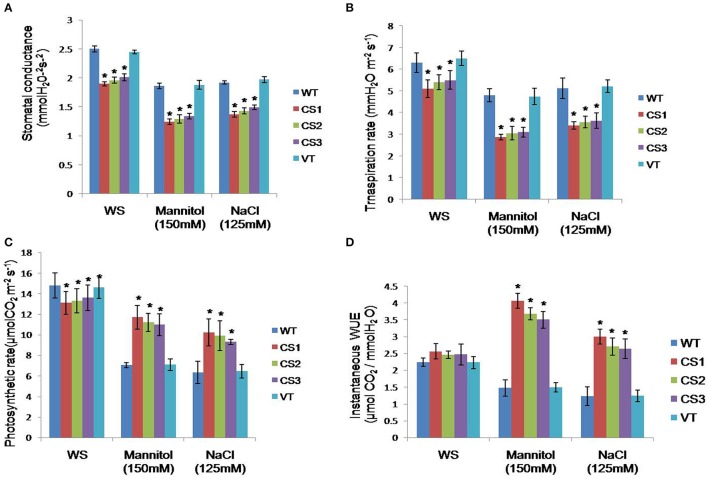
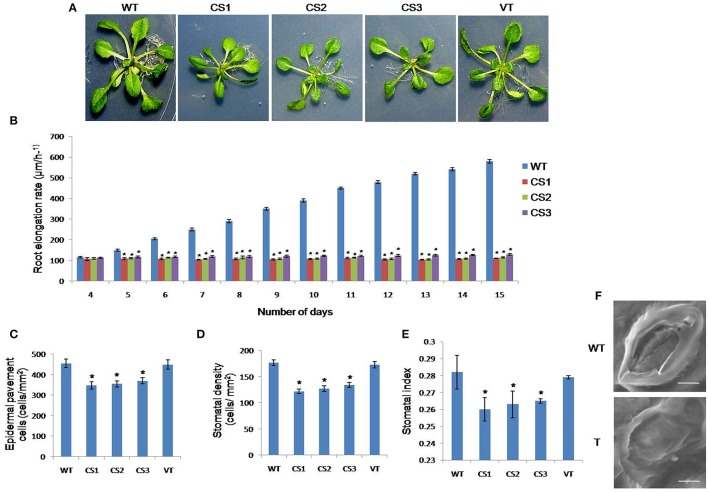
Frequent climatic changes in conjunction with other extreme environmental factors are known to affect growth, development and productivity of diverse crop plants. Pigeonpea, a major grain legume of the semiarid tropics, endowed with an excellent deep-root system, is known as one of the important drought tolerant crop plants. Cyclin dependent kinases (CDKs) are core cell cycle regulators and play important role in different aspects of plant growth and development. The cyclin-dependent kinase regulatory subunit gene () was isolated from the cDNA library of pigeonpea plants subjected to drought stress. Pigeonpea () gene expression was detected in both the root and leaf tissues of pigeonpea and was upregulated by polyethylene glycol (PEG), mannitol, NaCl and abscisic acid (ABA) treatments. The overexpression of gene in significantly enhanced tolerance of transgenics to drought and salt stresses as evidenced by different physiological parameters. Under stress conditions, transgenics showed higher biomass, decreased rate of water loss, decreased MDA levels, higher free proline contents, and glutathione levels. Moreover, under stress conditions transgenics exhibited lower stomatal conductance, lower transpiration, and higher photosynthetic rates. However, under normal conditions, -transgenics displayed decreased plant growth rate, increased cell size and decreased stomatal number compared to those of wild-type plants. Real-time polymerase chain reaction revealed that CKS could regulate the expression of both ABA-dependent and ABA-independent genes associated with abiotic stress tolerance as well as plant growth and development. As such, the seems promising and might serve as a potential candidate gene for enhancing the abiotic stress tolerance of crop plants.
众所周知,频繁的气候变化与其他极端环境因素共同作用会影响多种农作物的生长、发育和生产力。木豆是半干旱热带地区的一种主要豆类作物,拥有出色的深根系统,是重要的耐旱作物之一。细胞周期蛋白依赖性激酶(CDKs)是核心细胞周期调节因子,在植物生长发育的不同方面发挥重要作用。从遭受干旱胁迫的木豆植株的cDNA文库中分离出细胞周期蛋白依赖性激酶调节亚基基因()。在木豆的根和叶组织中均检测到木豆()基因的表达,并且该基因在聚乙二醇(PEG)、甘露醇、氯化钠和脱落酸(ABA)处理下上调。通过不同的生理参数证明,在中过表达基因显著增强了转基因植株对干旱和盐胁迫的耐受性。在胁迫条件下,转基因植株表现出更高的生物量、更低的失水率、更低的丙二醛水平、更高的游离脯氨酸含量和谷胱甘肽水平。此外,在胁迫条件下,转基因植株表现出更低的气孔导度、更低的蒸腾作用和更高的光合速率。然而,在正常条件下,与野生型植株相比,转基因植株的生长速率降低、细胞大小增加且气孔数量减少。实时聚合酶链反应表明,CKS可以调节与非生物胁迫耐受性以及植物生长发育相关的ABA依赖性和ABA非依赖性基因的表达。因此,似乎很有前景,可能作为增强作物非生物胁迫耐受性的潜在候选基因。