Gao Jie, Ochyl Lukasz J, Yang Ellen, Moon James J
Department of Pharmaceutical Sciences, University of Michigan, Ann Arbor, MI, USA; Department of Pharmaceutical Sciences, School of Pharmacy, Second Military Medical University, Shanghai, People's Republic of China; Biointerfaces Institute.
Department of Pharmaceutical Sciences, University of Michigan, Ann Arbor, MI, USA; Biointerfaces Institute.
Int J Nanomedicine. 2017 Feb 14;12:1251-1264. doi: 10.2147/IJN.S125866. eCollection 2017.
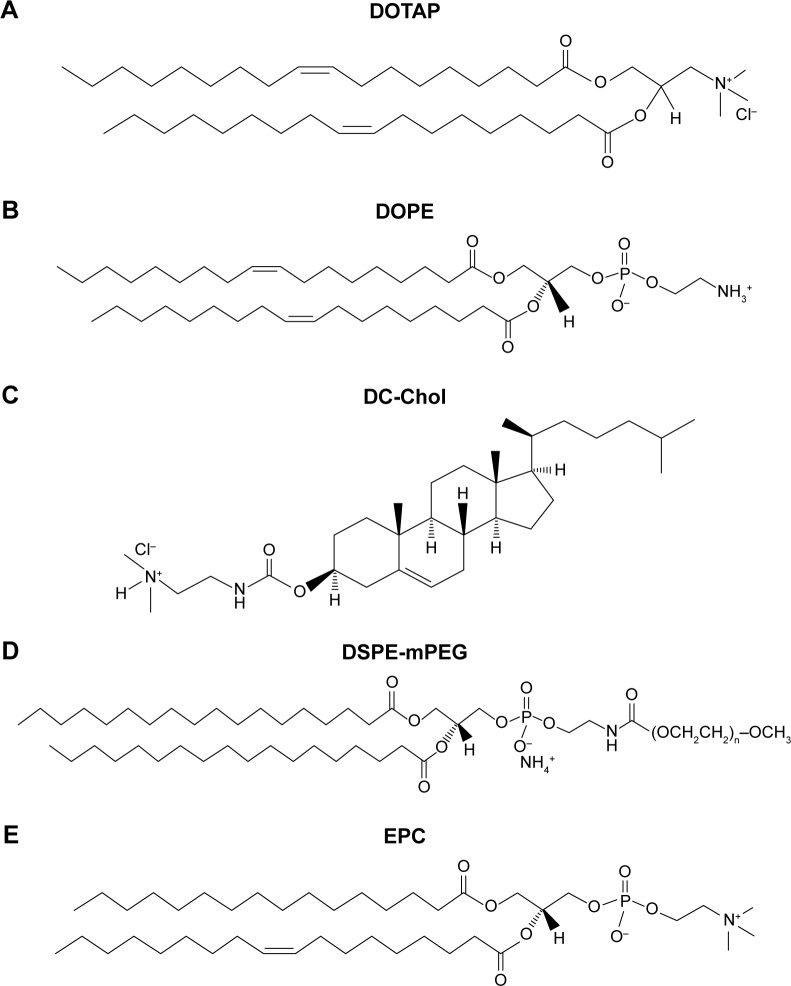
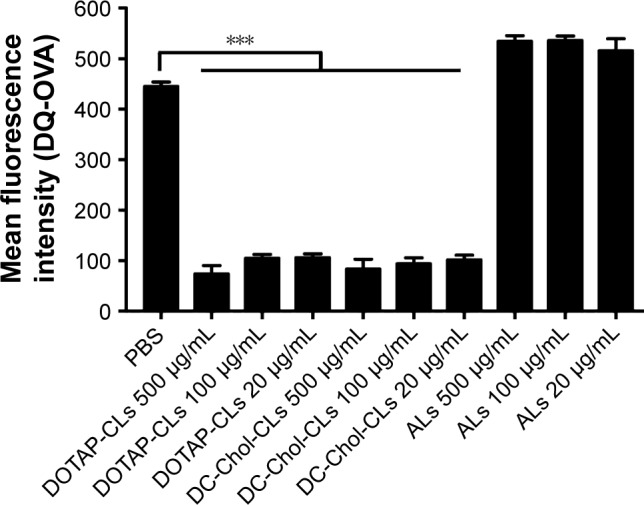
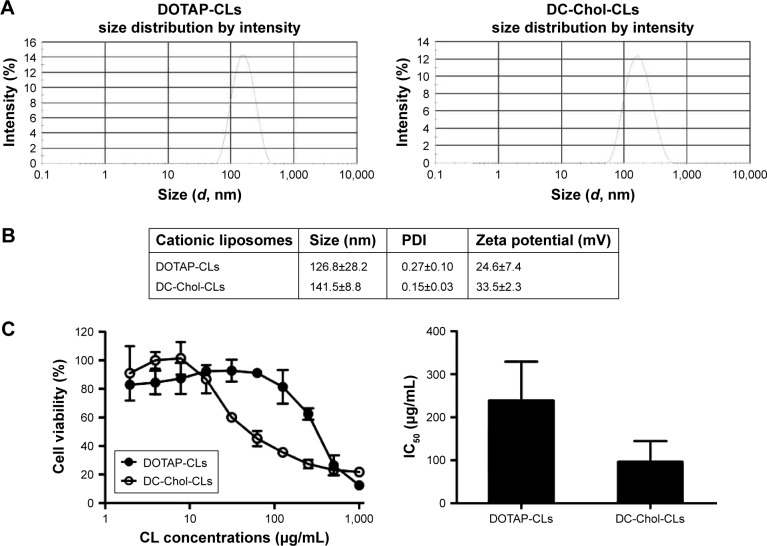
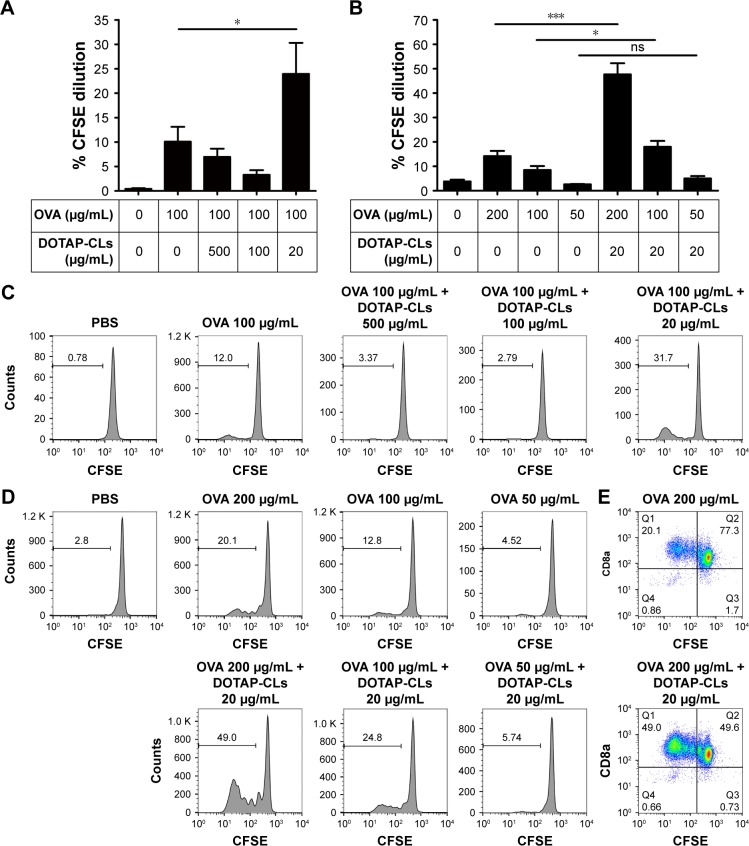
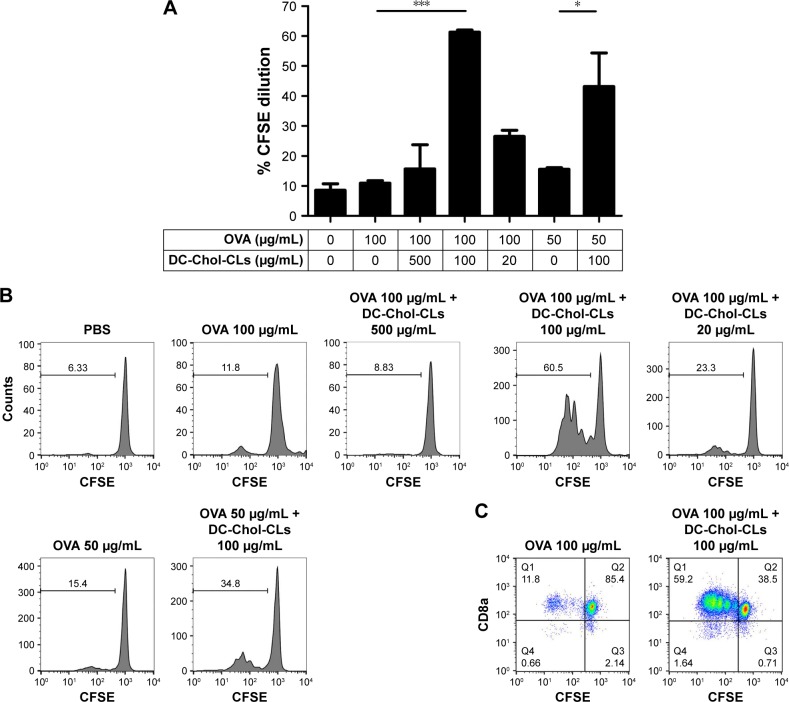
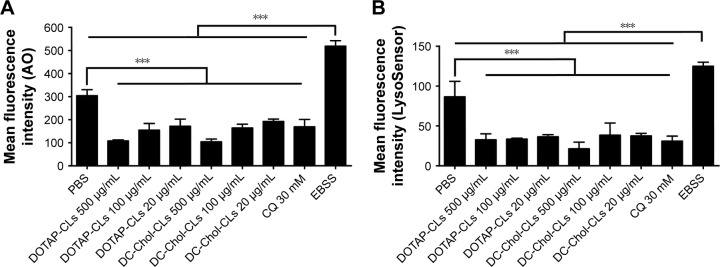
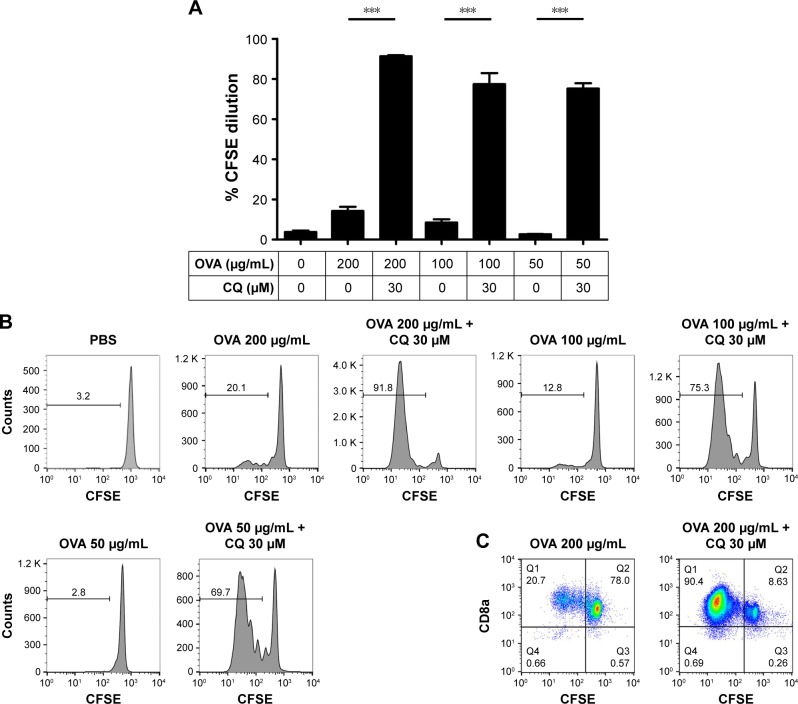
Cationic liposomes (CLs) have been widely examined as vaccine delivery nanoparticles since they can form complexes with biomacromolecules, promote delivery of antigens and adjuvant molecules to antigen-presenting cells (APCs), and mediate cellular uptake of vaccine components. CLs are also known to trigger antigen cross-presentation - the process by which APCs internalize extracellular protein antigens, degrade them into minimal CD8 T-cell epitopes, and present them in the context of major histocompatibility complex-I (MHC-I). However, the precise mechanisms behind CL-mediated induction of cross-presentation and cross-priming of CD8 T-cells remain to be elucidated. In this study, we have developed two distinct CL systems and examined their impact on the lysosomal pH in dendritic cells (DCs), antigen degradation, and presentation of peptide:MHC-I complexes to antigen-specific CD8 T-cells. To achieve this, we have used 3β-[-(','-dimethylaminoethane)-carbamoyl] cholesterol (DC-Chol) and 1,2-dioleoyl-3-trimethylammonium-propane (DOTAP) as the prototypical components of CLs with tertiary amine groups and compared the effect of CLs and anionic liposomes on lysosomal pH, antigen degradation, and cross-presentation by DCs. Our results showed that CLs, but not anionic liposomes, elevated the lysosomal pH in DCs and reduced antigen degradation, thereby promoting cross-presentation and cross-priming of CD8 T-cell responses. These studies shed new light on CL-mediated cross-presentation and suggest that intracellular fate of vaccine components and subsequent immunological responses can be controlled by rational design of nanomaterials.
阳离子脂质体(CLs)作为疫苗递送纳米颗粒已被广泛研究,因为它们可以与生物大分子形成复合物,促进抗原和佐剂分子递送至抗原呈递细胞(APC),并介导疫苗成分的细胞摄取。已知CLs还能触发抗原交叉呈递——即APC内化细胞外蛋白质抗原,将其降解为最小的CD8 T细胞表位,并在主要组织相容性复合体-I(MHC-I)的背景下呈递这些表位的过程。然而,CL介导的交叉呈递诱导和CD8 T细胞交叉启动背后的确切机制仍有待阐明。在本研究中,我们开发了两种不同的CL系统,并研究了它们对树突状细胞(DCs)溶酶体pH值、抗原降解以及肽:MHC-I复合物向抗原特异性CD8 T细胞呈递的影响。为实现这一目标,我们使用3β-[-(','-二甲基氨基乙烷)-甲酰基]胆固醇(DC-Chol)和1,2-二油酰基-3-三甲基铵丙烷(DOTAP)作为具有叔胺基团的CLs的典型成分,并比较了CLs和阴离子脂质体对DCs溶酶体pH值、抗原降解和交叉呈递的影响。我们的结果表明,CLs而非阴离子脂质体提高了DCs的溶酶体pH值并减少了抗原降解,从而促进了CD8 T细胞反应的交叉呈递和交叉启动。这些研究为CL介导的交叉呈递提供了新的见解,并表明疫苗成分的细胞内命运和随后的免疫反应可以通过合理设计纳米材料来控制。