Benevenuto Rafael Fonseca, Agapito-Tenfen Sarah Zanon, Vilperte Vinicius, Wikmark Odd-Gunnar, van Rensburg Peet Jansen, Nodari Rubens Onofre
Department of Crop Science, Federal University of Santa Catarina, Florianópolis, Brazil.
Genøk Center for Biosafety, Tromsø, Norway.
PLoS One. 2017 Feb 28;12(2):e0173069. doi: 10.1371/journal.pone.0173069. eCollection 2017.
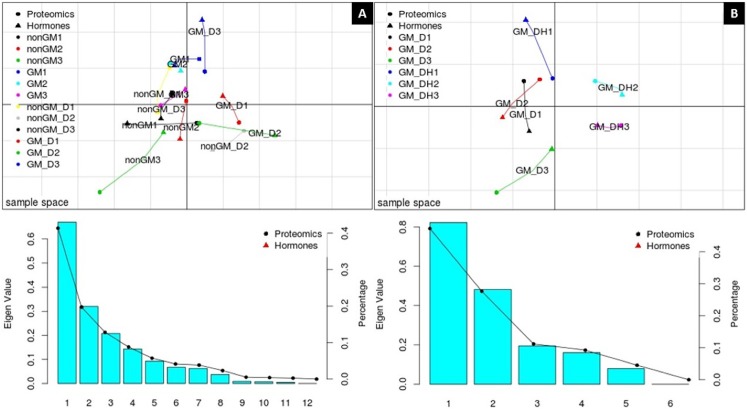
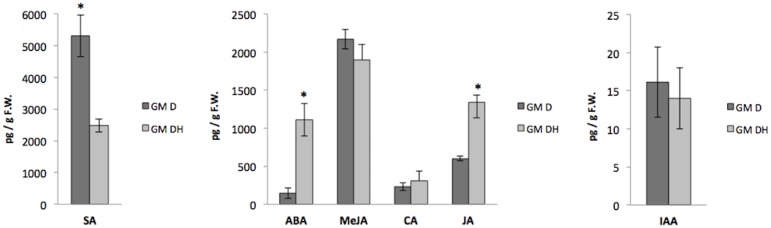
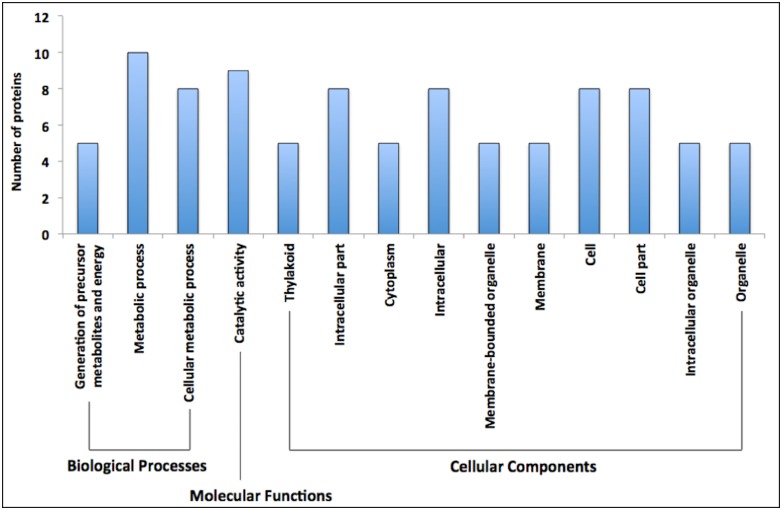
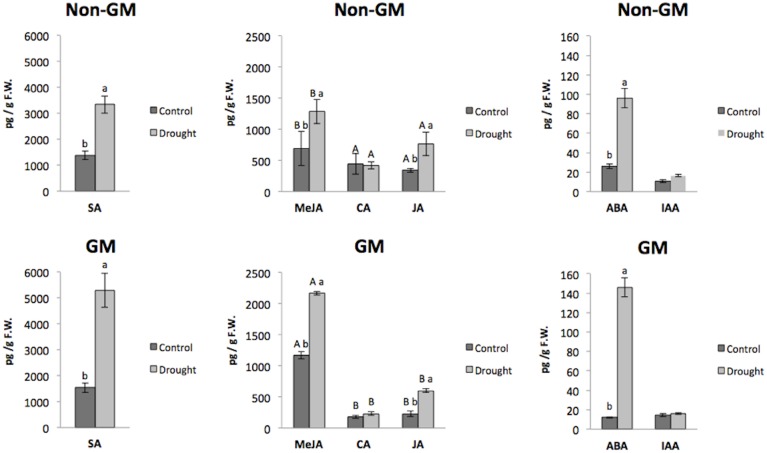
Some genetically modified (GM) plants have transgenes that confer tolerance to abiotic stressors. Meanwhile, other transgenes may interact with abiotic stressors, causing pleiotropic effects that will affect the plant physiology. Thus, physiological alteration might have an impact on the product safety. However, routine risk assessment (RA) analyses do not evaluate the response of GM plants exposed to different environmental conditions. Therefore, we here present a proteome profile of herbicide-tolerant maize, including the levels of phytohormones and related compounds, compared to its near-isogenic non-GM variety under drought and herbicide stresses. Twenty differentially abundant proteins were detected between GM and non-GM hybrids under different water deficiency conditions and herbicide sprays. Pathway enrichment analysis showed that most of these proteins are assigned to energetic/carbohydrate metabolic processes. Among phytohormones and related compounds, different levels of ABA, CA, JA, MeJA and SA were detected in the maize varieties and stress conditions analysed. In pathway and proteome analyses, environment was found to be the major source of variation followed by the genetic transformation factor. Nonetheless, differences were detected in the levels of JA, MeJA and CA and in the abundance of 11 proteins when comparing the GM plant and its non-GM near-isogenic variety under the same environmental conditions. Thus, these findings do support molecular studies in GM plants Risk Assessment analyses.
一些转基因植物含有赋予其对非生物胁迫耐受性的转基因。与此同时,其他转基因可能与非生物胁迫相互作用,产生多效性效应,进而影响植物生理。因此,生理变化可能会对产品安全性产生影响。然而,常规风险评估分析并未评估转基因植物在不同环境条件下的反应。因此,我们在此展示了耐除草剂玉米的蛋白质组概况,包括与干旱和除草剂胁迫下的近等基因非转基因品种相比的植物激素和相关化合物水平。在不同水分亏缺条件和除草剂喷洒下,在转基因和非转基因杂交种之间检测到20种差异丰富的蛋白质。通路富集分析表明,这些蛋白质大多与能量/碳水化合物代谢过程有关。在所分析的玉米品种和胁迫条件下,在植物激素和相关化合物中检测到不同水平的脱落酸(ABA)、顺式-脱落酸(CA)、茉莉酸(JA)、茉莉酸甲酯(MeJA)和水杨酸(SA)。在通路和蛋白质组分析中,发现环境是变异的主要来源,其次是遗传转化因素。尽管如此,在相同环境条件下比较转基因植物及其非转基因近等基因品种时,在JA、MeJA和CA水平以及11种蛋白质的丰度上仍检测到差异。因此,这些发现确实支持转基因植物风险评估分析中的分子研究。