National Engineering Laboratory for Tree Breeding, College of Biological Sciences and Technology, Beijing Forestry University, Beijing, 100083, China.
Guangdong Academy of Forestry, Guangzhou, 510520, China.
Sci Rep. 2017 Mar 3;7(1):56. doi: 10.1038/s41598-017-00156-1.
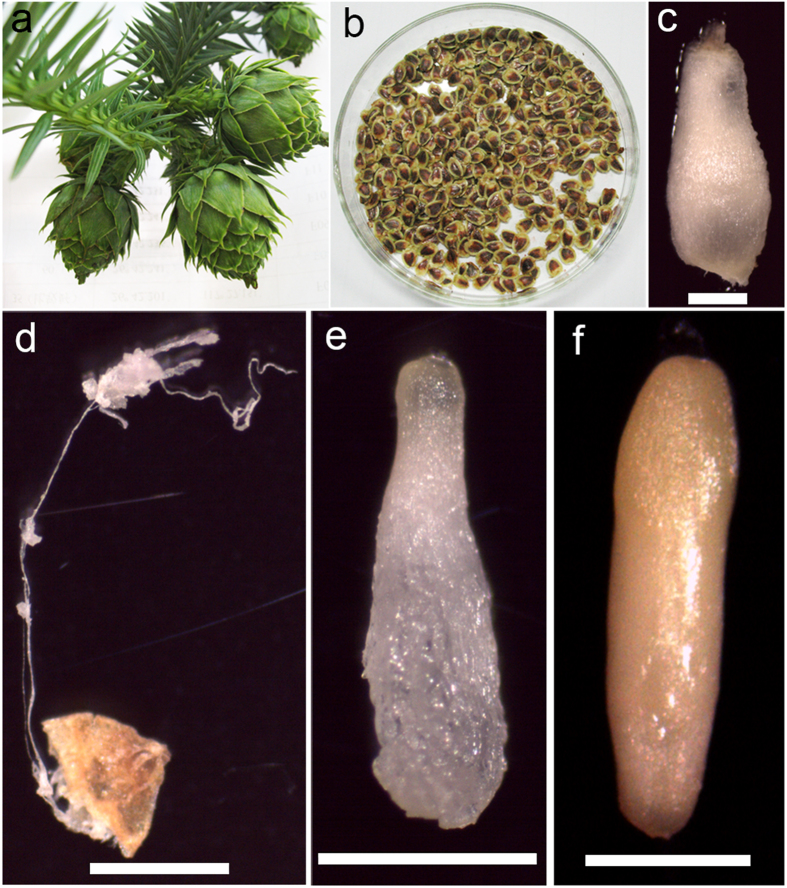
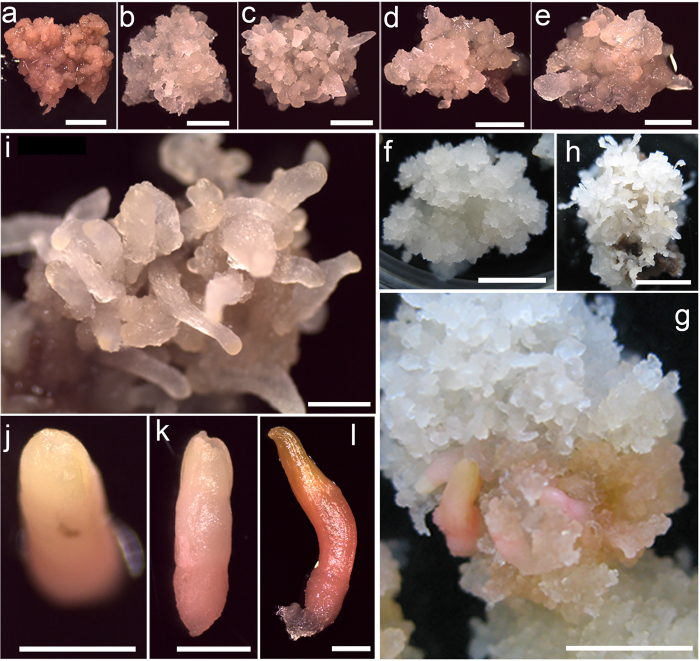
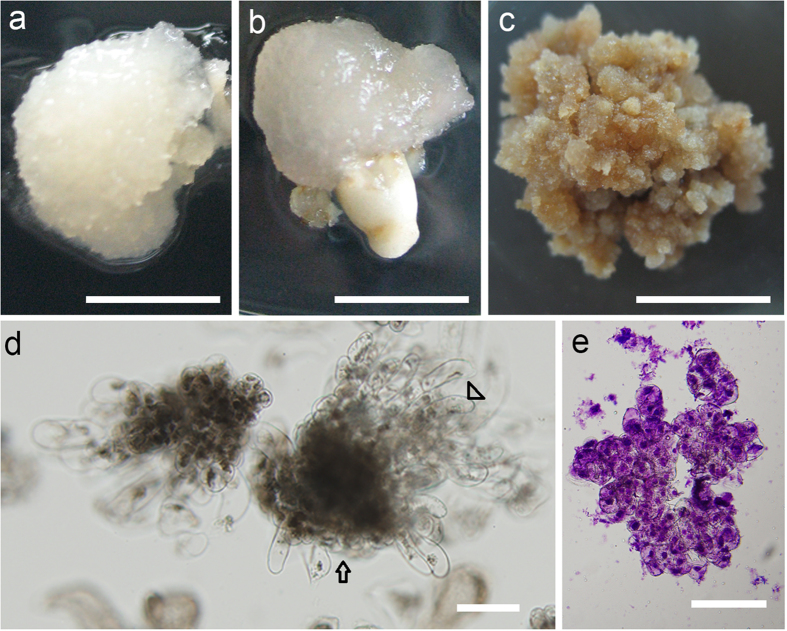
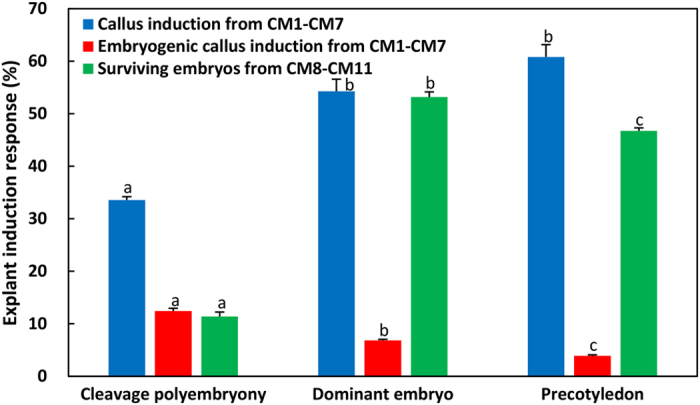
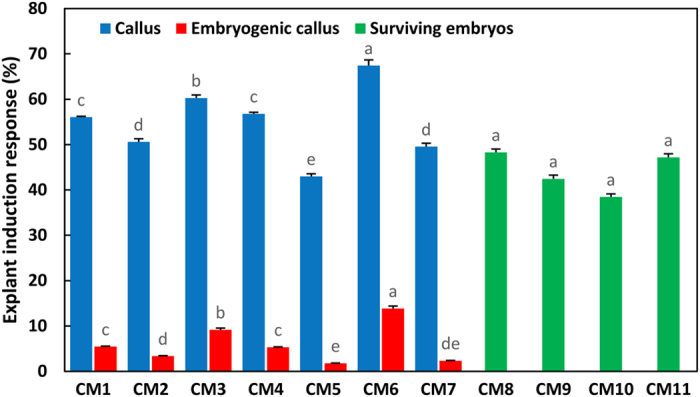
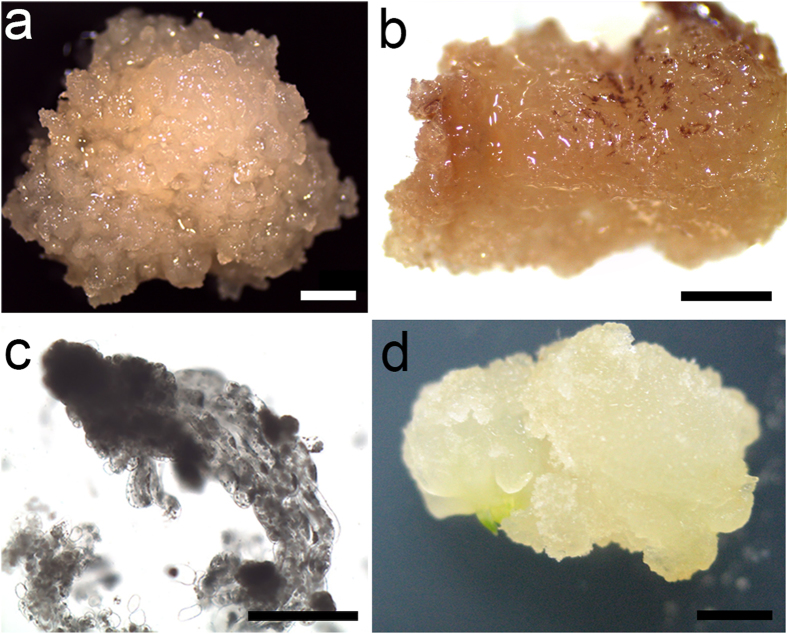
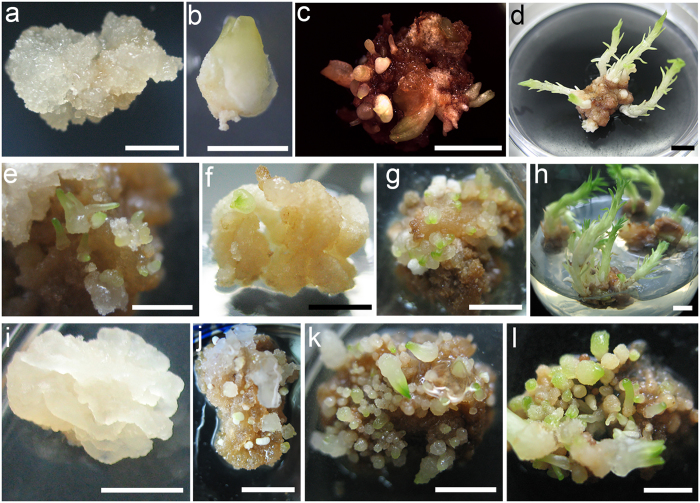
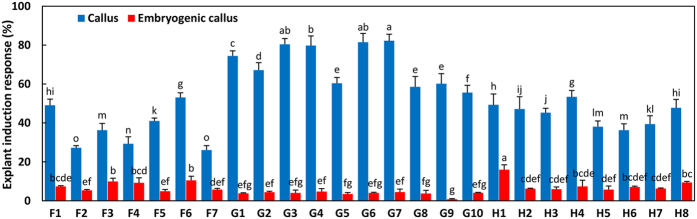
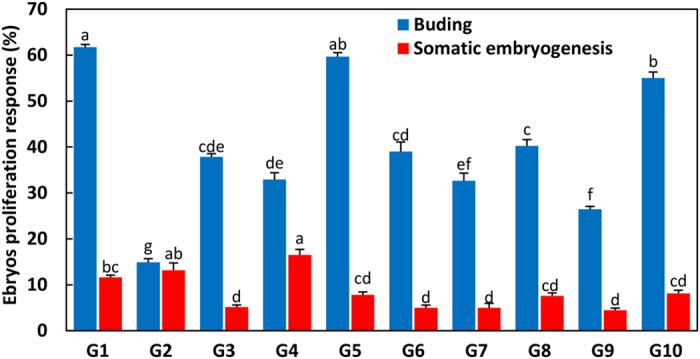
Two efficient somatic embryogenesis systems were developed in Chinese fir, the most important conifer for industrial wood production in China. Three development stages (cleavage polyembryony, dominant embryo, and precotyledon) of immature embryos derived from 25 genotypes of open-pollinated mother trees were used as initial explants. Cleavage polyembryony-stage embryos with a 12.44% induction rate was the most embryogenic response stage. The highest frequency of embryogenic callus (13.86%) induction was obtained from DCR medium supplemented with 1.5 mg L 2,4-dichlorophenoxyacetic acid (2,4-D) and 0.3 mg L kinetin (KN). An average of 53.33 early somatic embryos were produced from approximately 0.2 g (fresh weight) embryogenic callus after 2 weeks of incubation on medium supplemented with 50 μmol L abscisic acid (ABA) and 100 g L polyethylene glycol (PEG) 6000. About 53% dominant embryos have an embryogenic response after a 6-week cultivation on medium supplemented with 1.0-2.0 mg L benzyladenine (BA), 0.2 mg L naphthylacetic acid (NAA) or 2,4-D, and 0.004 mg L thidiazuron (TDZ). After three successive transfer cultures on medium supplemented with 1.5 mg L BA, 0.2 mg L NAA, and 0.004 mg L TDZ, 4.49-16.51% of the embryos developed into somatic embryos.
两个高效的体胚发生系统在中国福建柏中建立,福建柏是中国最重要的工业用材针叶树之一。来自 25 个开放授粉母树基因型的未成熟胚胎的三个发育阶段(裂生多胚、优势胚胎和子叶前体)被用作初始外植体。裂生多胚期胚胎的诱导率为 12.44%,是最具胚胎发生反应的阶段。在添加 1.5 mg/L 2,4-二氯苯氧乙酸(2,4-D)和 0.3 mg/L 激动素(KN)的 DCR 培养基中,获得了最高频率的胚性愈伤组织(13.86%)诱导。在添加 50 μmol/L 脱落酸(ABA)和 100 g/L 聚乙二醇(PEG)6000 的培养基上,约 0.2 g(鲜重)胚性愈伤组织经过 2 周培养后,平均产生 53.33 个早期体细胞胚。在添加 1.0-2.0 mg/L 苄基腺嘌呤(BA)、0.2 mg/L 萘乙酸(NAA)或 2,4-D 和 0.004 mg/L 噻二唑脲(TDZ)的培养基中培养 6 周后,约 53%的优势胚胎具有胚胎发生反应。在添加 1.5 mg/L BA、0.2 mg/L NAA 和 0.004 mg/L TDZ 的培养基上进行连续 3 次转移培养后,4.49-16.51%的胚胎发育成体细胞胚。