Fei Xianming, Wang Huan, Yuan Wufeng, Wo Mingyi, Jiang Lei
Center of Laboratory Medicine, Zhejiang Provincial People's Hospital, Hangzhou 310014, China.
Biomed Res Int. 2017;2017:8983763. doi: 10.1155/2017/8983763. Epub 2017 Jan 26.
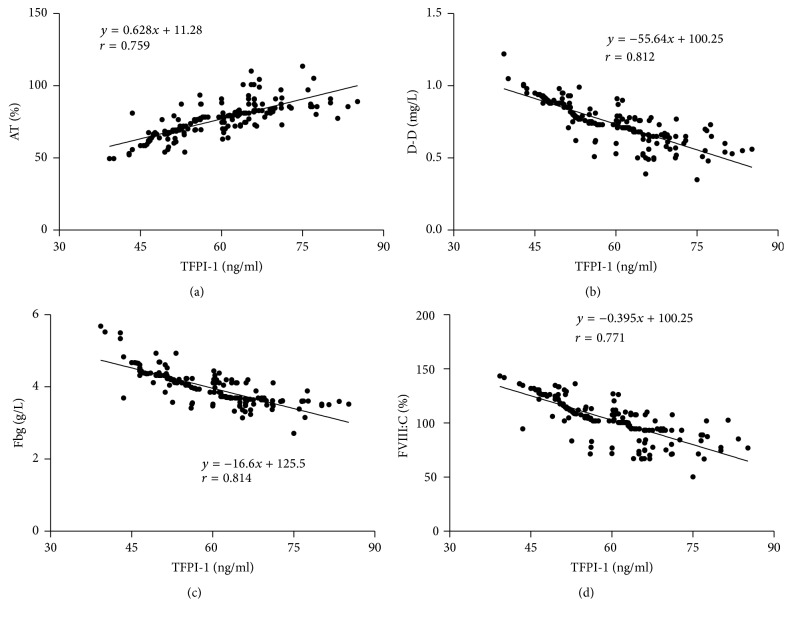
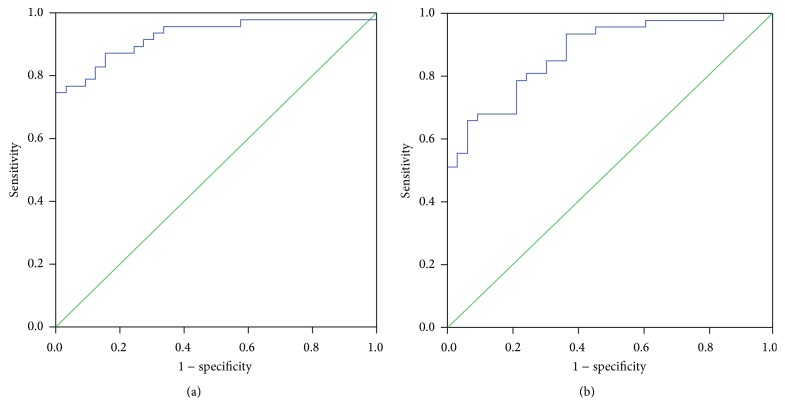
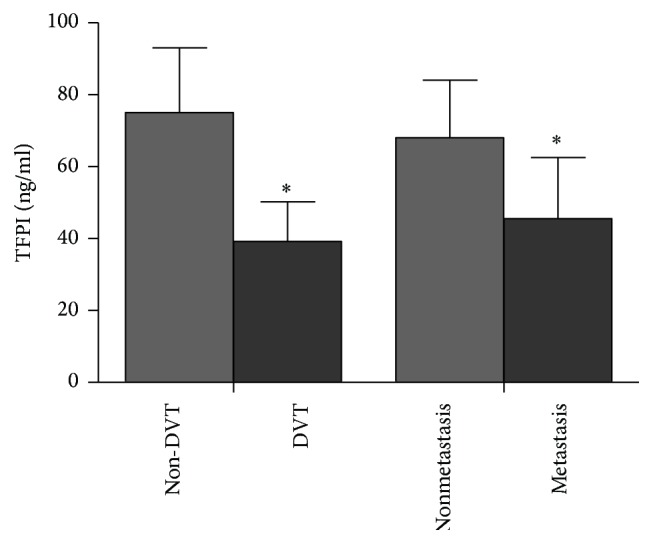
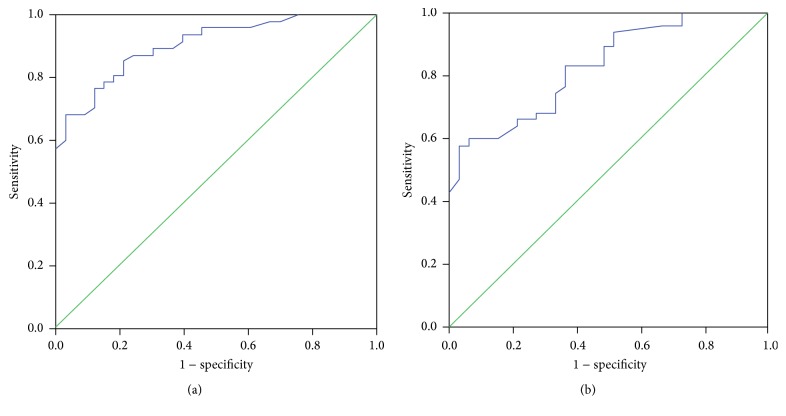
Activation of blood coagulation contributes to cancer progression. Tissue factor pathway inhibitor-1 (TFPI-1) is the main inhibitor of extrinsic coagulation pathway. The aim of this study is to assess the predicting significance of TFPI-1 for thrombotic complication and metastasis in lung cancer patients. Total of 188 non-small cell lung cancer (NSCLC) patients were included in this study. Plasma TFPI-1, D-dimer (D-D), antithrombin (AT), Fibrinogen (Fbg), and coagulating factor VIII activity (FVIII:C) were measured. In NSCLC patients, significantly decreased TFPI-1 and AT and increased D-D, Fbg, and FVIII:C levels were observed, and there was a significant correlation between TFPI-1 and other hemostatic parameters ( < 0.001, resp.). NSCLC patients with deep venous thrombosis (DVT) or metastasis had significantly lower TFPI-1 levels than those without DVT or metastasis ( < 0.01, resp.). Multivariate regression revealed that TFPI-1 acted as a predictor for DVT or tumor metastasis in NSCLC patients [OR: 4.15 or 3.28, < 0.05, resp.]. The area under ROC curve of TFPI-1 was 0.905 (95% CI, 0.8420.967) or 0.828 (95% CI, 0.7420.915) for predicting DVT or metastasis ( < 0.001, resp.). The optimal point of TFPI-1 was 57.7 or 54.3 ng/mL for predicting DVT or metastasis, respectively. Combination of TFPI-1 and D-D measurements can improve the predicting power for DVT or metastasis in NSCLC patients. Our findings suggested that TFPI-1 was a valuable predictor of DVT and tumor metastasis in NSCLC patients.
血液凝固的激活促进癌症进展。组织因子途径抑制剂-1(TFPI-1)是外源性凝血途径的主要抑制剂。本研究旨在评估TFPI-1对肺癌患者血栓形成并发症和转移的预测意义。本研究共纳入188例非小细胞肺癌(NSCLC)患者。检测血浆TFPI-1、D-二聚体(D-D)、抗凝血酶(AT)、纤维蛋白原(Fbg)和凝血因子VIII活性(FVIII:C)。在NSCLC患者中,观察到TFPI-1和AT显著降低,D-D、Fbg和FVIII:C水平升高,且TFPI-1与其他止血参数之间存在显著相关性(分别为<0.001)。发生深静脉血栓形成(DVT)或转移的NSCLC患者的TFPI-1水平显著低于未发生DVT或转移的患者(分别为<0.01)。多因素回归显示,TFPI-1是NSCLC患者DVT或肿瘤转移的预测指标[OR:4.15或3.28,分别为<0.05]。TFPI-1预测DVT或转移的ROC曲线下面积为0.905(95%CI,0.8420.967)或0.828(95%CI,0.7420.915)(分别为<0.001)。TFPI-1预测DVT或转移的最佳切点分别为57.7或54.3 ng/mL。联合检测TFPI-1和D-D可提高NSCLC患者DVT或转移的预测能力。我们的研究结果表明,TFPI-1是NSCLC患者DVT和肿瘤转移的有价值预测指标。