Murphy Sandra, Zweyer Margit, Mundegar Rustam R, Henry Michael, Meleady Paula, Swandulla Dieter, Ohlendieck Kay
Department of Biology, Maynooth University, National University of Ireland, Maynooth Co. Kildare, Ireland.
Department of Physiology II, University of Bonn, Bonn D-53115, Germany.
Proteomes. 2015 Sep 16;3(3):298-327. doi: 10.3390/proteomes3030298.
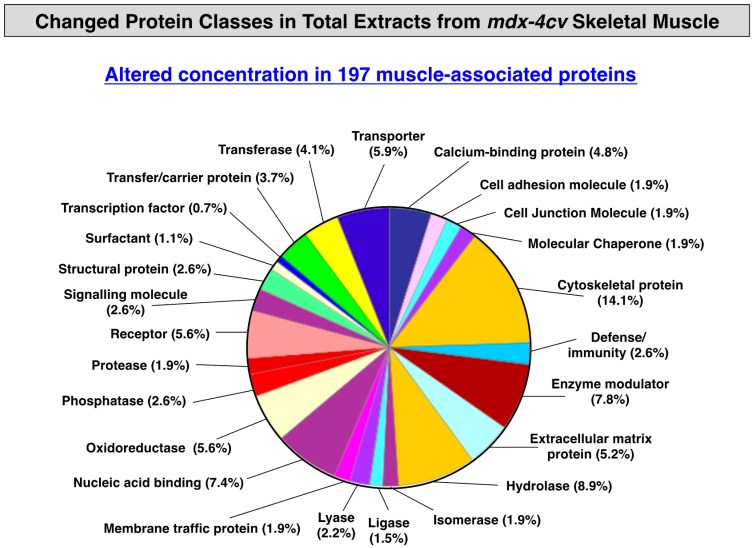
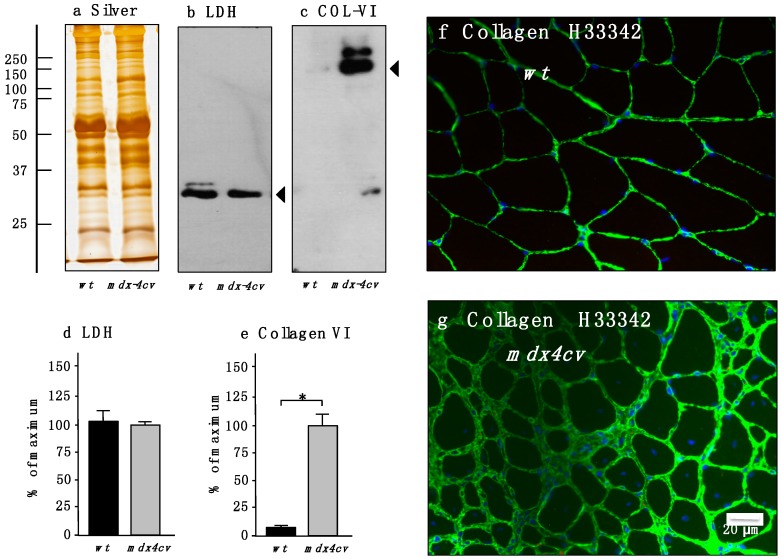
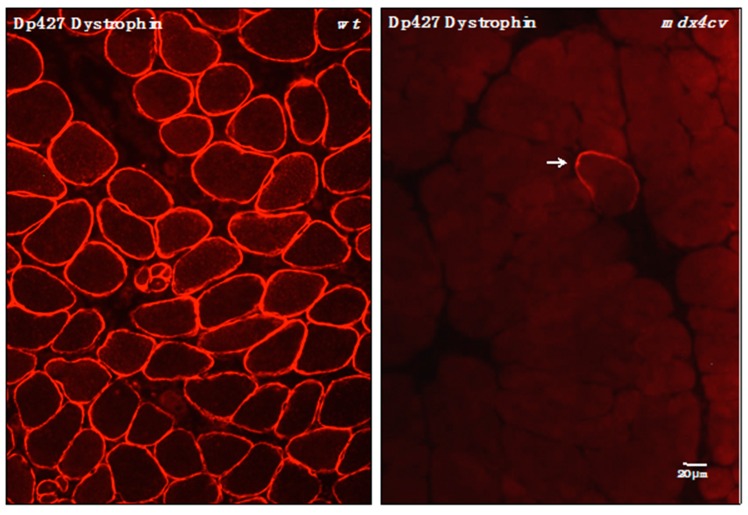
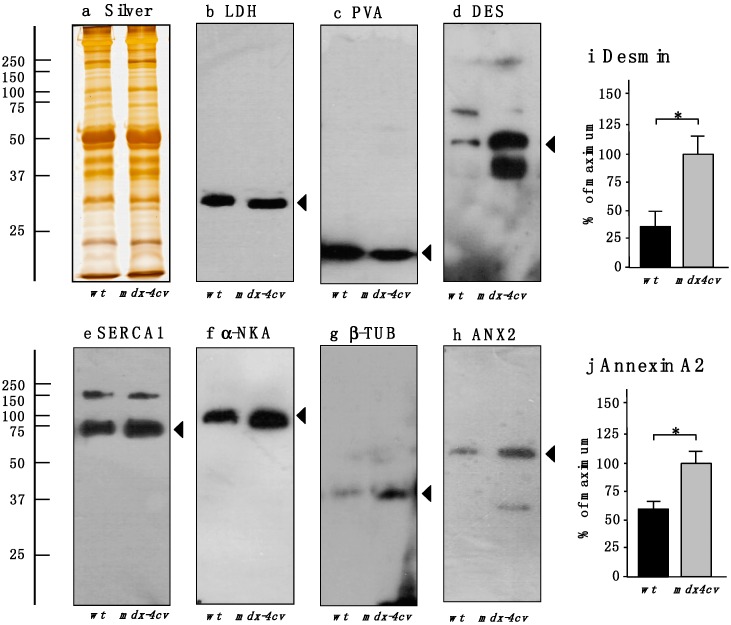
The full-length dystrophin protein isoform of 427 kDa (Dp427), the absence of which represents the principal abnormality in X-linked muscular dystrophy, is difficult to identify and characterize by routine proteomic screening approaches of crude tissue extracts. This is probably related to its large molecular size, its close association with the sarcolemmal membrane, and its existence within a heterogeneous glycoprotein complex. Here, we used a careful extraction procedure to isolate the total protein repertoire from normal dystrophic skeletal muscles, in conjunction with label-free mass spectrometry, and successfully identified Dp427 by proteomic means. In contrast to a considerable number of previous comparative studies of the total skeletal muscle proteome, using whole tissue proteomics we show here for the first time that the reduced expression of this membrane cytoskeletal protein is the most significant alteration in dystrophinopathy. This agrees with the pathobiochemical concept that the almost complete absence of dystrophin is the main defect in Duchenne muscular dystrophy and that the mouse model of dystrophinopathy exhibits only very few revertant fibers. Significant increases in collagens and associated fibrotic marker proteins, such as fibronectin, biglycan, asporin, decorin, prolargin, mimecan, and lumican were identified in dystrophin-deficient muscles. The up-regulation of collagen in muscles was confirmed by immunofluorescence microscopy and immunoblotting. Thus, this is the first mass spectrometric study of crude tissue extracts that puts the proteomic identification of dystrophin in its proper pathophysiological context.
427 kDa的全长抗肌萎缩蛋白(Dp427)的缺失是X连锁肌营养不良的主要异常表现,通过对粗制组织提取物进行常规蛋白质组学筛选方法很难识别和表征它。这可能与其大分子尺寸、与肌膜的紧密结合以及它在异质糖蛋白复合物中的存在有关。在这里,我们采用了一种精细的提取方法,结合无标记质谱技术,从正常和营养不良的骨骼肌中分离出总蛋白质库,并通过蛋白质组学方法成功鉴定出Dp427。与之前大量关于全骨骼肌蛋白质组的比较研究不同,我们在此首次通过全组织蛋白质组学表明,这种膜细胞骨架蛋白表达的降低是肌营养不良症中最显著的改变。这与病理生物化学概念一致,即抗肌萎缩蛋白几乎完全缺失是杜兴氏肌营养不良的主要缺陷,并且肌营养不良症的小鼠模型仅表现出极少数的回复纤维。在缺乏抗肌萎缩蛋白的肌肉中,胶原蛋白和相关纤维化标记蛋白(如纤连蛋白、双糖链蛋白聚糖、抑瘤素、核心蛋白聚糖、脯氨酸富含蛋白、 mimecan和光蛋白聚糖)显著增加。通过免疫荧光显微镜和免疫印迹法证实了肌肉中胶原蛋白的上调。因此,这是首次对粗制组织提取物进行的质谱研究,将抗肌萎缩蛋白的蛋白质组学鉴定置于适当的病理生理背景中。