James Andrew M, Hoogewijs Kurt, Logan Angela, Hall Andrew R, Ding Shujing, Fearnley Ian M, Murphy Michael P
Mitochondrial Biology Unit, Medical Research Council, Cambridge CB2 0XY, UK.
Mitochondrial Biology Unit, Medical Research Council, Cambridge CB2 0XY, UK; Laboratory of Molecular Biology, Medical Research Council, Cambridge CB2 0QH, UK; The Wellcome Trust Centre for Mitochondrial Research, Institute for Cell and Molecular Biosciences, The Medical School, Newcastle University, Newcastle upon Tyne NE2 4HH, UK.
Cell Rep. 2017 Feb 28;18(9):2105-2112. doi: 10.1016/j.celrep.2017.02.018.
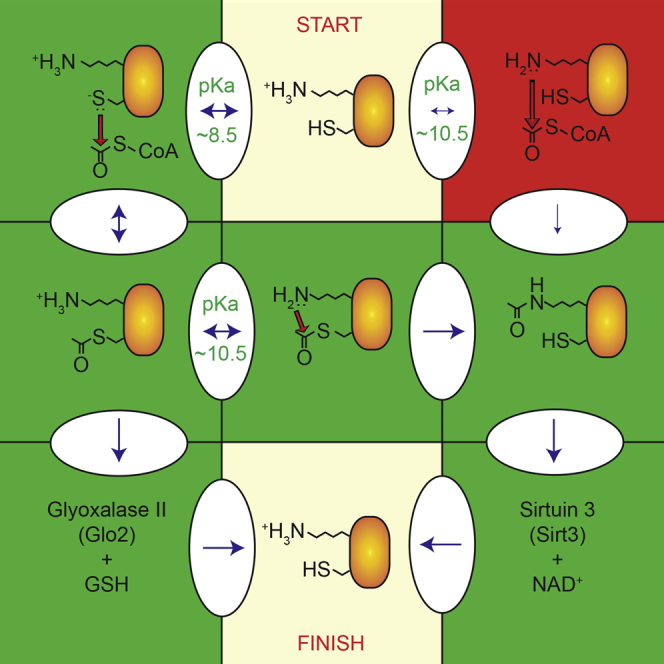
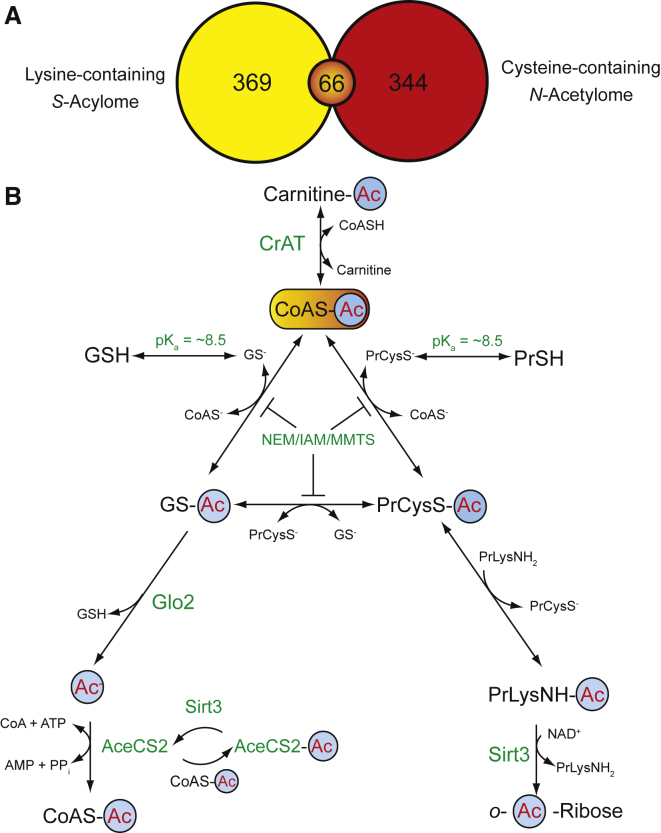
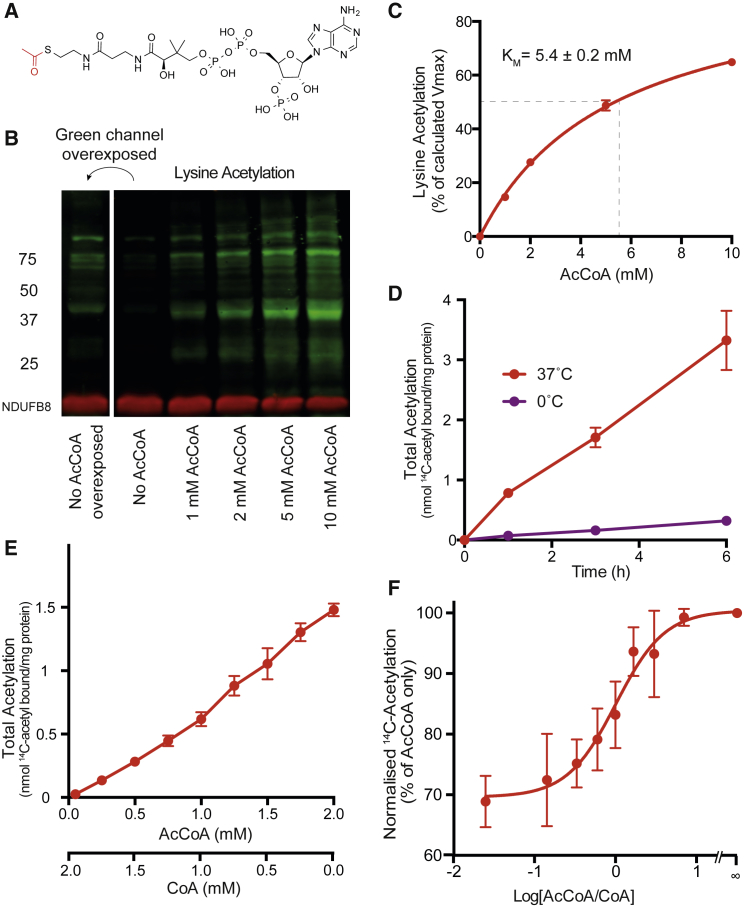
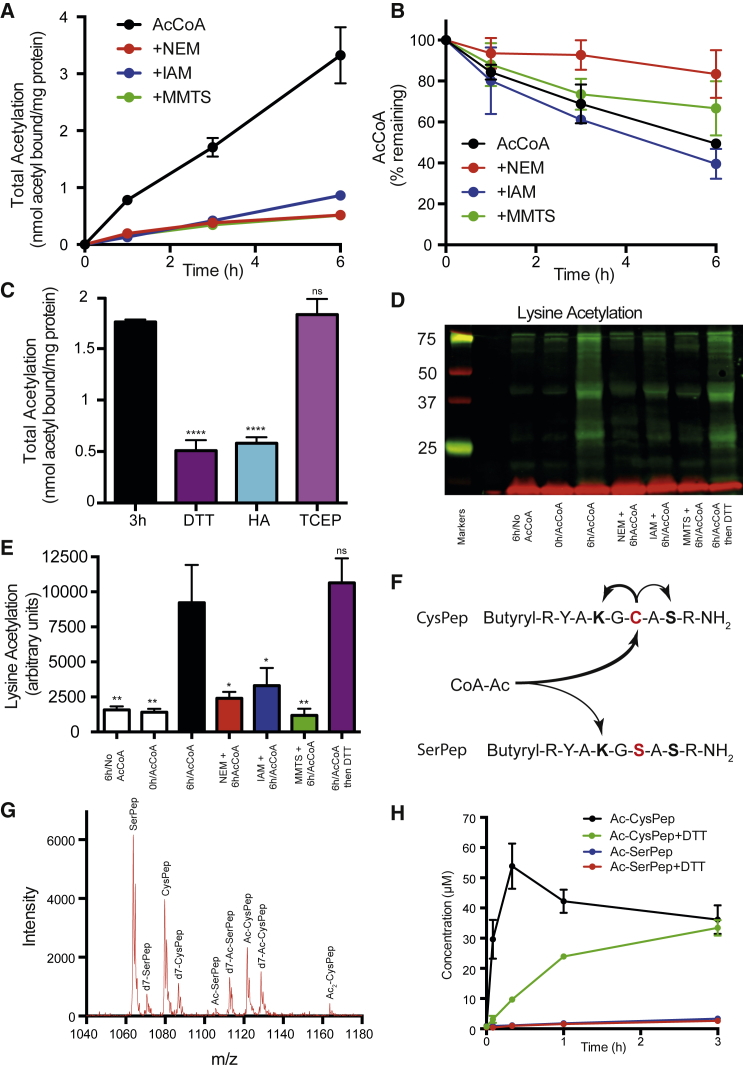
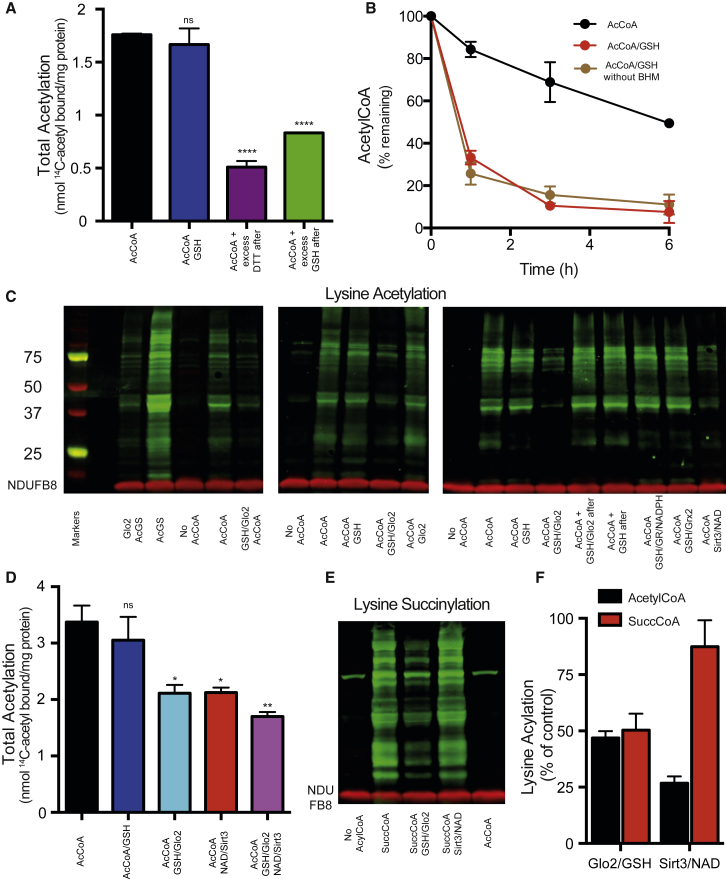
Acetyl coenzyme A (AcCoA), a key intermediate in mitochondrial metabolism, N-acetylates lysine residues, disrupting and, in some cases, regulating protein function. The mitochondrial lysine deacetylase Sirtuin 3 (Sirt3) reverses this modification with benefits reported in diabetes, obesity, and aging. We show that non-enzymatic lysine N-acetylation by AcCoA is greatly enhanced by initial acetylation of a cysteine residue, followed by SN-transfer of the acetyl moiety to a nearby lysine on mitochondrial proteins and synthetic peptides. The frequent occurrence of an S-acetyl intermediate before lysine N-acetylation suggests that proximity to a thioester is a key determinant of lysine susceptibility to acetylation. The thioesterase glyoxalase II (Glo2) can limit protein S-acetylation, thereby preventing subsequent lysine N-acetylation. This suggests that the hitherto obscure role of Glo2 in mitochondria is to act upstream of Sirt3 in minimizing protein N-acetylation, thus limiting protein dysfunction when AcCoA accumulates.
乙酰辅酶A(AcCoA)是线粒体代谢中的关键中间体,可对赖氨酸残基进行N - 乙酰化修饰,在某些情况下会破坏并调节蛋白质功能。线粒体赖氨酸脱乙酰酶沉默调节蛋白3(Sirt3)可逆转这种修饰,在糖尿病、肥胖症和衰老方面均有相关益处的报道。我们发现,半胱氨酸残基的初始乙酰化会极大增强AcCoA介导的非酶促赖氨酸N - 乙酰化,随后乙酰基通过SN - 转移至线粒体蛋白质和合成肽上附近的赖氨酸。赖氨酸N - 乙酰化之前频繁出现S - 乙酰中间体,这表明靠近硫酯是赖氨酸乙酰化敏感性的关键决定因素。硫酯酶乙二醛酶II(Glo2)可限制蛋白质的S - 乙酰化,从而防止随后的赖氨酸N - 乙酰化。这表明,Glo2在线粒体中迄今尚不明确的作用是在Sirt3上游发挥作用,使蛋白质N - 乙酰化降至最低,从而在AcCoA积累时限制蛋白质功能障碍。