Chen Tao, Wang Hui, Yang Peng, He Zhen-Yu
Department of General Surgery, The Second Clinical Medical College of Nanjing Medical University.
Department of General Surgery, Second Affiliated Hospital of Nanjing Medical University, Nanjing, Jiangsu, People's Republic of China.
Onco Targets Ther. 2017 Feb 17;10:993-1000. doi: 10.2147/OTT.S128588. eCollection 2017.
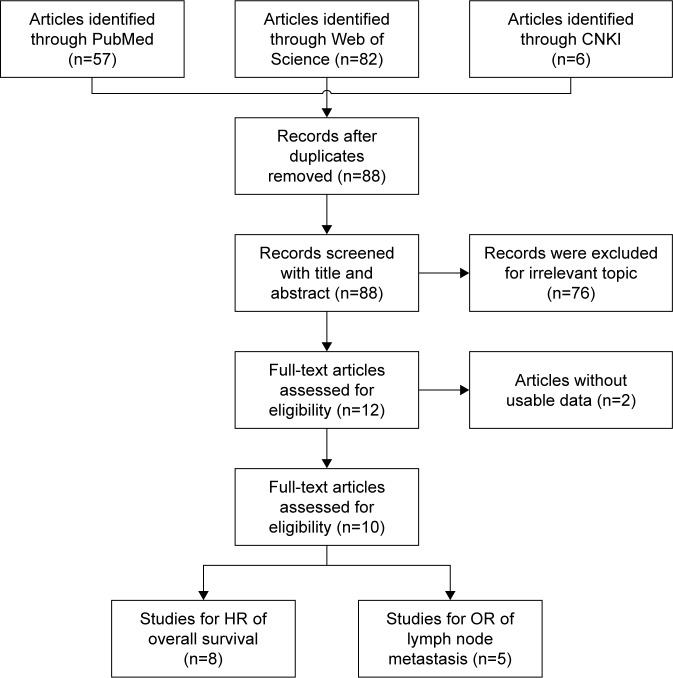
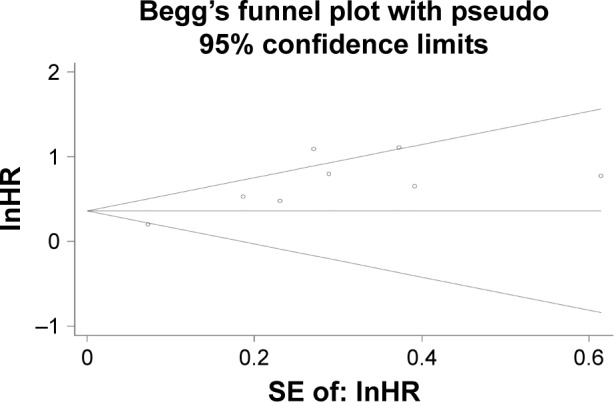
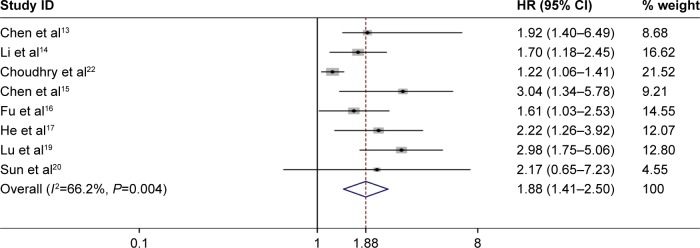
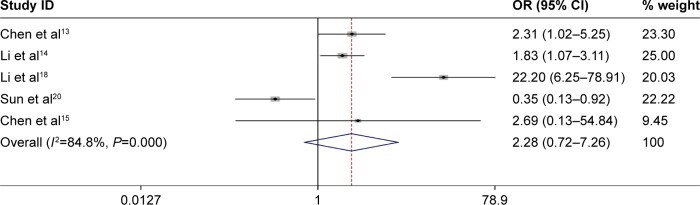
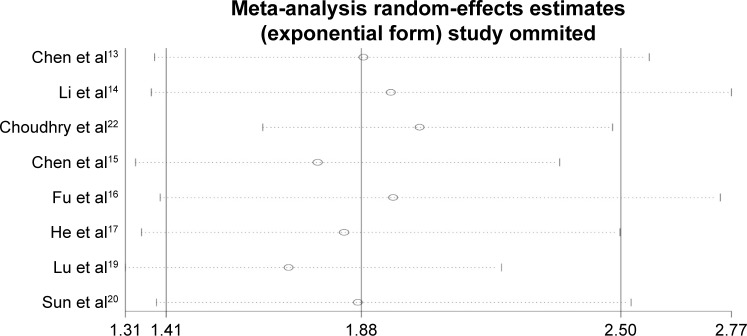
A number of studies have revealed that nuclear paraspeckle assembly transcript 1 (NEAT1), a long noncoding RNA (lncRNA), was aberrantly regulated in various cancers. High NEAT1 expression was associated with a poor prognosis and an increased risk of lymph node metastasis (LNM) in cancer patients. This meta-analysis was conducted to identify the potential value of NEAT1 as a biomarker for cancer prognosis. We searched the electronic databases PubMed, Web of Science, and China National Knowledge Infrastructure (up to November 13, 2016) to collect all relevant studies to explore the association between the expression of lncRNA NEAT1 and overall survival (OS) and LNM. The results showed that cancer patients with high NEAT1 expression had a poorer OS than those with low NEAT1 expression (hazard ratio: 1.88, 95% confidence interval [CI]: 1.41-2.50, =0.000). Subgroup analyses by cancer type and sample size indicated that digestive system cancer patients with high NEAT1 expression experienced an increased risk of developing LNM (odds ratio: 1.96, 95% CI: 1.25-3.06, =0.003). In conclusion, the present meta-analysis showed that high expression of NEAT1 might potentially serve as a reliable biomarker for poor clinical outcome in various cancers. However, owing to the limited size of samples, further clinical studies are required to verify our findings.
多项研究表明,核旁斑组装转录本1(NEAT1),一种长链非编码RNA(lncRNA),在各种癌症中受到异常调控。NEAT1高表达与癌症患者预后不良及淋巴结转移(LNM)风险增加相关。本荟萃分析旨在确定NEAT1作为癌症预后生物标志物的潜在价值。我们检索了电子数据库PubMed、科学网和中国知网(截至2016年11月13日),收集所有相关研究,以探讨lncRNA NEAT1表达与总生存期(OS)及LNM之间的关联。结果显示,NEAT1高表达的癌症患者的OS比NEAT1低表达的患者更差(风险比:1.88,95%置信区间[CI]:1.41 - 2.50,P = 0.000)。按癌症类型和样本量进行的亚组分析表明,NEAT1高表达的消化系统癌症患者发生LNM的风险增加(优势比:1.96,95% CI:1.25 - 3.06,P = 0.003)。总之,本荟萃分析表明,NEAT1高表达可能潜在地作为各种癌症不良临床结局的可靠生物标志物。然而,由于样本量有限,需要进一步的临床研究来验证我们的发现。