Department of Intensive Care Medicine, Parc de Salut Mar, Passeig Maritim 25-29, 08003, Barcelona, Spain.
Department of Medicine, Universitat Pompeu Fabra, Barcelona, Spain.
Eur J Clin Microbiol Infect Dis. 2017 Aug;36(8):1393-1403. doi: 10.1007/s10096-017-2945-4. Epub 2017 Mar 3.
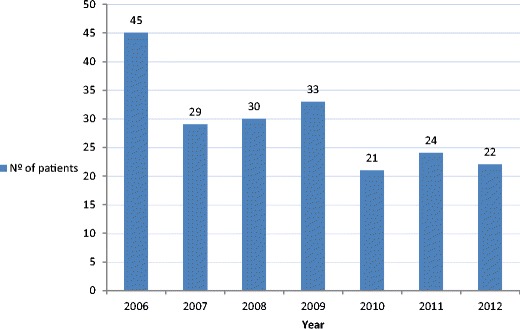
The objectives of this investigation were to analyze the clinical patterns, risk groups, prognostic factors, and mortality of infections caused by Aeromonas spp. This was a retrospective study of adult patients with Aeromonas spp. isolates attended at the Hospital del Mar in Barcelona, Spain, between January 2006 and December 2012. Epidemiological data, antimicrobial susceptibility, clinical patterns, underlying illnesses, type of infection, admission to the intensive care unit (ICU), number of episodes, coinfection, antimicrobial therapy, and evolution were analyzed. A total of 221 clinical samples from 204 patients were positive for Aeromonas spp. The mean age of the patients was 67.6 years. The main clinical form of presentation was gastrointestinal (78.4%). Malignancy was the main risk group in 69 (33.8%) patients, and 48 (23.5%) were previously healthy. Twenty-one patients (10.3%) were admitted to the ICU. Infections were acquired in the hospital in 52.5% of the patients, and 28.9% were polymicrobial. The overall mortality (after 1 year of follow-up from the first positive culture) was 26.5%. Univariate analysis identified an association between increased mortality and the following variables: age ≥80 years, hospitalization, admission to the ICU, malignancy, extraintestinal infection, and appropriate antimicrobial therapy. In the multivariate analysis, age ≥80 years [odds ratio (OR), 4.37 [95% confidence interval (CI), 1.68-11.35; p = 0.002]], admission to the ICU (OR, 6.59 [95% CI, 2.17-19.99; p = 0.001]), and malignancy (OR, 3.62 [95% CI, 1.32-9.90; p = 0.012]) were significantly associated with mortality. Aeromonas infections are mainly gastrointestinal. The 1-year follow-up mortality rate was high. Old age (age ≥80 years), admission to the ICU, and malignancy were identified as independent risk factors for mortality.
本研究旨在分析气单胞菌感染的临床特征、高危人群、预后因素和死亡率。这是一项回顾性研究,纳入了 2006 年 1 月至 2012 年 12 月期间在西班牙巴塞罗那的 Hospital del Mar 就诊的成人气单胞菌分离株患者。分析了流行病学数据、抗菌药物敏感性、临床特征、基础疾病、感染类型、入住重症监护病房(ICU)、发作次数、合并感染、抗菌治疗和转归。204 例患者的 221 份临床标本中检测出气单胞菌。患者的平均年龄为 67.6 岁。主要的临床表现为胃肠道感染(78.4%)。恶性肿瘤是 69 例(33.8%)患者的主要高危人群,48 例(23.5%)患者既往健康。21 例(10.3%)患者入住 ICU。52.5%的患者在医院获得感染,28.9%的患者为混合感染。所有患者 1 年后的总体死亡率(随访自首次阳性培养开始)为 26.5%。单因素分析发现,以下变量与死亡率增加有关:年龄≥80 岁、住院、入住 ICU、恶性肿瘤、肠外感染和适当的抗菌治疗。多因素分析发现,年龄≥80 岁[比值比(OR),4.37(95%置信区间(CI),1.68-11.35;p=0.002)]、入住 ICU(OR,6.59(95%CI,2.17-19.99;p=0.001)]和恶性肿瘤(OR,3.62(95%CI,1.32-9.90;p=0.012)]与死亡率显著相关。气单胞菌感染主要为胃肠道感染。1 年随访死亡率较高。高龄(年龄≥80 岁)、入住 ICU 和恶性肿瘤是死亡的独立危险因素。