Kumar Sanjeet, Das Gitishree, Shin Han-Seung, Patra Jayanta Kumar
School of Life Sciences, Ravenshaw University Cuttack, India.
Research Institute of Biotechnology and Medical Converged Science, Dongguk University-Seoul Goyang-si, South Korea.
Front Pharmacol. 2017 Feb 14;8:52. doi: 10.3389/fphar.2017.00052. eCollection 2017.
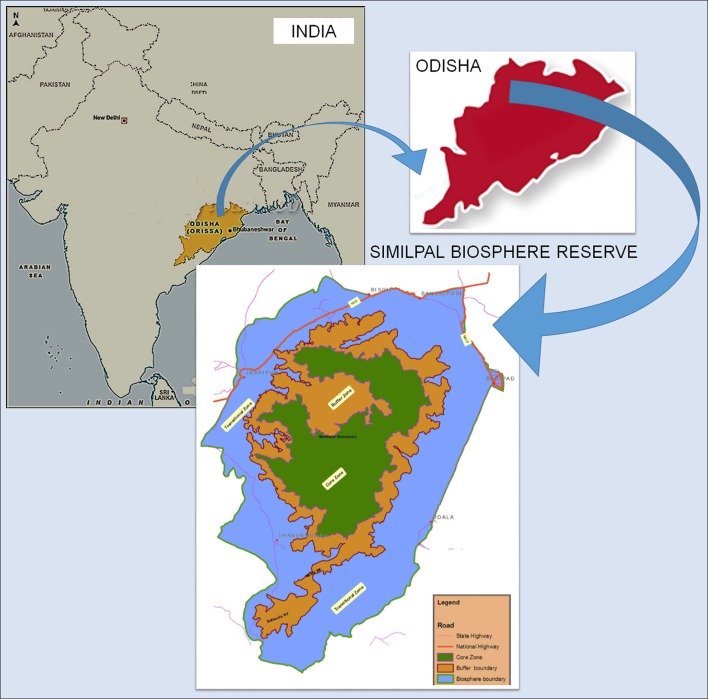
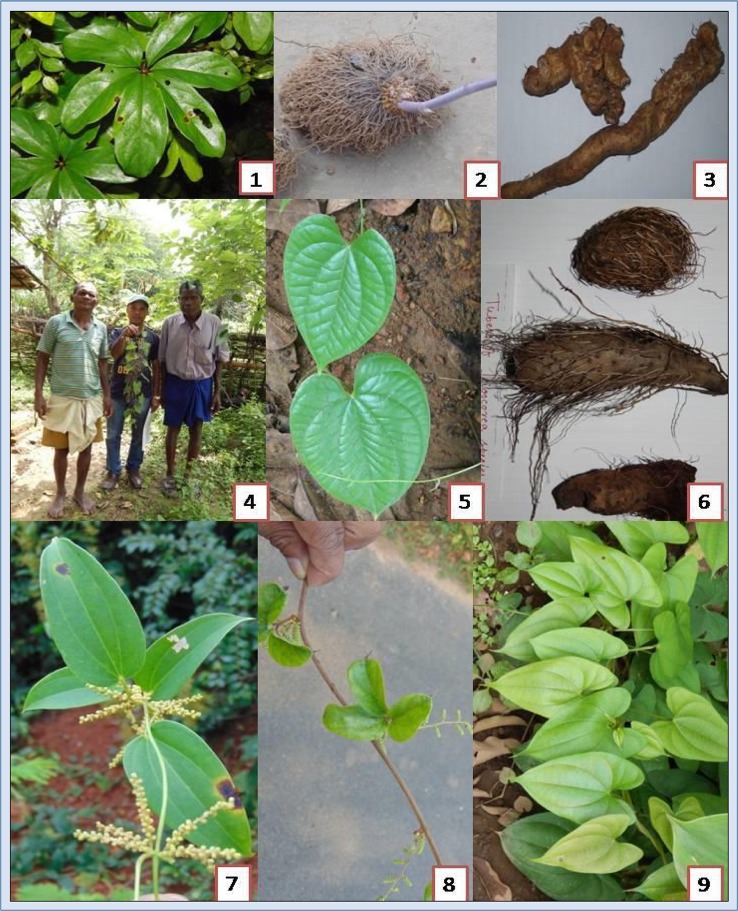
A number of wild crops remain unexplored in this world and among them some have excellent medicinal and nutritional properties. India is a harbor of biodiversity in general and phytodiversity in particular. The plant diversity is distributed from the Western Ghats to Eastern Ghats, along with the North-Eastern region and from the Greater Himalayas to the plain of Ganga. Among these distributed floral regions of the country, the Eastern Ghats are important due to their rich floral diversity. The forests of Odisha form a major part of Eastern Ghats in general and the Similipal Biosphere Reserve (SBR) in particular. The SBR is inhabited by many local communities. The food and medicinal habits of these communities are not fully explored even today. They are dependent on the forests of SBR for their food and medicine. Among their collections from forests, root and tuberous plants play a significant role. The local communities of SBR use about 89 types of tuberous plants for various purposes. is one such tuber, having maximum use among the local of SBR. However, less documentation and no specific reports are available on the food and medicinal values of the species available in this part of the World. species, popularly known as Yam worldwide and as Ban Aalu in Odisha, India, is a prime staple medicinal-food substitute for the majority of rural and local people of the state of India. Of the 13 species available in SBR, 10 species are known to be bitter in taste and unpalatable when taken raw. Since less documentation is available on the species of SBR and their traditional uses, the present study was focused on the ethnobotany, nutritional and pharmacological values of these species along its nutraceutical importance.
世界上仍有许多野生作物未被探索,其中一些具有出色的药用和营养特性。印度总体上是生物多样性的宝库,尤其是植物多样性。植物多样性从西高止山脉分布到东高止山脉,以及东北地区,从大喜马拉雅山脉到恒河平原。在该国这些分布的花卉区域中,东高止山脉因其丰富的花卉多样性而重要。奥里萨邦的森林总体上构成了东高止山脉的主要部分,特别是西姆利帕尔生物保护区(SBR)。SBR有许多当地社区居住。即使在今天,这些社区的饮食和药用习惯也没有得到充分探索。他们依靠SBR的森林获取食物和药物。在他们从森林中采集的物品中,根茎类植物起着重要作用。SBR的当地社区使用约89种块茎植物用于各种目的。 就是这样一种块茎,在SBR当地使用最为广泛。然而,关于世界这一地区现有物种的食物和药用价值,文献记载较少且没有具体报告。 物种,在世界范围内普遍被称为山药,在印度奥里萨邦被称为班阿卢,是印度该邦大多数农村和当地人主要的主食性药用食物替代品。在SBR中发现的13种 物种中,有10种已知味道苦涩,生用时口感不佳。由于关于SBR的 物种及其传统用途的文献记载较少,本研究重点关注这些物种的民族植物学、营养和药理价值及其营养保健重要性。