Ding Fei, Wang Meiling, Liu Bin, Zhang Shuoxin
College of Forestry, Northwest A&F University Yangling, China.
College of Agronomy, Northwest A&F University Yangling, China.
Front Plant Sci. 2017 Feb 20;8:244. doi: 10.3389/fpls.2017.00244. eCollection 2017.
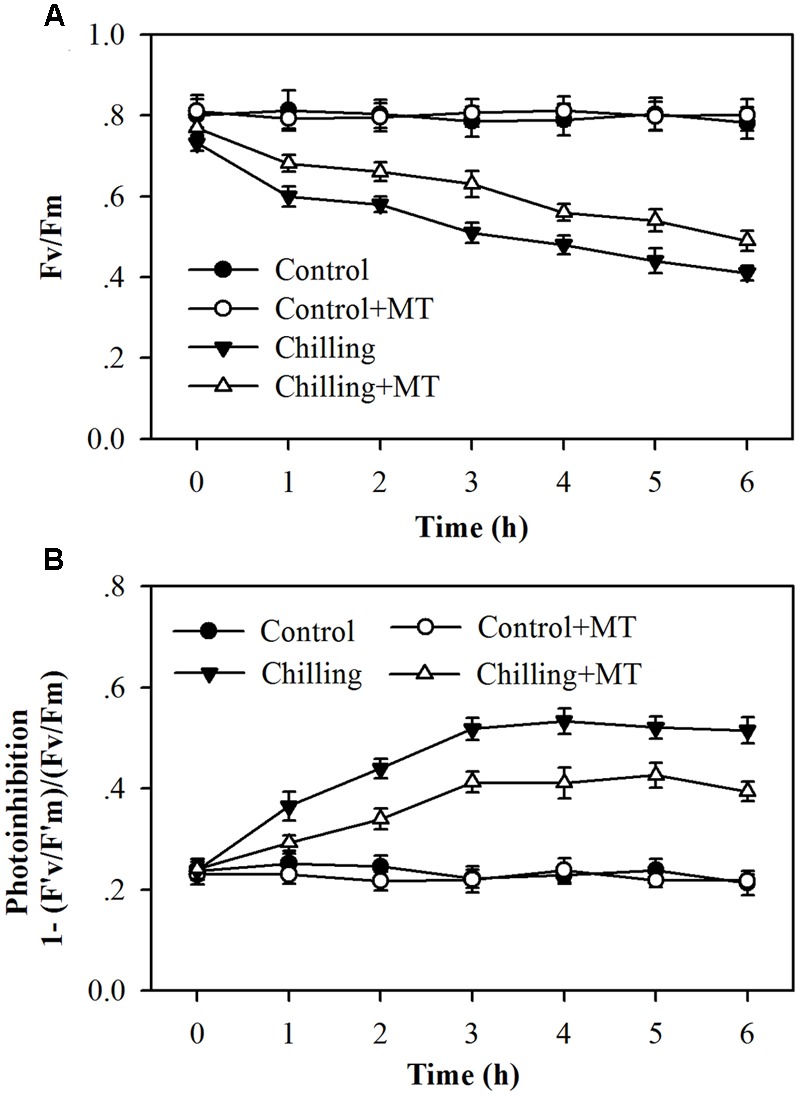
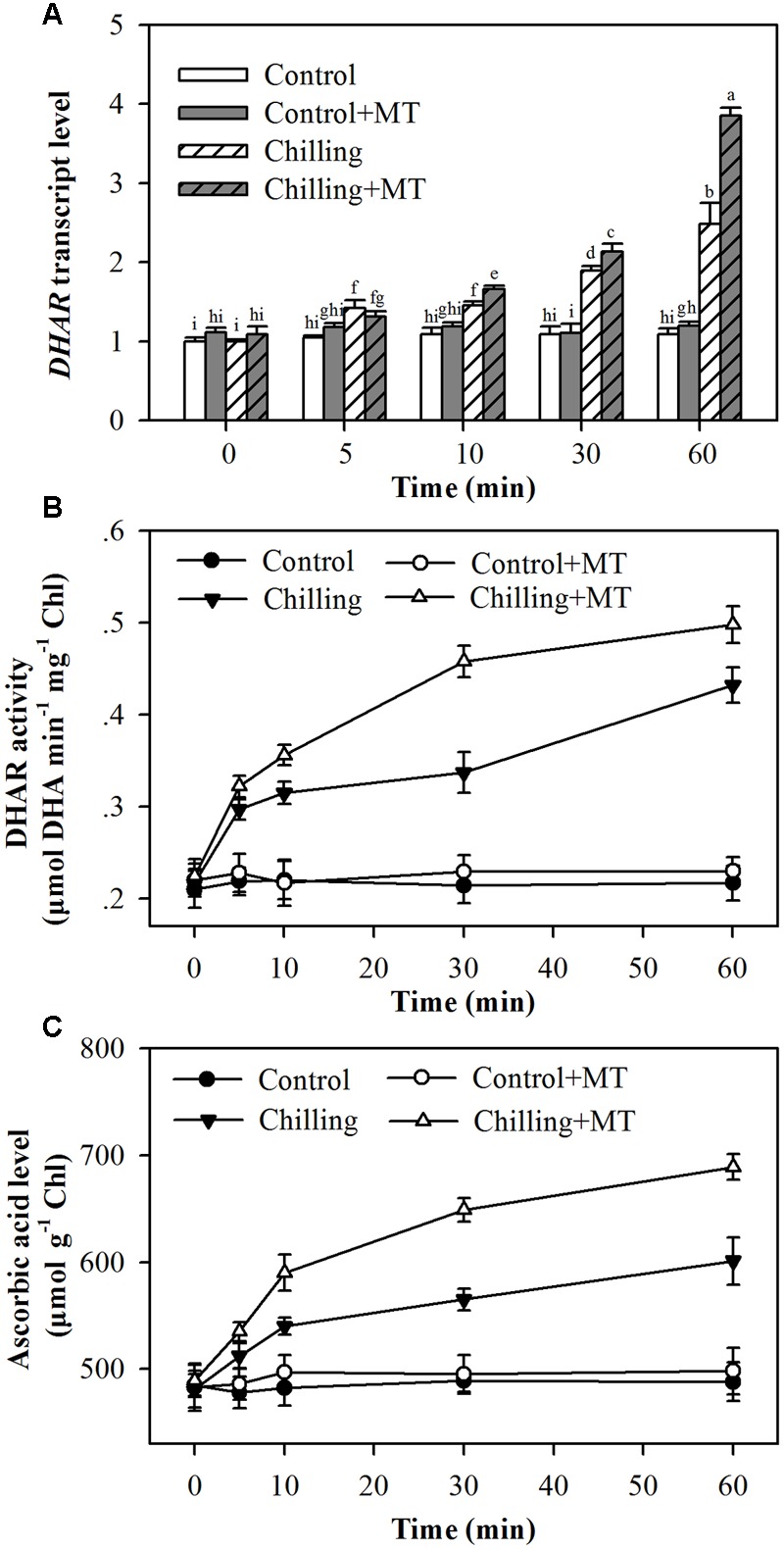
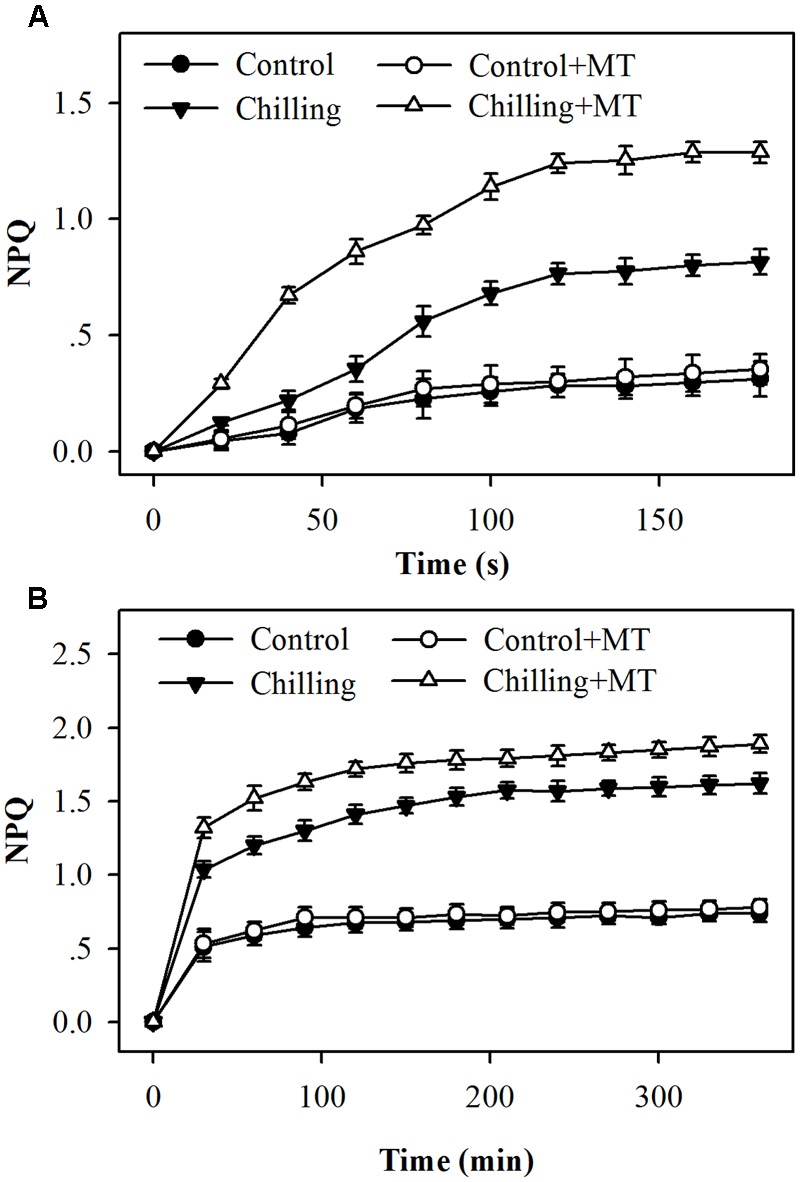
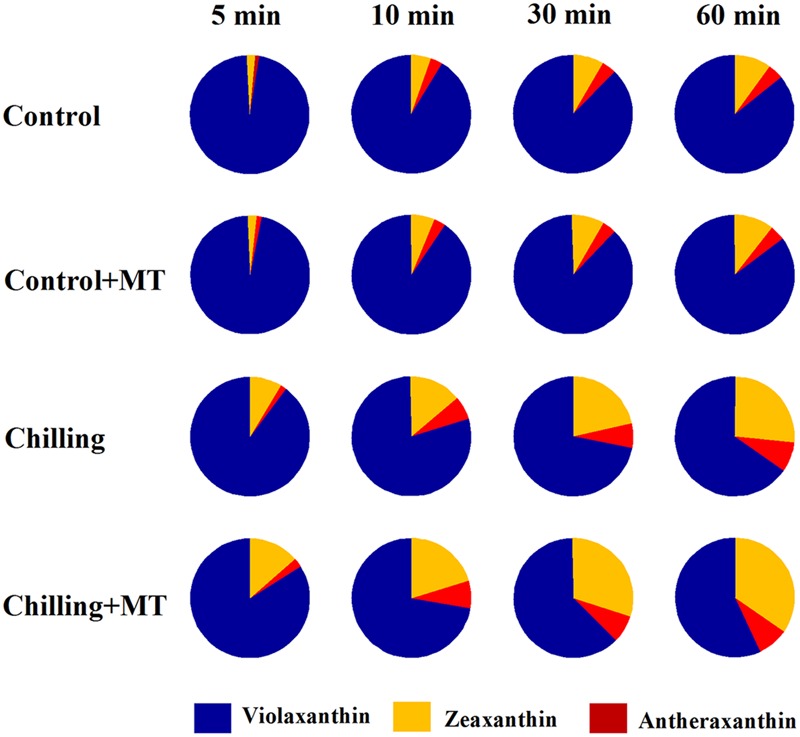
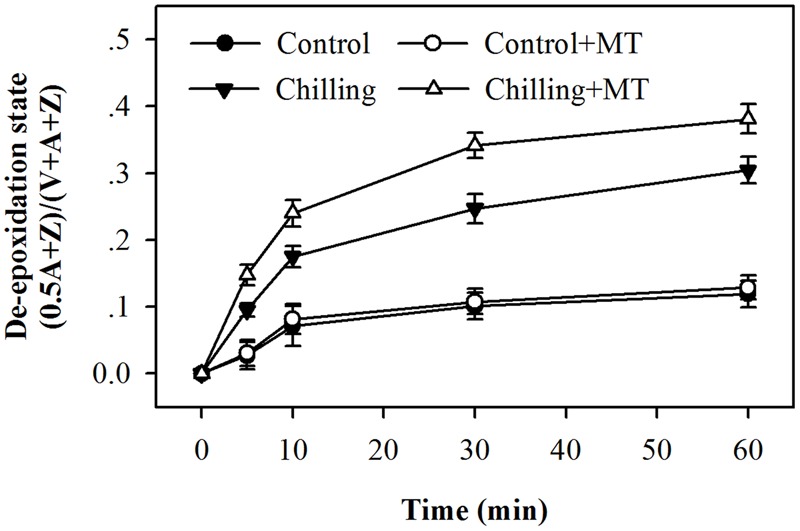
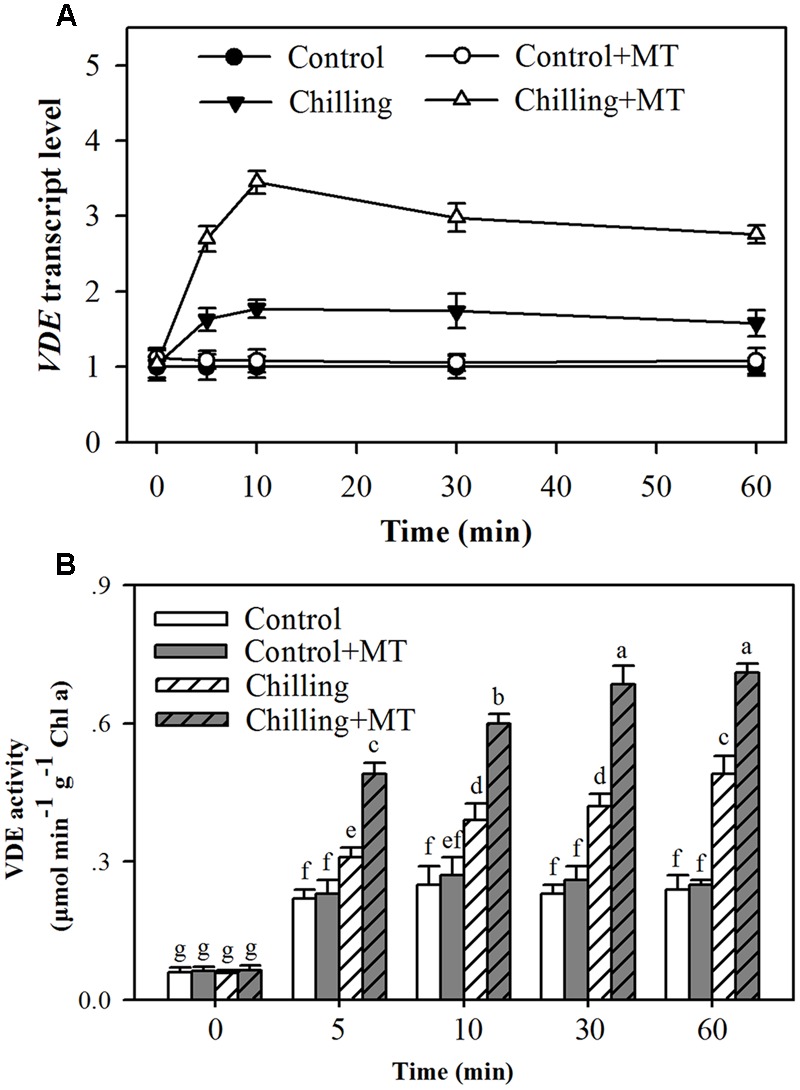
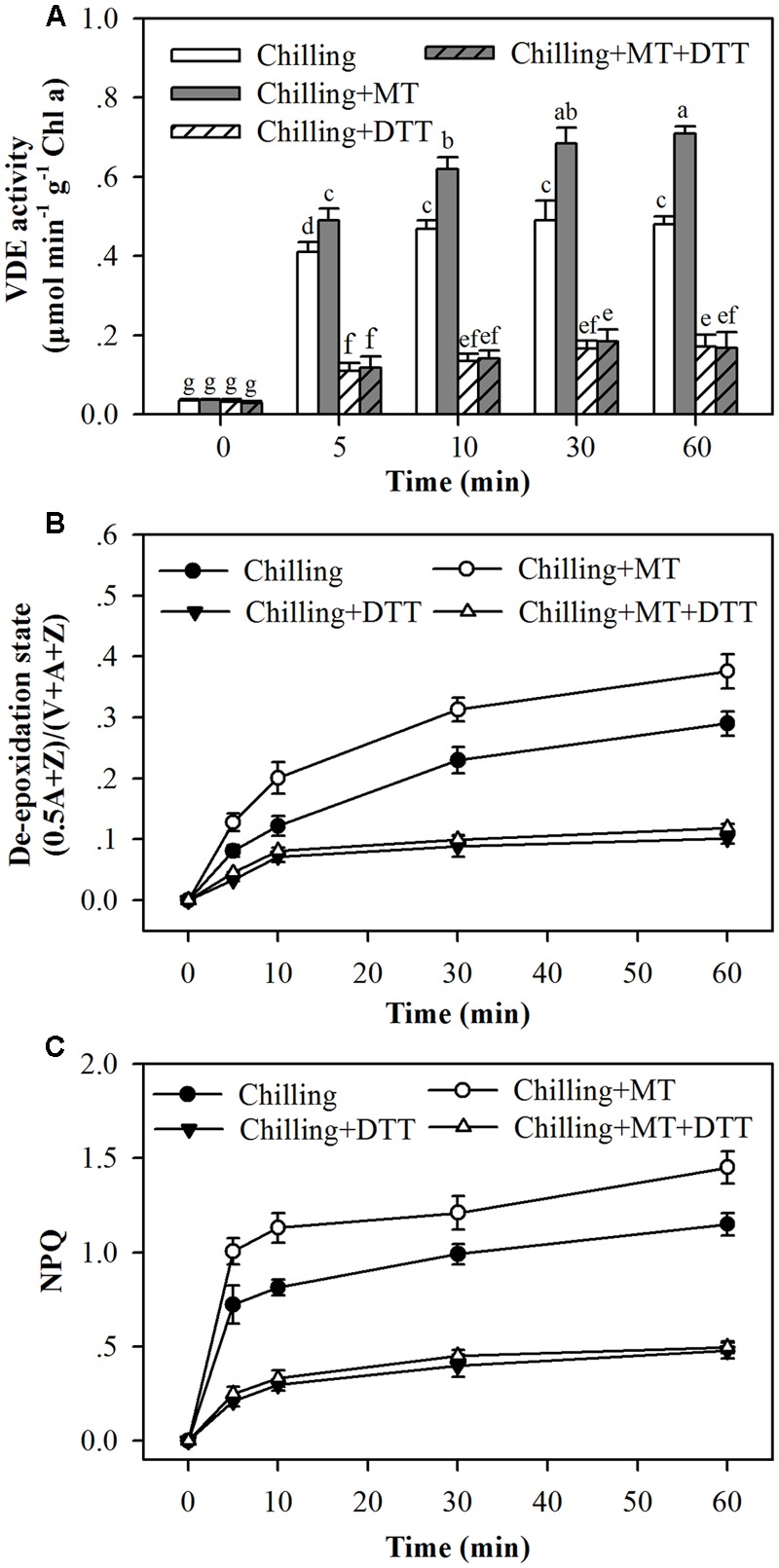
Melatonin plays an important role in tolerance to multiple stresses in plants. Recent studies have shown that melatonin relieves photoinhibition in plants under cold stress; however, the mechanisms are not fully understood. Non-photochemical quenching (NPQ) is a key process thermally dissipating excess light energy that plants employ as a protective mechanism to prevent the over reduction of photosystem II. Here, we report the effects of exogenous melatonin on NPQ and mitigation of photoinhibition in tomato seedlings exposed to moderate light during chilling. In response to moderate light during chilling, the maximum quantum yield (Fv/Fm) and the effective photochemical efficiency (F'v/F'm) of PSII were both substantially reduced, showing severe photoinhibition in tomato seedlings, whereas exogenous application of melatonin effectively alleviated the photoinhibition. Further experiment showed that melatonin accelerated the induction of NPQ in response to moderate light and maintained higher level of NPQ upon longer exposure to light during chilling. Consistent with the increased NPQ was the elevated de-epoxidation state of xanthophyll pigments in melatonin-pretreated seedlings exposed to light during chilling. Enzyme activity assay showed that violaxanthin de-epoxidase (VDE), which catalyzes the de-epoxidation reaction in the xanthophyll cycle, was activated by light and the activity was further enhanced by application of melatonin. Further analysis revealed that melatonin induced the expression of VDE gene in tomato seedlings under moderate light and chilling conditions. Ascorbic acid is an essential cofactor of VDE and the level of it was found to be increased in melatonin-pretreated seedlings. Feeding tomato seedlings with dithiothreitol, an inhibitor of VDE, blocked the effects of melatonin on the de-epoxidation state of xanthophyll pigments and the induction of NPQ. Collectively, these results suggest that exogenous melatonin mitigates photoinhibition by accelerating NPQ through the stimulation of VDE activity and the enhancement of de-epoxidation state of xanthophyll pigments.
褪黑素在植物对多种胁迫的耐受性中发挥着重要作用。最近的研究表明,褪黑素可缓解冷胁迫下植物的光抑制;然而,其机制尚未完全明确。非光化学猝灭(NPQ)是植物热耗散过剩光能的关键过程,作为一种保护机制可防止光系统II过度还原。在此,我们报道了外源褪黑素对处于冷害期间适度光照下的番茄幼苗NPQ及光抑制缓解的影响。对于冷害期间的适度光照,PSII的最大量子产量(Fv/Fm)和有效光化学效率(F'v/F'm)均显著降低,表明番茄幼苗存在严重的光抑制,而外源施用褪黑素可有效缓解这种光抑制。进一步实验表明,褪黑素可加速对适度光照的NPQ诱导,并在冷害期间长时间光照后维持较高水平的NPQ。与NPQ增加相一致的是,在冷害期间光照处理的褪黑素预处理幼苗中,叶黄素色素的脱环氧化状态升高。酶活性测定表明,催化叶黄素循环中脱环氧化反应的紫黄质脱环氧化酶(VDE)被光激活,且褪黑素处理可进一步增强其活性。进一步分析表明,褪黑素在适度光照和冷害条件下诱导番茄幼苗中VDE基因的表达。抗坏血酸是VDE的必需辅因子,且发现其在褪黑素预处理的幼苗中水平升高。用VDE抑制剂二硫苏糖醇处理番茄幼苗,可阻断褪黑素对叶黄素色素脱环氧化状态和NPQ诱导的影响。总体而言,这些结果表明,外源褪黑素通过刺激VDE活性和增强叶黄素色素的脱环氧化状态来加速NPQ,从而减轻光抑制。