Tan Mun Hua, Gan Han Ming, Lee Yin Peng, Poore Gary C B, Austin Christopher M
School of Science, Monash University Malaysia, Bandar Sunway, Selangor, Malaysia; Genomics Facility, Tropical Medicine and Biology Platform, Monash University Malaysia, Bandar Sunway, Selangor, Malaysia.
Museums Victoria , Melbourne, VIC , Australia.
PeerJ. 2017 Mar 1;5:e2982. doi: 10.7717/peerj.2982. eCollection 2017.
Whole mitochondrial DNA is being increasingly utilized for comparative genomic and phylogenetic studies at deep and shallow evolutionary levels for a range of taxonomic groups. Although mitogenome sequences are deposited at an increasing rate into public databases, their taxonomic representation is unequal across major taxonomic groups. In the case of decapod crustaceans, several infraorders, including Axiidea (ghost shrimps, sponge shrimps, and mud lobsters) and Caridea (true shrimps) are still under-represented, limiting comprehensive phylogenetic studies that utilize mitogenomic information.
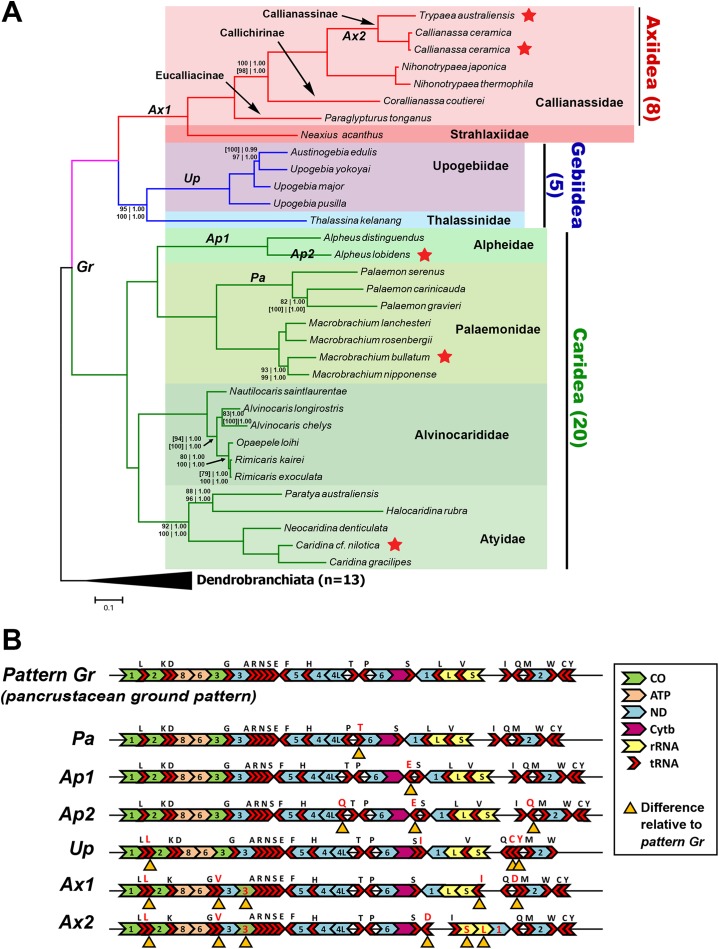
Sequence reads from partial genome scans were generated using the Illumina MiSeq platform and mitogenome sequences were assembled from these low coverage reads. In addition to examining phylogenetic relationships within the three infraorders, Axiidea, Gebiidea, and Caridea, we also investigated the diversity and frequency of codon usage bias and mitogenome gene order rearrangements.
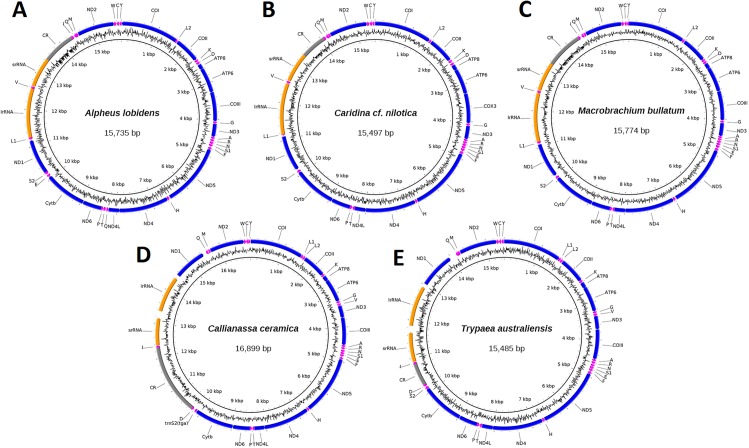
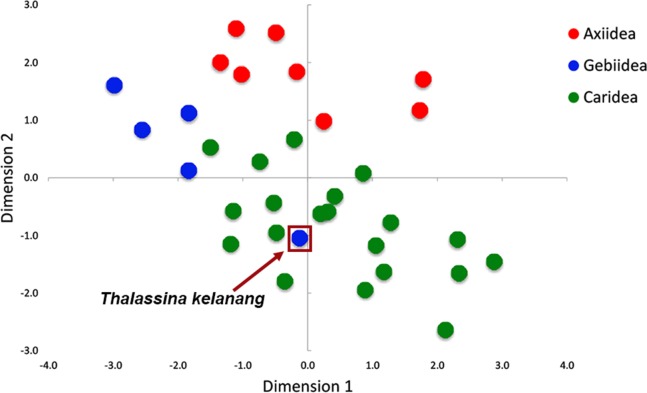
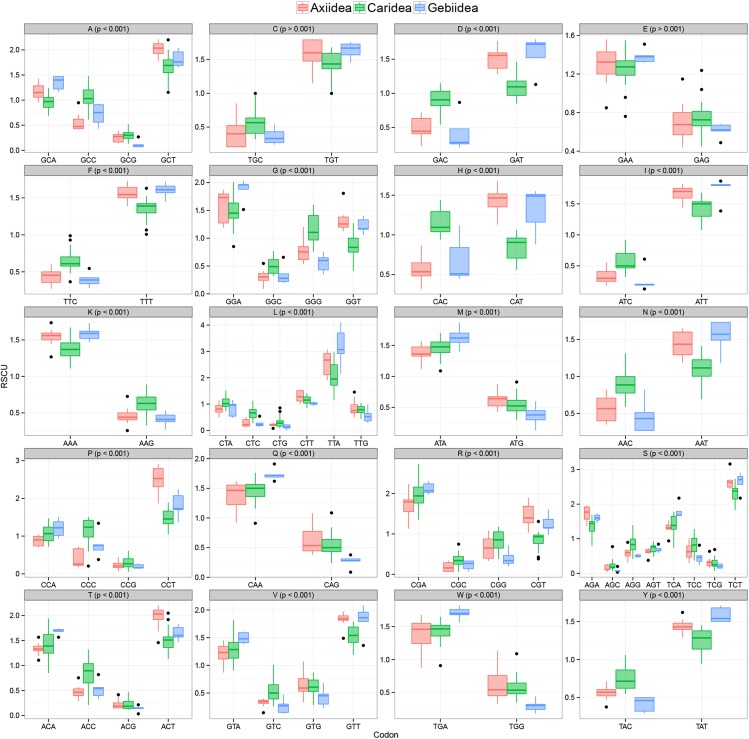
We present new mitogenome sequences for five shrimp species from Australia that includes two ghost shrimps, and , along with three caridean shrimps, , , and cf. . Strong differences in codon usage were discovered among the three infraorders and significant gene order rearrangements were observed. While the gene order rearrangements are congruent with the inferred phylogenetic relationships and consistent with taxonomic classification, they are unevenly distributed within and among the three infraorders.
Our findings suggest potential for mitogenome rearrangements to be useful phylogenetic markers for decapod crustaceans and at the same time raise important questions concerning the drivers of mitogenome evolution in different decapod crustacean lineages.
全线粒体DNA越来越多地被用于一系列分类群在深度和浅度进化水平上的比较基因组学和系统发育研究。尽管有丝分裂基因组序列以越来越快的速度存入公共数据库,但它们在主要分类群中的分类代表性并不均衡。就十足目甲壳类动物而言,包括阿西虾亚目(幽灵虾、海绵虾和泥龙虾)和真虾亚目(真虾)在内的几个下目仍然代表性不足,这限制了利用有丝分裂基因组信息的全面系统发育研究。
使用Illumina MiSeq平台生成来自部分基因组扫描的序列读数,并从这些低覆盖度读数中组装有丝分裂基因组序列。除了研究阿西虾亚目、吉比虾亚目和真虾亚目这三个下目内部的系统发育关系外,我们还研究了密码子使用偏好的多样性和频率以及有丝分裂基因组基因顺序重排情况。
我们展示了来自澳大利亚的五种虾类的新有丝分裂基因组序列,其中包括两种幽灵虾,即 和 ,以及三种真虾,即 、 和 cf. 。在这三个下目中发现了密码子使用上的显著差异,并观察到了明显的基因顺序重排。虽然基因顺序重排与推断的系统发育关系一致且与分类学分类相符,但它们在这三个下目内部和之间的分布并不均匀。
我们的研究结果表明,有丝分裂基因组重排有可能成为十足目甲壳类动物有用的系统发育标记,同时也提出了关于不同十足目甲壳类动物谱系中有丝分裂基因组进化驱动因素的重要问题。