Alghamdi Amani, Vallortigara Julie, Howlett David R, Broadstock Martin, Hortobágyi Tibor, Ballard Clive, Thomas Alan J, O'Brien John T, Aarsland Dag, Attems Johannes, Francis Paul T, Whitfield David R
King's College London, Wolfson Centre for Age-Related Diseases, London, UK.
Department of Biochemistry, King Saud University, College of Science, Riyadh, Saudi Arabia.
J Alzheimers Dis. 2017;57(2):373-386. doi: 10.3233/JAD-160946.
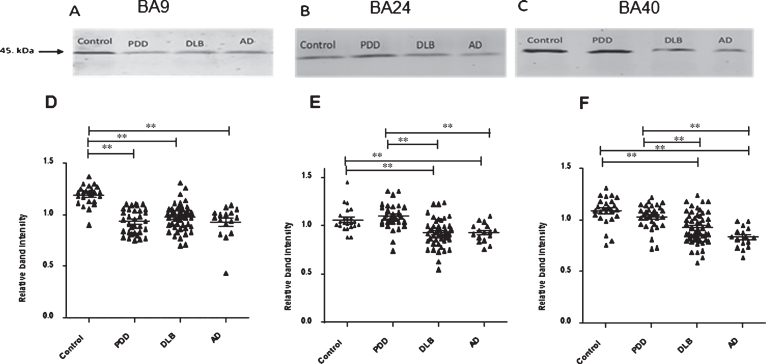
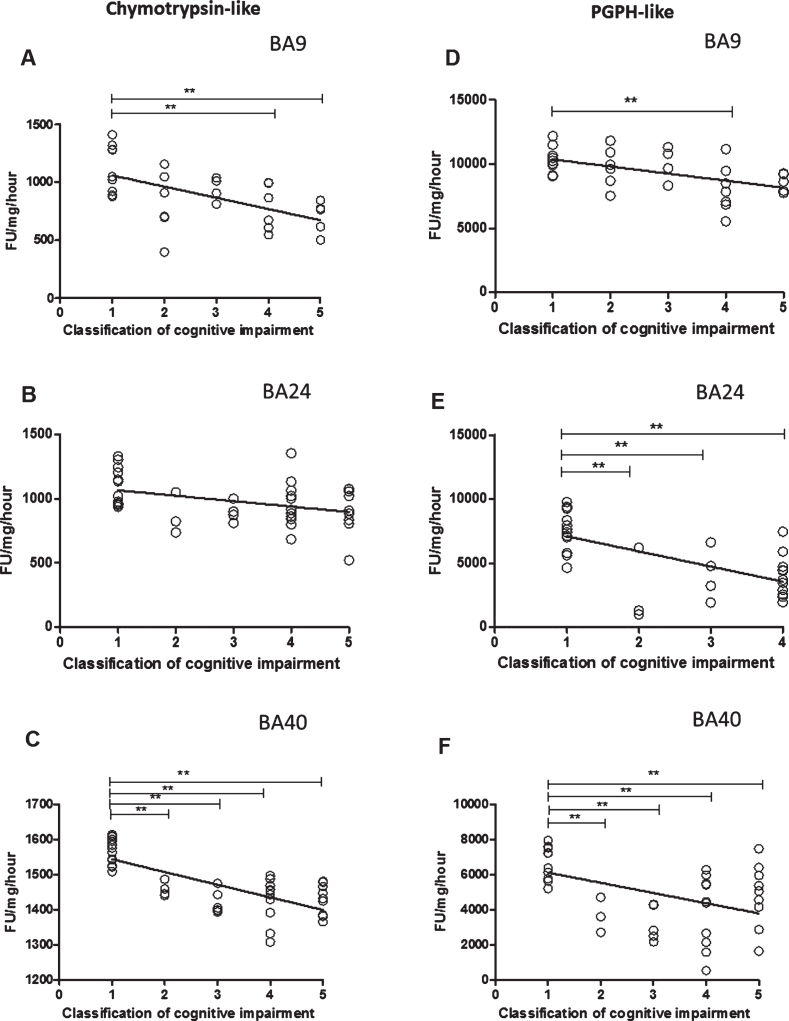
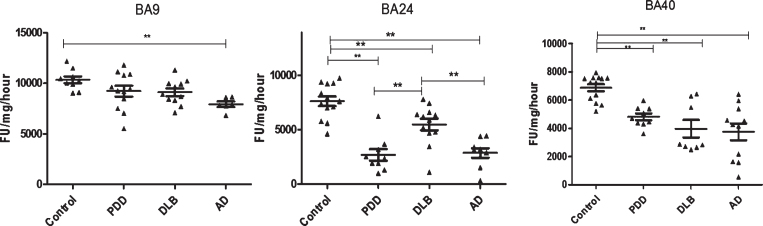
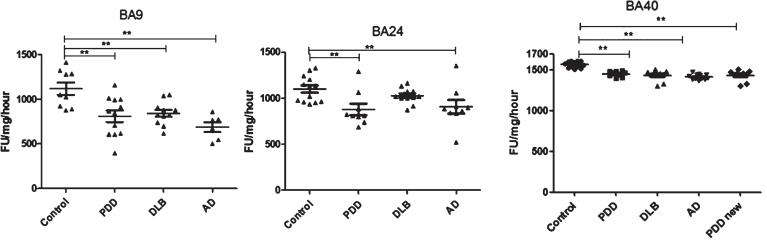
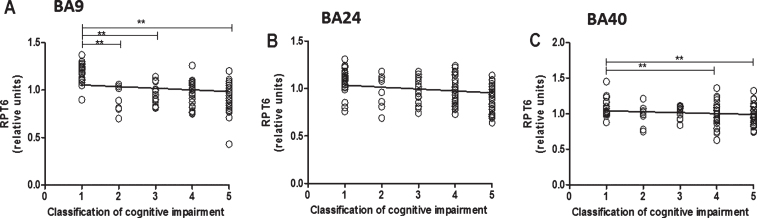
Lewy body dementia is the second most common neurodegenerative dementia and is pathologically characterized by α-synuclein positive cytoplasmic inclusions, with varying amounts of amyloid-β (Aβ) and hyperphosphorylated tau (tau) aggregates in addition to synaptic loss. A dysfunctional ubiquitin proteasome system (UPS), the major proteolytic pathway responsible for the clearance of short lived proteins, may be a mediating factor of disease progression and of the development of α-synuclein aggregates. In the present study, protein expression of a key component of the UPS, the RPT6 subunit of the 19S regulatory complex was determined. Furthermore, the main proteolytic-like (chymotrypsin- and PGPH-) activities have also been analyzed. The middle frontal (Brodmann, BA9), inferior parietal (BA40), and anterior cingulate (BA24) gyrus' cortex were selected as regions of interest from Parkinson's disease dementia (PDD, n = 31), dementia with Lewy bodies (DLB, n = 44), Alzheimer's disease (AD, n = 16), and control (n = 24) brains. Clinical and pathological data available included the MMSE score. DLB, PDD, and AD were characterized by significant reductions of RPT6 (one-way ANOVA, p < 0.001; Bonferroni post hoc test) in prefrontal cortex and parietal cortex compared with controls. Strong associations were observed between RPT6 levels in prefrontal, parietal cortex, and anterior cingulate gyrus and cognitive impairment (p = 0.001, p = 0.001, and p = 0.008, respectively). These findings highlight the involvement of the UPS in Lewy body dementia and indicate that targeting the UPS may have the potential to slow down or reduce the progression of cognitive impairment in DLB and PDD.
路易体痴呆是第二常见的神经退行性痴呆,其病理特征为α-突触核蛋白阳性胞质内含物,除突触丧失外,还有不同数量的淀粉样β蛋白(Aβ)和过度磷酸化的tau蛋白(tau)聚集物。功能失调的泛素蛋白酶体系统(UPS)是负责清除短命蛋白的主要蛋白水解途径,可能是疾病进展和α-突触核蛋白聚集物形成的介导因素。在本研究中,测定了UPS关键成分19S调节复合物的RPT6亚基的蛋白表达。此外,还分析了主要的类蛋白水解(胰凝乳蛋白酶样和PGPH样)活性。从帕金森病痴呆(PDD,n = 31)、路易体痴呆(DLB,n = 44)、阿尔茨海默病(AD,n = 16)和对照(n = 24)脑的大脑中,选择额中回(布罗德曼区,BA9)、顶下叶(BA40)和前扣带回(BA24)作为感兴趣区域。可用的临床和病理数据包括简易精神状态检查表(MMSE)评分。与对照组相比,DLB、PDD和AD的前额叶皮质和顶叶皮质中的RPT6显著降低(单因素方差分析,p < 0.001;Bonferroni事后检验)。在前额叶、顶叶皮质和前扣带回中的RPT6水平与认知障碍之间观察到强相关性(分别为p = 0.001、p = 0.001和p = 0.008)。这些发现突出了UPS在路易体痴呆中的作用,并表明针对UPS可能有减缓或减少DLB和PDD中认知障碍进展的潜力。