Silva Viviam de Oliveira, Pereira Luciano José, Murata Ramiro Mendonça
Herman Ostrow School of Dentistry, Division of Periodontology Diagnostic Sciences, Dental Hygiene & Biomedical Science, University of Southern California, Los Angeles, CA, USA.
Department of Veterinary Medicine, Physiology and Pharmacology Area, Federal University of Lavras, Lavras, Minas Gerais, Brazil.
BMC Microbiol. 2017 Mar 7;17(1):53. doi: 10.1186/s12866-017-0946-1.
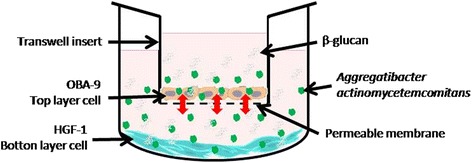
The aim of this study was to evaluate the effects of β-glucan on the expression of inflammatory mediators and metabolomic profile of oral cells [keratinocytes (OBA-9) and fibroblasts (HGF-1) in a dual-chamber model] infected by Aggregatibacter actinomycetemcomitans. The periodontopathogen was applied and allowed to cross the top layer of cells (OBA-9) to reach the bottom layer of cells (HGF-1) and induce the synthesis of immune factors and cytokines in the host cells. β-glucan (10 μg/mL or 20 μg/mL) were added, and the transcriptional factors and metabolites produced were quantified in the remaining cell layers and supernatant.
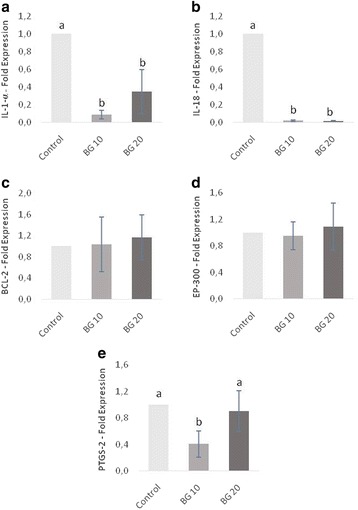
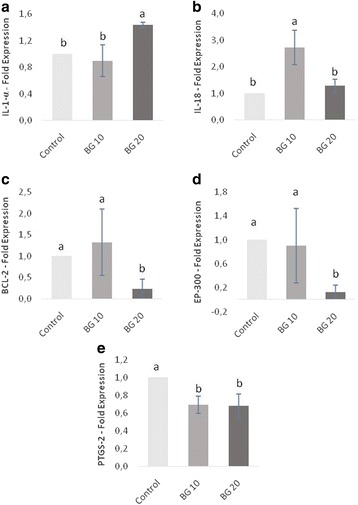
The relative expression of interleukin (IL)-1-α and IL-18 genes in HGF-1 decreased with 10 μg/mL or 20 μg/mL of β-glucan, where as the expression of PTGS-2 decreased only with 10 μg/mL. The expression of IL-1-α increased with 20 μg/mL and that of IL-18 increased with 10 μg/mL in OBA-9; the expression of BCL 2, EP 300, and PTGS-2 decreased with the higher dose of β-glucan. The production of the metabolite 4-aminobutyric acid presented lower concentrations under 20 μg/mL, whereas the concentrations of 2-deoxytetronic acid NIST and oxalic acid decreased at both concentrations used. Acetophenone, benzoic acid, and pinitol presented reduced concentrations only when treated with 10 μg/mL of β-glucan.
Treatment with β-glucans positively modulated the immune response and production of metabolites.
本研究旨在评估β-葡聚糖对受伴放线聚集杆菌感染的口腔细胞(双室模型中的角质形成细胞(OBA-9)和成纤维细胞(HGF-1))中炎症介质表达和代谢组学特征的影响。应用牙周病原体并使其穿过细胞顶层(OBA-9)到达细胞底层(HGF-1),诱导宿主细胞中免疫因子和细胞因子的合成。添加β-葡聚糖(10μg/mL或20μg/mL),并对剩余细胞层和上清液中产生的转录因子和代谢产物进行定量。
在HGF-1中,10μg/mL或20μg/mL的β-葡聚糖可使白细胞介素(IL)-1-α和IL-18基因的相对表达降低,而PTGS-2的表达仅在10μg/mL时降低。在OBA-9中,20μg/mL时IL-1-α的表达增加,10μg/mL时IL-18的表达增加;较高剂量的β-葡聚糖可使BCL 2、EP 300和PTGS-2的表达降低。代谢产物4-氨基丁酸的产生在20μg/mL以下时浓度较低,而在两种使用浓度下,2-脱氧四糖酸NIST和草酸的浓度均降低。仅在使用10μg/mL的β-葡聚糖处理时,苯乙酮、苯甲酸和松醇的浓度降低。
β-葡聚糖处理可正向调节免疫反应和代谢产物的产生。