Rehm Colin D, Drewnowski Adam
Center for Public Health Nutrition, University of Washington, Seattle, WA, 98195-3410, USA.
Nutr J. 2017 Mar 7;16(1):17. doi: 10.1186/s12937-017-0238-5.
Replacing typical American snacks with tree nuts may be an effective way to improve diet quality and compliance with the 2015-2020 Dietary Guidelines for Americans (DGAs).
To assess and quantify the impact of replacing typical snacks with composite tree nuts or almonds on diet metrics, including empty calories (i.e., added sugars and solid fats), individual fatty acids, macronutrients, nutrients of public health concern, including sodium, fiber and potassium, and summary measures of diet quality.
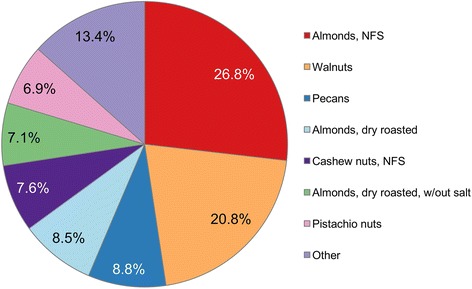
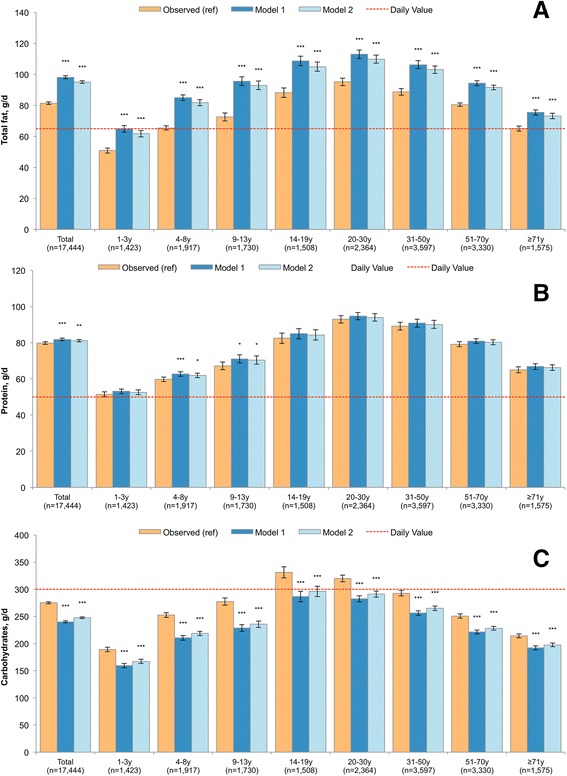
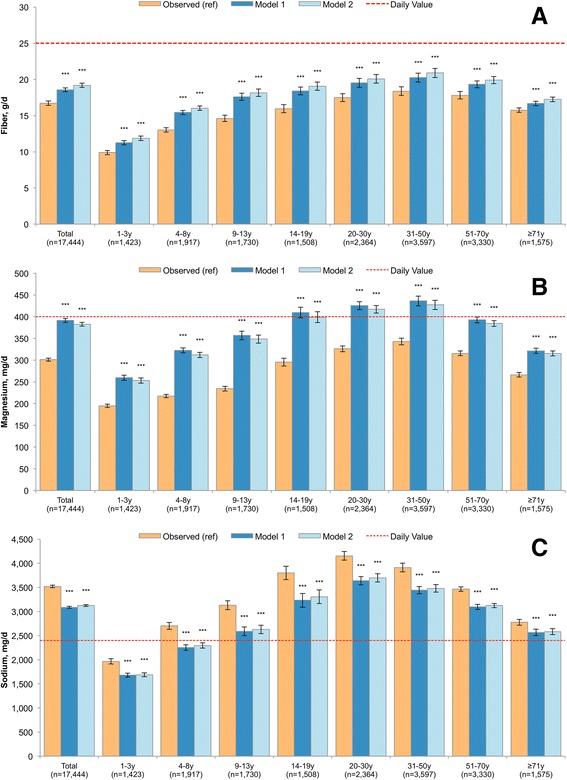
Food pattern modeling was implemented in the nationally representative 2009-2012 National Health and Examination Survey (NHANES) in a population of 17,444 children and adults. All between-meal snacks, excluding beverages, were replaced on a per calorie basis with a weighted tree nut composite, reflecting consumption patterns in the population. Model 1 replaced all snacks with tree nuts, while Model 2 exempted whole fruits, non-starchy vegetables, and whole grains (>50% of total grain content). Additional analyses were conducted using almonds only. Outcomes of interest were empty calories (i.e., solid fats and added sugars), saturated and mono- and polyunsaturated fatty acids, fiber, protein, sodium, potassium and magnesium. The Healthy Eating Index-2010, which measures adherence to the 2010 Dietary Guidelines for Americans, was used as a summary measure of diet quality.
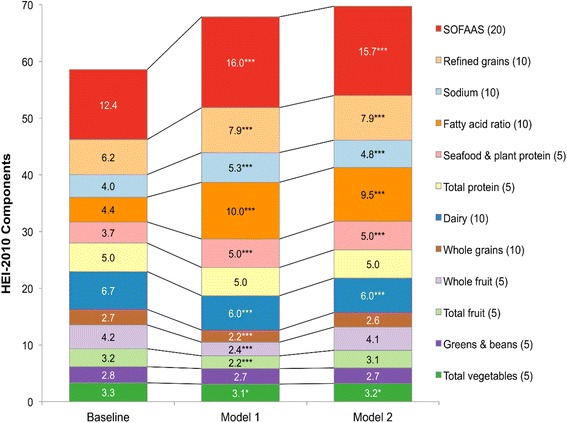
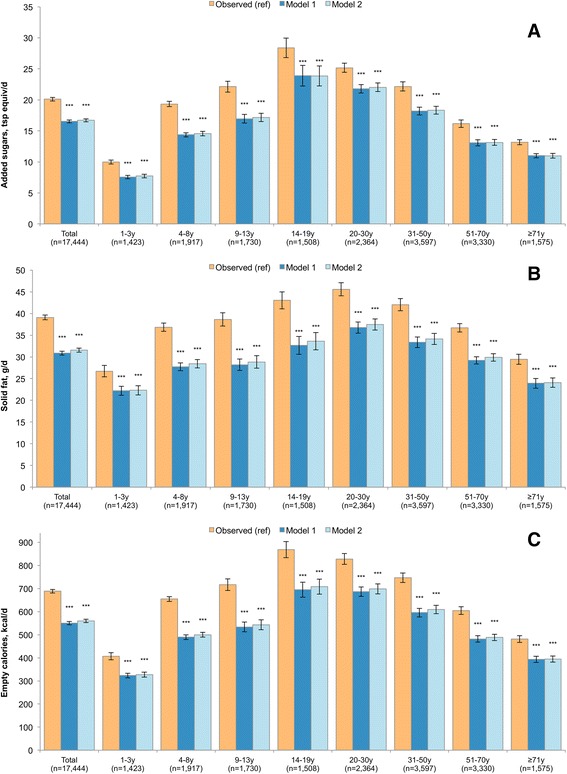
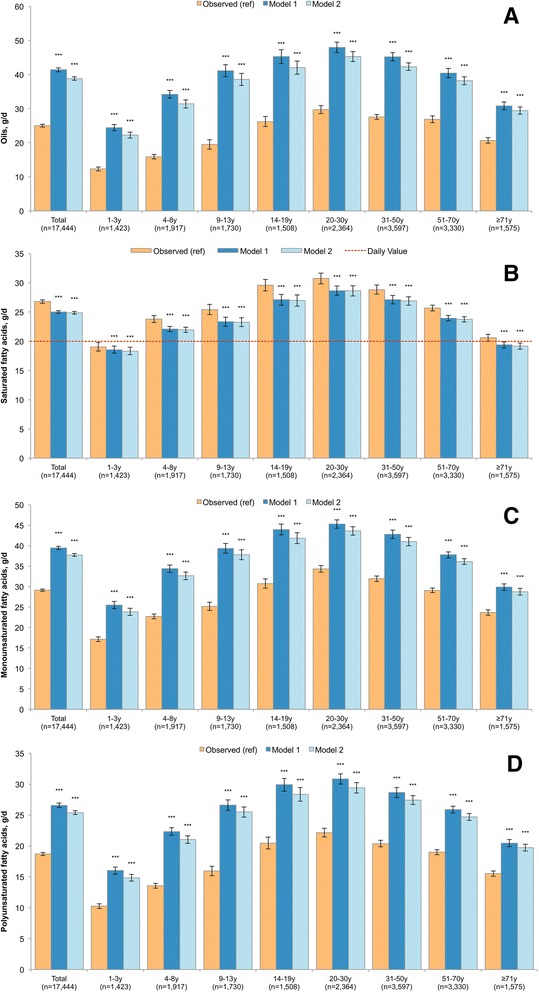
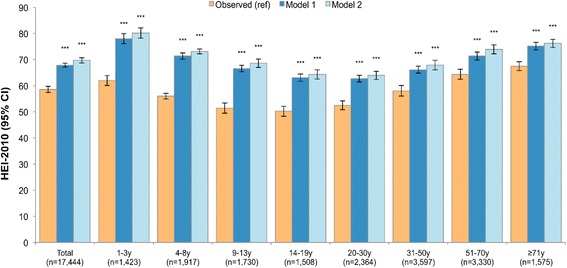
Compared to observed diets, modeled food patterns were significantly lower in empty calories (-20.1% and -18.7% in Model 1 and Model 2, respectively), added sugars (-17.8% and -16.9%), solid fats (-21.0% and -19.3%), saturated fat (-6.6% and -7.1%)., and sodium (-12.3% and -11.2%). Modeled patterns were higher in oils (65.3% and 55.2%), monounsaturated (35.4% and 26.9%) and polyunsaturated fats (42.0% and 35.7%), plant omega 3 s (53.1% and 44.7%), dietary fiber (11.1% and 14.8%), and magnesium (29.9% and 27.0%), and were modestly higher in potassium (1.5% and 2.9%). HEI-2010 scores were significantly higher in Model 1 (67.8) and in Model 2 (69.7) compared to observed diets (58.5). Replacing snacks with almonds only produced similar results; the decrease in sodium was more modest and no increase in plant omega-3 fats was observed.
Replacing between-meal snacks with tree nuts or almonds led to more nutrient-rich diets that were lower in empty calories and sodium and had more favorable fatty acid profiles. Food pattern modeling using NHANES data can be used to assess the likely nutritional impact of dietary guidance.
用坚果替代典型的美国零食可能是改善饮食质量并符合《2015 - 2020年美国膳食指南》(DGA)的有效方法。
评估并用复合坚果或杏仁替代典型零食对饮食指标的影响并进行量化,这些指标包括空热量(即添加糖和固体脂肪)、单个脂肪酸、宏量营养素、公共卫生关注的营养素(包括钠、纤维和钾)以及饮食质量的综合衡量指标。
在具有全国代表性的2009 - 2012年国家健康与营养检查调查(NHANES)中,对17444名儿童和成年人进行了食物模式建模。所有非饮料类的餐间零食按热量逐一被加权坚果组合替代,该组合反映了人群中的消费模式。模型1用坚果替代所有零食,而模型2排除了全水果、非淀粉类蔬菜和全谷物(占谷物总量的50%以上)。仅使用杏仁进行了额外分析。关注的结果为空热量(即固体脂肪和添加糖)、饱和脂肪酸、单不饱和脂肪酸和多不饱和脂肪酸、纤维、蛋白质、钠、钾和镁。《2010年健康饮食指数》用于衡量对《2010年美国膳食指南》的遵循情况,作为饮食质量的综合衡量指标。
与观察到的饮食相比,建模的食物模式在空热量方面显著降低(模型1和模型2分别降低了20.1%和18.7%)、添加糖(分别降低了17.8%和16.9%)、固体脂肪(分别降低了21.0%和19.3%)、饱和脂肪(分别降低了6.6%和7.1%)以及钠(分别降低了12.3%和11.2%)。建模模式在油类(分别增加了65.3%和55.2%)、单不饱和脂肪酸(分别增加了35.4%和26.9%)和多不饱和脂肪酸(分别增加了42.0%和35.7%)、植物ω-3脂肪酸(分别增加了53.1%和44.7%)、膳食纤维(分别增加了11.1%和14.8%)以及镁(分别增加了29.9%和27.0%)方面更高,钾含量也略有增加(分别增加了1.5%和2.9%)。与观察到的饮食(58.5)相比,模型1(67.8)和模型2(69.7)的《2010年健康饮食指数》得分显著更高。仅用杏仁替代零食产生了类似的结果;钠的降低更为适度,且未观察到植物ω-3脂肪酸增加。
用坚果或杏仁替代餐间零食会使饮食更富含营养,空热量和钠含量更低,并具有更有利的脂肪酸谱。利用NHANES数据进行食物模式建模可用于评估饮食指导可能产生的营养影响。