Peres Raphael S, Santos Gabriela B, Cecilio Nerry T, Jabor Valquíria A P, Niehues Michael, Torres Bruna G S, Buqui Gabriela, Silva Carlos H T P, Costa Teresa Dalla, Lopes Norberto P, Nonato Maria C, Ramalho Fernando S, Louzada-Júnior Paulo, Cunha Thiago M, Cunha Fernando Q, Emery Flavio S, Alves-Filho Jose C
Department of Pharmacology, Ribeirão Preto Medical School, Center of Research in Inflammatory Diseases (CRID), University of São Paulo, Avenida Bandeirantes, 3900, Ribeirão Preto, São Paulo, CEP: 14049-900, Brazil.
Department of Pharmaceutical Sciences, Faculty of Pharmaceutical Sciences of Ribeirão Preto, University of São Paulo, Avenida do Café s/n, Ribeirão Preto, CEP: 14040-903, Brazil.
Arthritis Res Ther. 2017 Mar 7;19(1):47. doi: 10.1186/s13075-017-1236-x.
The inhibition of pyrimidine biosynthesis by blocking the dihydroorotate dehydrogenase (DHODH) activity, the prime target of leflunomide (LEF), has been proven to be an effective strategy for rheumatoid arthritis (RA) treatment. However, a considerable proportion of RA patients are refractory to LEF. Here, we investigated lapachol (LAP), a natural naphthoquinone, as a potential DHODH inhibitor and addressed its immunosuppressive properties.
Molecular flexible docking studies and bioactivity assays were performed to determine the ability of LAP to interact and inhibit DHODH. In vitro studies were conducted to assess the antiproliferative effect of LAP using isolated lymphocytes. Finally, collagen-induced arthritis (CIA) and antigen-induced arthritis (AIA) models were employed to address the anti-arthritic effects of LAP.
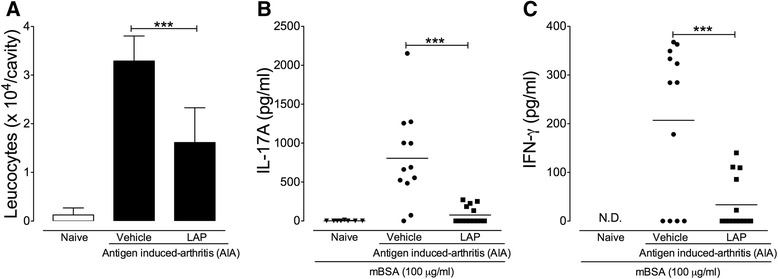
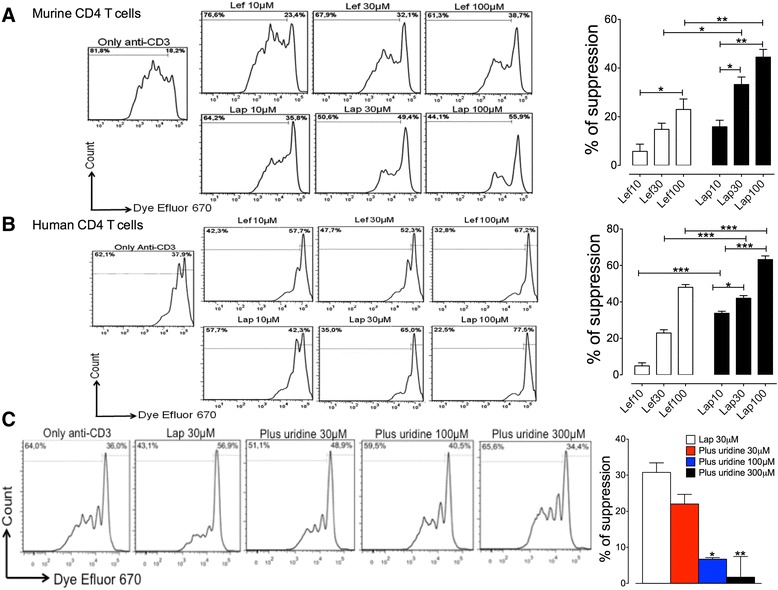
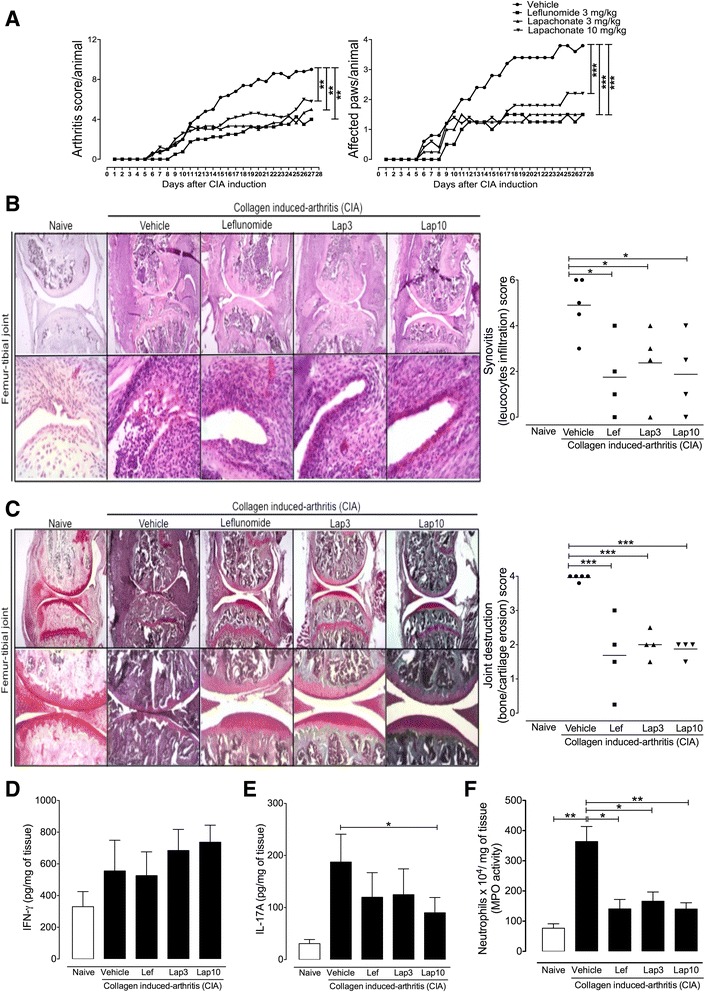
We found that LAP is a potent DHODH inhibitor which had a remarkable ability to inhibit both human and murine lymphocyte proliferation in vitro. Importantly, uridine supplementation abrogated the antiproliferative effect of LAP, supporting that the pyrimidine metabolic pathway is the target of LAP. In vivo, LAP treatment markedly reduced CIA and AIA progression as evidenced by the reduction in clinical score, articular tissue damage, and inflammation.
Our findings propose a binding model of interaction and support the ability of LAP to inhibit DHODH, decreasing lymphocyte proliferation and attenuating the severity of experimental autoimmune arthritis. Therefore, LAP could be considered as a potential immunosuppressive lead candidate with potential therapeutic implications for RA.
通过阻断二氢乳清酸脱氢酶(DHODH)活性来抑制嘧啶生物合成,这是来氟米特(LEF)的主要作用靶点,已被证明是治疗类风湿关节炎(RA)的有效策略。然而,相当一部分RA患者对LEF耐药。在此,我们研究了天然萘醌拉帕醇(LAP)作为一种潜在的DHODH抑制剂,并探讨了其免疫抑制特性。
进行分子柔性对接研究和生物活性测定,以确定LAP与DHODH相互作用并抑制其活性的能力。利用分离的淋巴细胞进行体外研究,以评估LAP的抗增殖作用。最后,采用胶原诱导的关节炎(CIA)和抗原诱导的关节炎(AIA)模型来研究LAP的抗关节炎作用。
我们发现LAP是一种有效的DHODH抑制剂,在体外具有显著抑制人和小鼠淋巴细胞增殖的能力。重要的是,补充尿苷可消除LAP的抗增殖作用,这支持了嘧啶代谢途径是LAP的作用靶点。在体内,LAP治疗显著降低了CIA和AIA的进展,临床评分、关节组织损伤和炎症减轻均证明了这一点。
我们的研究结果提出了一种相互作用的结合模型,并支持LAP抑制DHODH、减少淋巴细胞增殖和减轻实验性自身免疫性关节炎严重程度的能力。因此,LAP可被视为一种潜在的免疫抑制先导化合物,对RA具有潜在的治疗意义。