Wei Yuehong, Huang Yong, Li Xiaoning, Ma Yu, Tao Xia, Wu Xinwei, Yang Zhicong
Guangzhou Center for Disease Control and Prevention, Guangzhou, Guangdong Province, China.
PLoS Negl Trop Dis. 2017 Mar 8;11(3):e0005447. doi: 10.1371/journal.pntd.0005447. eCollection 2017 Mar.
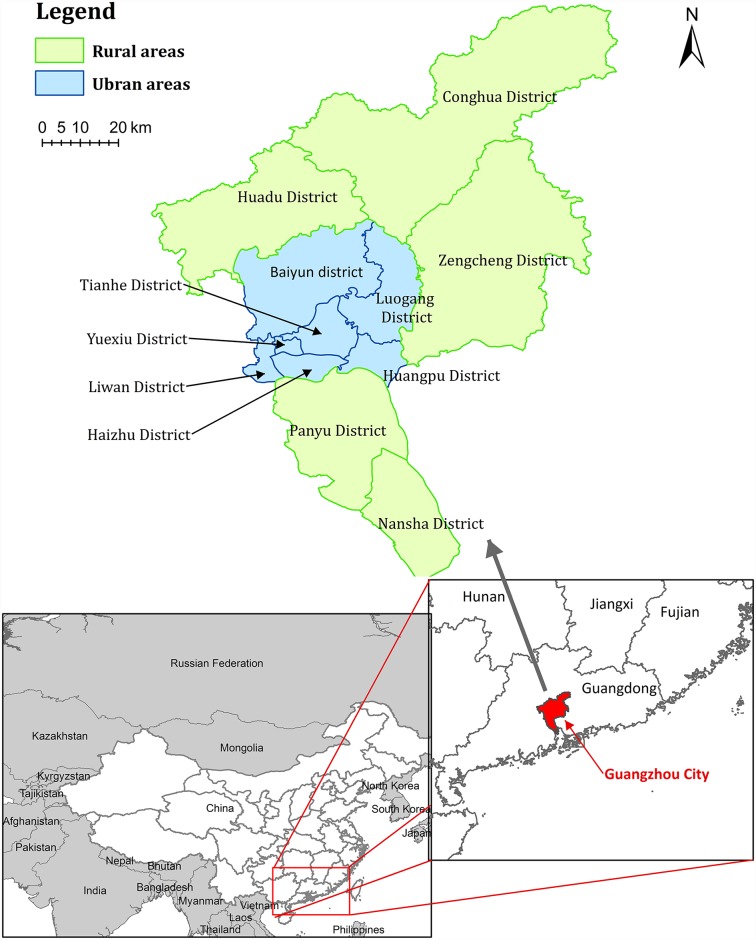
We aimed to evaluate the relationships between climate variability, animal reservoirs and scrub typhus incidence in Southern China.
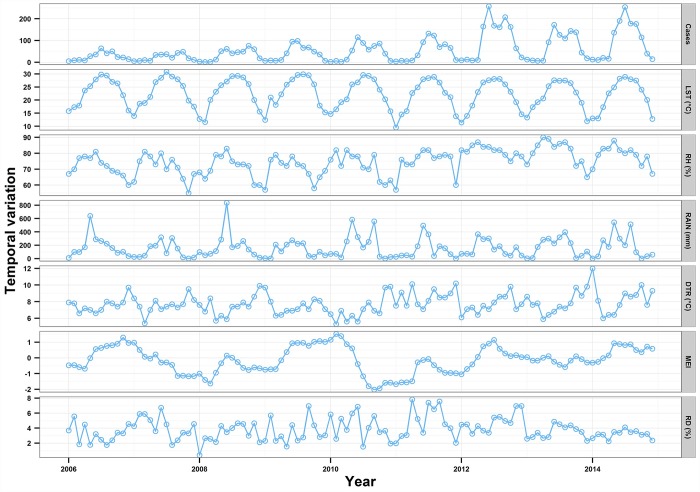
We obtained data on scrub typhus cases in Guangzhou every month from 2006 to 2014 from the Chinese communicable disease network. Time-series Poisson regression models and distributed lag nonlinear models (DLNM) were used to evaluate the relationship between risk factors and scrub typhus.
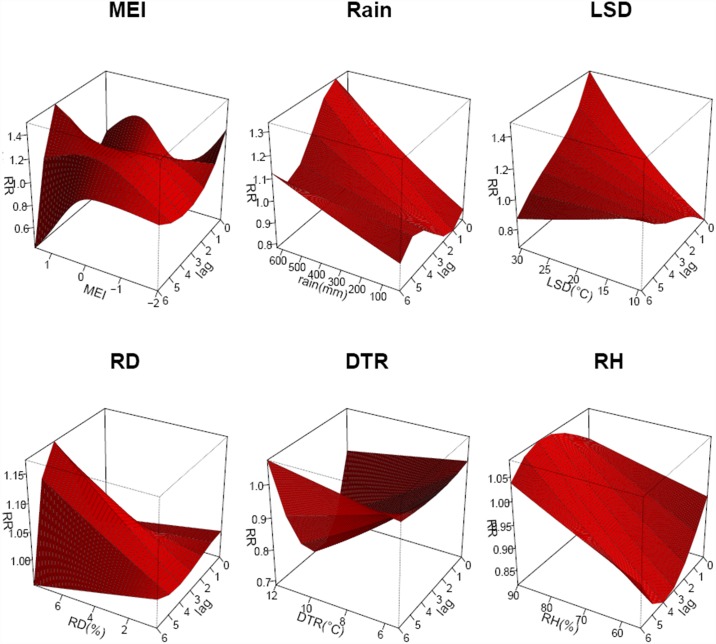
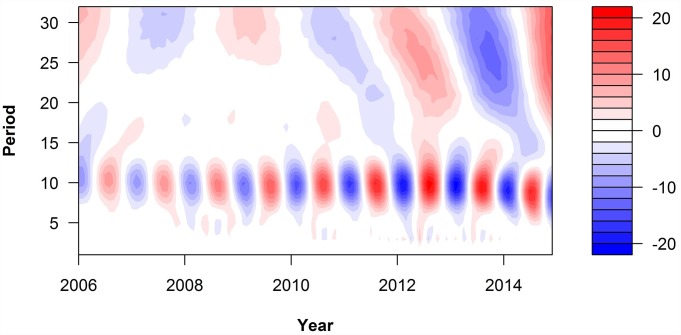
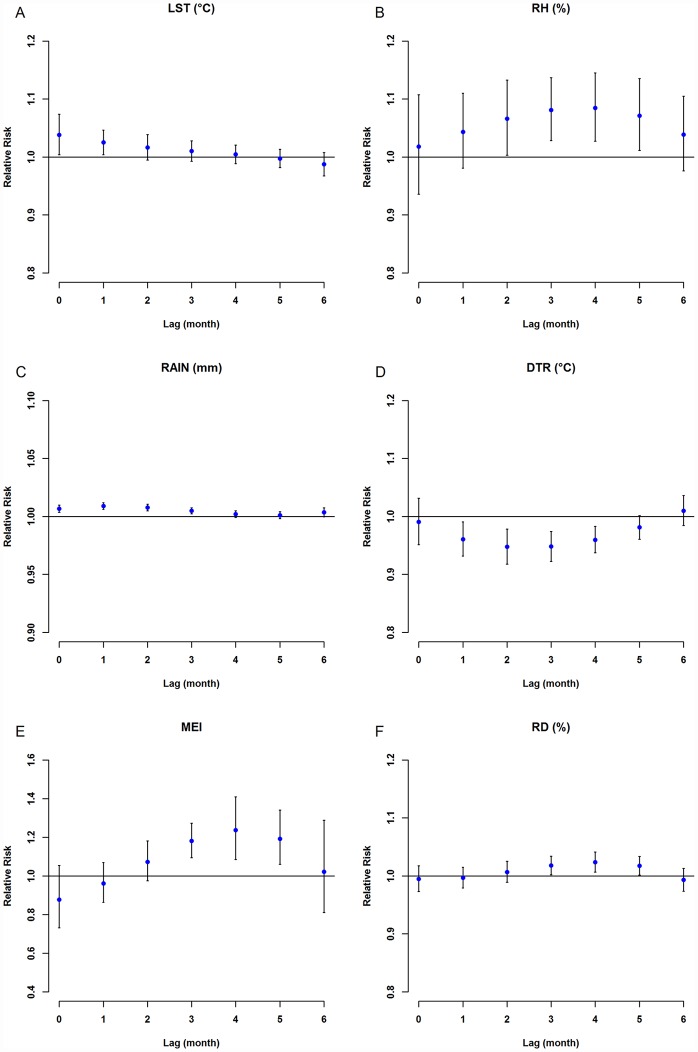
Wavelet analysis found the incidence of scrub typhus cycled with a period of approximately 8-12 months and long-term trends with a period of approximately 24-36 months. The DLNM model shows that relative humidity, rainfall, DTR, MEI and rodent density were associated with the incidence of scrub typhus.
Our findings suggest that the incidence scrub typhus has two main temporal cycles. Determining the reason for this trend and how it can be used for disease control and prevention requires additional research. The transmission of scrub typhus is highly dependent on climate factors and rodent density, both of which should be considered in prevention and control strategies for scrub typhus.
我们旨在评估中国南方气候变异性、动物宿主与恙虫病发病率之间的关系。
我们从中国传染病网络获取了2006年至2014年广州每月的恙虫病病例数据。采用时间序列泊松回归模型和分布滞后非线性模型(DLNM)来评估危险因素与恙虫病之间的关系。
小波分析发现恙虫病发病率以约8 - 12个月为周期循环,长期趋势以约24 - 36个月为周期。DLNM模型表明,相对湿度、降雨量、日较差、多变量厄尔尼诺指数(MEI)和啮齿动物密度与恙虫病发病率相关。
我们的研究结果表明,恙虫病发病率有两个主要的时间周期。确定这种趋势的原因以及如何将其用于疾病控制和预防需要进一步研究。恙虫病的传播高度依赖于气候因素和啮齿动物密度,在恙虫病的预防和控制策略中都应考虑这两个因素。