Sharpe S A, White A D, Sibley L, Gleeson F, Hall G A, Basaraba R J, McIntyre A, Clark S O, Gooch K, Marsh P D, Williams A, Dennis M J
Public Health England, National Infection Service, Porton Down, Salisbury, SP4 0JG, United Kingdom.
The Churchill Hospital, Headington, Oxford, United Kingdom.
PLoS One. 2017 Mar 8;12(3):e0171906. doi: 10.1371/journal.pone.0171906. eCollection 2017.
New interventions for tuberculosis are urgently needed. Non-human primate (NHP) models provide the most relevant pre-clinical models of human disease and play a critical role in vaccine development. Models utilising Asian cynomolgus macaque populations are well established but the restricted genetic diversity of the Mauritian cynomolgus macaques may be of added value.
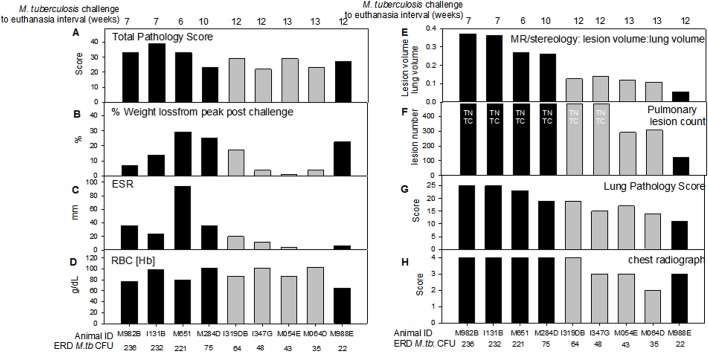
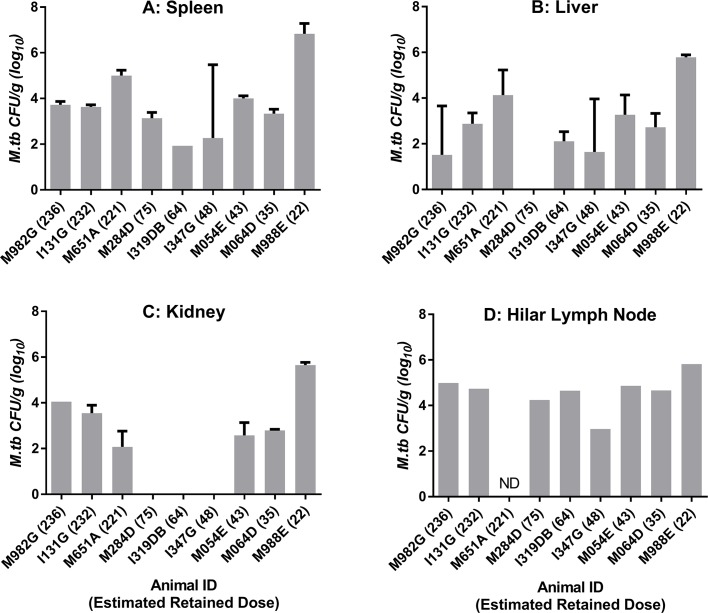
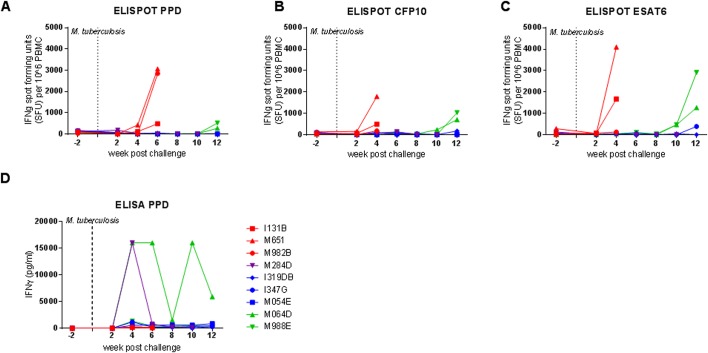
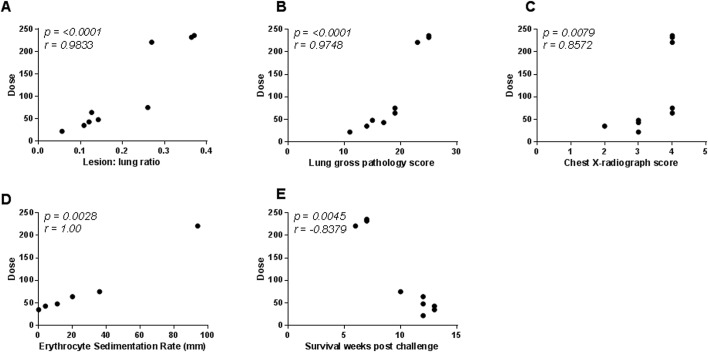
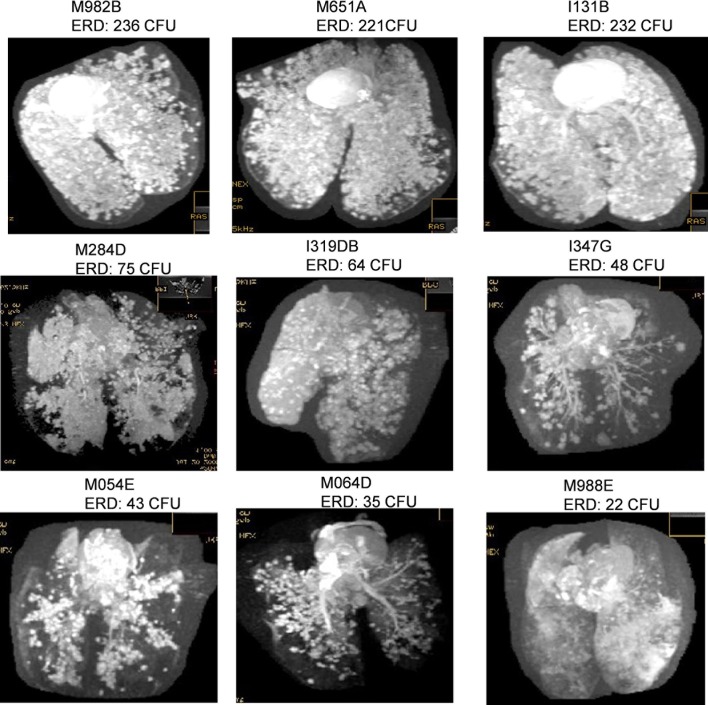
Mauritian cynomolgus macaques were exposed to a range of doses of M. tuberculosis delivered by aerosol, and the outcome was assessed using clinical, imaging and pathology-based measures.
All macaques developed characteristic clinical signs and disease features of tuberculosis (TB). Disease burden and the ability to control disease were dependent on exposure dose. Mauritian cynomolgus macaques showed less variation in pulmonary disease burden and total gross pathology scores within exposure dose groups than either Indian rhesus macaques or Chinese cynomolgus macaques.
The genetic homogeneity of Mauritian cynomolgus macaques makes them a potentially useful model of human tuberculosis.
迫切需要针对结核病的新干预措施。非人灵长类动物(NHP)模型提供了与人类疾病最相关的临床前模型,在疫苗开发中发挥着关键作用。利用亚洲食蟹猴种群的模型已经很成熟,但毛里求斯食蟹猴有限的遗传多样性可能具有额外价值。
将毛里求斯食蟹猴暴露于一系列经气溶胶递送的结核分枝杆菌剂量下,并使用基于临床、影像学和病理学的方法评估结果。
所有食蟹猴均出现了结核病(TB)的特征性临床症状和疾病特征。疾病负担和控制疾病的能力取决于暴露剂量。与印度恒河猴或中国食蟹猴相比,毛里求斯食蟹猴在暴露剂量组内肺部疾病负担和总大体病理学评分的变化较小。
毛里求斯食蟹猴的遗传同质性使其成为人类结核病的潜在有用模型。