Ansseau Eugénie, Vanderplanck Céline, Wauters Armelle, Harper Scott Q, Coppée Frédérique, Belayew Alexandra
Laboratory of Molecular Biology, Research Institute for Health Sciences and Technology, University of Mons, Avenue du Champ de Mars 6, 7000-Mons, Belgium.
Department of Pediatrics, The Ohio State University College of Medicine, Columbus, OH 43205, USA.
Genes (Basel). 2017 Mar 3;8(3):93. doi: 10.3390/genes8030093.
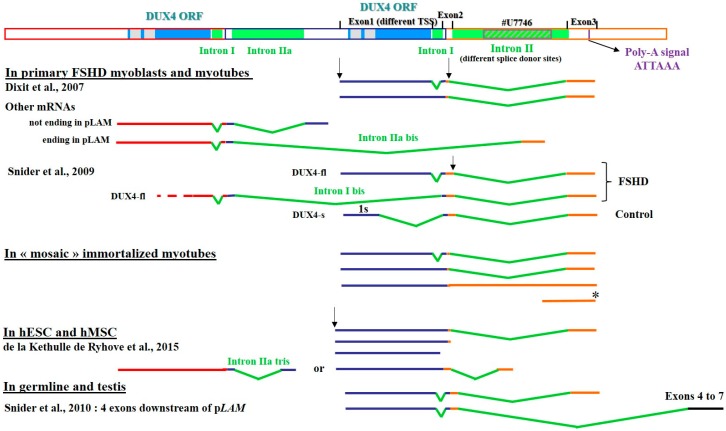
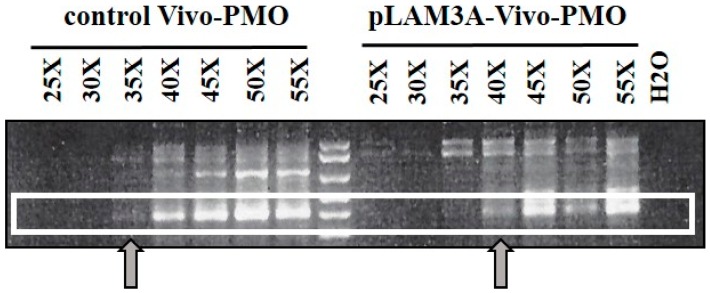
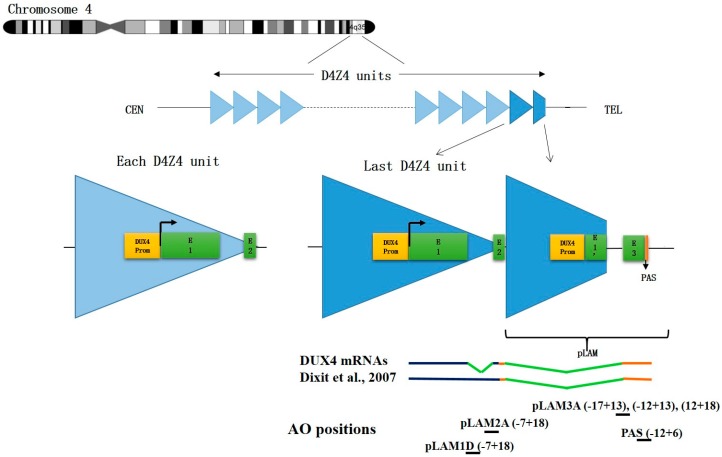
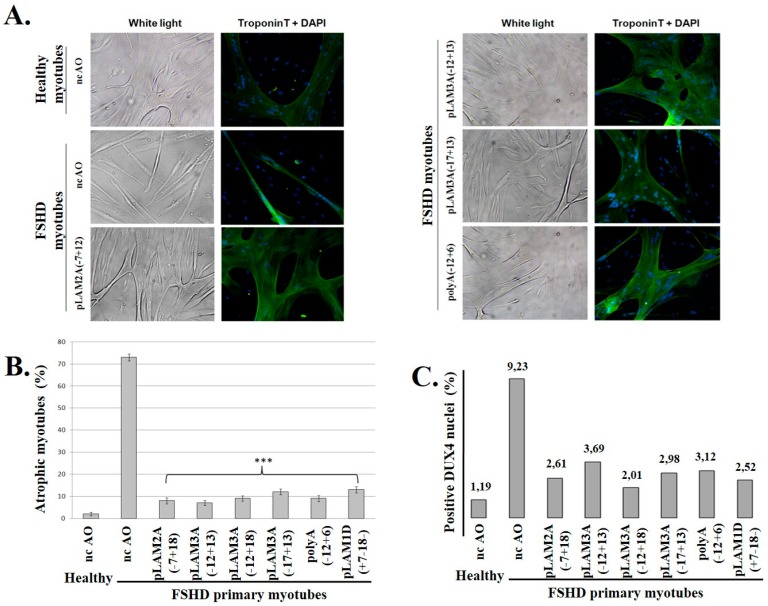
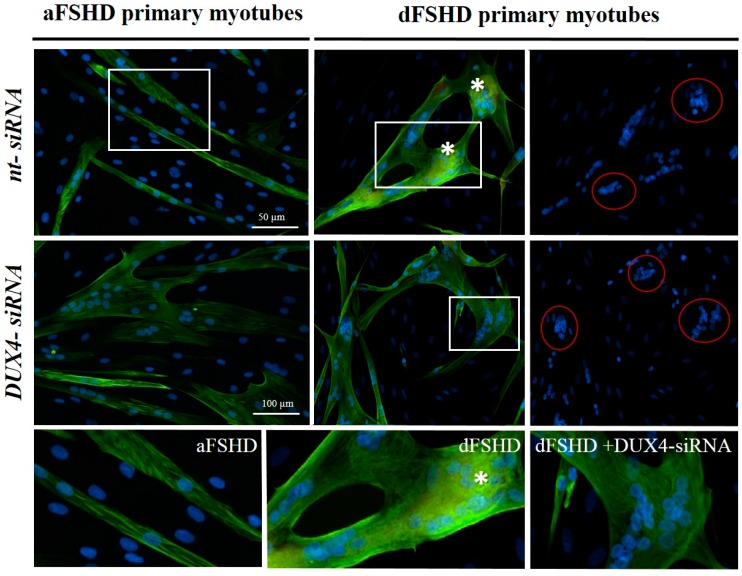
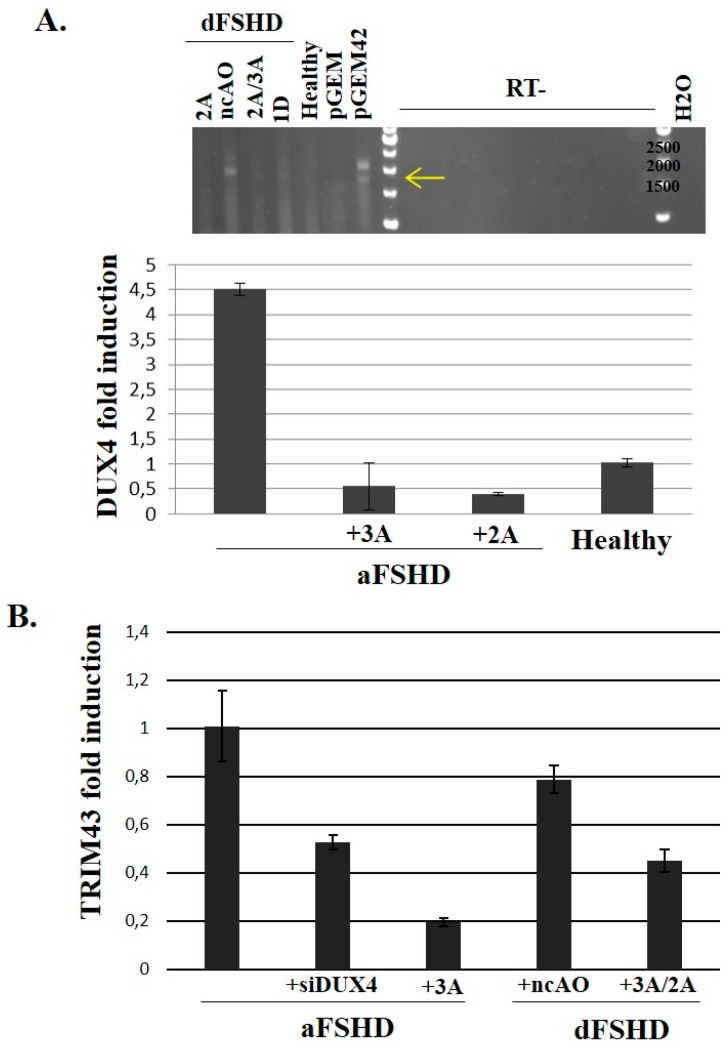
FacioScapuloHumeral muscular Dystrophy (FSHD) is one of the most prevalent hereditary myopathies and is generally characterized by progressive muscle atrophy affecting the face, scapular fixators; upper arms and distal lower legs. The FSHD locus maps to a macrosatellite D4Z4 repeat array on chromosome 4q35. Each D4Z4 unit contains a gene; the most distal of which is flanked by a polyadenylation site on FSHD-permissive alleles, which allows for production of stable mRNAs. In addition, an open chromatin structure is required for gene transcription. FSHD thus results from a gain of function of the toxic DUX4 protein that normally is only expressed in germ line and stem cells. Therapeutic strategies are emerging that aim to decrease DUX4 expression or toxicity in FSHD muscle cells. We review here the heterogeneity of mRNAs observed in muscle and stem cells; and the use of antisense oligonucleotides (AOs) targeting the mRNA to interfere either with transcript cleavage/polyadenylation or intron splicing. We show in primary cultures that DUX4-targeted AOs suppress the atrophic FSHD myotube phenotype; but do not improve the disorganized FSHD myotube phenotype which could be caused by DUX4c over-expression. Thus; DUX4c might constitute another therapeutic target in FSHD.
面肩肱型肌营养不良症(FSHD)是最常见的遗传性肌病之一,其一般特征为进行性肌肉萎缩,累及面部、肩胛固定肌、上臂和小腿远端。FSHD基因座定位于4号染色体q35区域的一个大卫星D4Z4重复序列阵列。每个D4Z4单元包含一个基因;在FSHD允许等位基因上,最远端的基因侧翼有一个聚腺苷酸化位点,这使得稳定的mRNA得以产生。此外,基因转录需要开放的染色质结构。因此,FSHD是由通常仅在生殖系和干细胞中表达的有毒DUX4蛋白的功能获得导致的。旨在降低FSHD肌肉细胞中DUX4表达或毒性的治疗策略正在出现。我们在此综述了在肌肉和干细胞中观察到的mRNA的异质性,以及使用靶向该mRNA的反义寡核苷酸(AO)来干扰转录本切割/聚腺苷酸化或内含子剪接。我们在原代培养中表明,靶向DUX4的AO可抑制萎缩性FSHD肌管表型,但不能改善可能由DUX4c过表达引起的紊乱的FSHD肌管表型。因此,DUX4c可能构成FSHD的另一个治疗靶点。