Agarwal G, Angeles R, Pirrie M, Marzanek F, McLeod B, Parascandalo J, Dolovich L
Departments of Family Medicine, Clinical Epidemiology and Biostatistics, Quality Assurance Program Coordinator for Family Medicine Residency, Residency Program Research Coordinator, Family Medicine Residency Program, McMaster University, 100 Main Street West, 5th Floor, Hamilton, ON, L8P 1H6, Canada.
Hamilton Paramedic Services, City of Hamilton, Canada.
BMC Emerg Med. 2017 Mar 9;17(1):8. doi: 10.1186/s12873-017-0119-4.
Seniors living in subsidized housing have lower income, poorer health, and increased risk for cardiometabolic diseases and falls. Seniors also account for more than one third of calls to Emergency Medical Services (EMS). This study examines the effectiveness of the Community Health Assessment Program through EMS (CHAP-EMS) in reducing blood pressure, diabetes risk, and EMS calls.
Paramedics on modified duty (e.g. injured) conducted weekly, one-on-one drop-in sessions in a common area of one subsidized senior's apartment building in Hamilton, Ontario. Paramedics assessed cardiovascular, diabetes, and fall risk, provided health education, referred participants to local resources, and encouraged participants to return to CHAP-EMS for follow-up. Reports were faxed to the family physician regularly. Blood pressure was collected throughout the one year intervention, while diabetes risk was assessed at baseline and after 6-12 months. EMS call volumes were collected from the Hamilton Paramedic Service for two years pre-intervention and one year during the intervention.
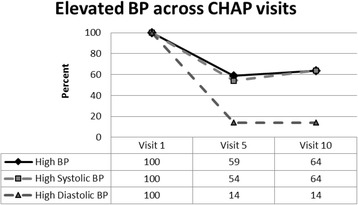
There were 79 participants (mean age = 72.2 years) and 1,365 participant visits to CHAP-EMS. The majority were female (68%), high school educated or less (53%), had a family doctor (90%), history of hypertension (58%), high waist circumference (64%), high body mass index (61%), and high stress (53%). Many had low physical activity (42%), high fat intake (33%), low fruit/vegetable intake (30%), and were current smokers (29%). At baseline, 42% of participants had elevated blood pressure. Systolic blood pressure decreased significantly by the participant's 3 visit to CHAP-EMS and diastolic by the 5 visit (p < .05). At baseline, 19% of participants had diabetes; 67% of those undiagnosed had a moderate or high risk based on the Canadian Diabetes Risk (CANRISK) assessment. 15% of participants dropped one CANRISK category (e.g. high to moderate) during the intervention. EMS call volume decreased 25% during the intervention compared to the previous two years.
CHAP-EMS was associated with a reduction in emergency calls and participant blood pressure and a tendency towards lowered diabetes risk after one year of implementation within a low income subsidized housing building with a history of high EMS calls.
Retrospectively registered on May 12 2016 with clinicaltrials.gov: NCT02772263.
居住在保障性住房中的老年人收入较低、健康状况较差,患心血管代谢疾病和跌倒的风险增加。老年人拨打紧急医疗服务(EMS)电话的次数也占总数的三分之一以上。本研究旨在探讨通过EMS实施的社区健康评估项目(CHAP-EMS)在降低血压、糖尿病风险和EMS呼叫次数方面的有效性。
休班(如受伤)的护理人员每周在安大略省汉密尔顿市一栋保障性老年公寓楼的公共区域进行一对一的不定期问诊。护理人员评估心血管、糖尿病和跌倒风险,提供健康教育,为参与者推荐当地资源,并鼓励参与者返回CHAP-EMS进行随访。报告定期传真给家庭医生。在为期一年的干预期间收集血压数据,同时在基线和6至12个月后评估糖尿病风险。从汉密尔顿护理服务中心收集干预前两年和干预期间一年的EMS呼叫量。
共有79名参与者(平均年龄=72.2岁),对CHAP-EMS进行了1365次问诊。大多数为女性(68%),高中及以下学历(53%),有家庭医生(90%),有高血压病史(58%),腰围高(64%),体重指数高(61%),压力大(53%)。许多人身体活动量低(42%),脂肪摄入量高(33%),水果/蔬菜摄入量低(30%),且为当前吸烟者(29%)。基线时,42%的参与者血压升高。参与者第三次到CHAP-EMS问诊时收缩压显著下降,第五次问诊时舒张压显著下降(p<0.05)。基线时,19%的参与者患有糖尿病;根据加拿大糖尿病风险(CANRISK)评估,67%未确诊的参与者具有中度或高度风险。15%的参与者在干预期间降低了一个CANRISK类别(如从高到中)。与前两年相比,干预期间EMS呼叫量下降了25%。
在一个EMS呼叫次数较多的低收入保障性住房建筑中实施一年后,CHAP-EMS与紧急呼叫次数减少、参与者血压降低以及糖尿病风险降低趋势相关。
于2016年5月12日在clinicaltrials.gov上进行回顾性注册:NCT02772263。