Diallo Nouhoum, Akweongo Patricia, Maya Ernest, Aikins Moses, Sarfo Bismark
School of Public Health, University of Ghana, Legon-Accra, Accra, Ghana.
Malaria Research and Training Center/Department of Epidemiology and Infectious Diseases/University of Science Techniques and Technologies of Bamako, Bamako, Mali.
Malar J. 2017 Mar 9;16(1):109. doi: 10.1186/s12936-017-1751-x.
The burden of malaria in mobile populations remains poorly documented in sub-Saharan Africa. This study determined the prevalence of malaria among hawkers and long-distance truck drivers in the Greater Accra region of Ghana.
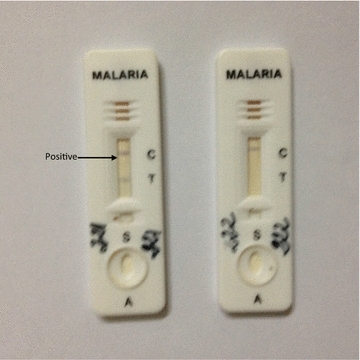
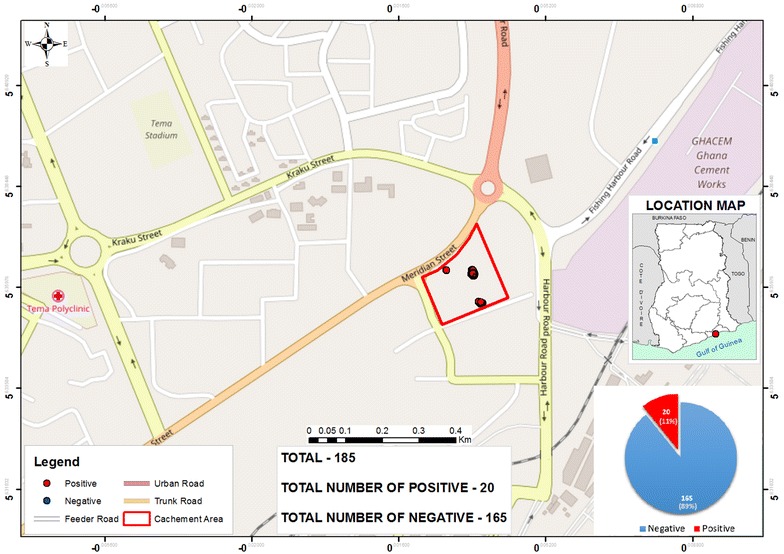
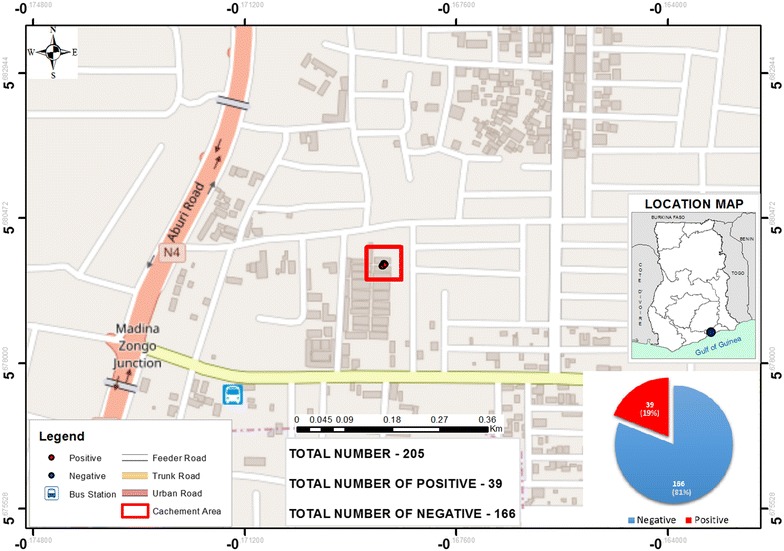
A cross-sectional design using consecutive sampling method between June and July 2016 in Accra and Tema in Ghana was used in this study. The study population was hawkers who roam and sleep in the Market Streets, and long-distance truck drivers. Participants completed closed ended interview questionnaires on socio-demographic characteristics, primary residence and knowledge about malaria. Rapid diagnostic test and thick blood smears of each participant were stained with Giemsa and read using microscopy. Geographical position system (GPS) was used to collect the station locations of these mobile populations.
The overall prevalence of malaria was 15.1% and Plasmodium falciparum was responsible for all malaria infection. The malaria prevalence was 18.9 and 10.9% respectively among hawkers and truck drivers (p < 0.05). The hawkers, the single and the no formal educated participants were more likely to get malaria than the long-distance truck drivers (OR = 1.91, 95% CI 1.07-3.42), the married (OR = 1.94 95% CI 1.11-3.40) and the educated participants (OR = 2.56 95% CI 1.10-5.93), respectively. After controlling for other variables, marital status (OR = 2.60 95% CI 1.43- 4.73) and educational level (OR = 2.70 95% CI 1.08-6.77) were statistically significantly associated with malaria.
This study demonstrated that the prevalence of malaria is high among hawkers and long distance truck drivers. Sociodemographic characteristics, such as marital status, occupation and educational level are significantly associated with malaria. The station locations as determined by GPS technology will make these mobile populations easier to reach for any malaria intervention.
在撒哈拉以南非洲地区,流动人口中的疟疾负担仍缺乏充分记录。本研究确定了加纳大阿克拉地区小贩和长途卡车司机中的疟疾患病率。
本研究采用横断面设计,于2016年6月至7月在加纳的阿克拉和特马使用连续抽样方法。研究人群为在市场街道游荡和睡觉的小贩以及长途卡车司机。参与者完成了关于社会人口学特征、主要居住地和疟疾知识的封闭式访谈问卷。对每位参与者进行快速诊断检测,并制作厚血涂片,用吉姆萨染色后通过显微镜检查读取结果。使用地理定位系统(GPS)收集这些流动人口的驻地位置。
疟疾总体患病率为15.1%,所有疟疾感染均由恶性疟原虫引起。小贩和卡车司机中的疟疾患病率分别为18.9%和10.9%(p<0.05)。小贩、单身者和未受过正规教育的参与者比长途卡车司机(比值比[OR]=1.91,95%置信区间[CI]1.07 - 3.42)、已婚者(OR = 1.94,95% CI 1.11 - 3.40)和受过教育的参与者(OR = 2.56,95% CI 1.10 - 5.93)更易感染疟疾。在控制其他变量后,婚姻状况(OR = 2.60,95% CI 1.43 - 4.73)和教育水平(OR = 2.70,95% CI 1.08 - 6.77)与疟疾在统计学上显著相关。
本研究表明,小贩和长途卡车司机中的疟疾患病率较高。社会人口学特征,如婚姻状况、职业和教育水平与疟疾显著相关。通过GPS技术确定的驻地位置将使这些流动人口更容易接受任何疟疾干预措施。