Gordya Natalia, Yakovlev Andrey, Kruglikova Anastasia, Tulin Dmitry, Potolitsina Evdokia, Suborova Tatyana, Bordo Domenico, Rosano Camillo, Chernysh Sergey
Laboratory of Insect Biopharmacology and Immunology, Faculty of Biology, St. Petersburg State University, St. Petersburg, Russia.
Research Center of Kirov Military Medical Academy, St. Petersburg, Russia.
PLoS One. 2017 Mar 9;12(3):e0173559. doi: 10.1371/journal.pone.0173559. eCollection 2017.
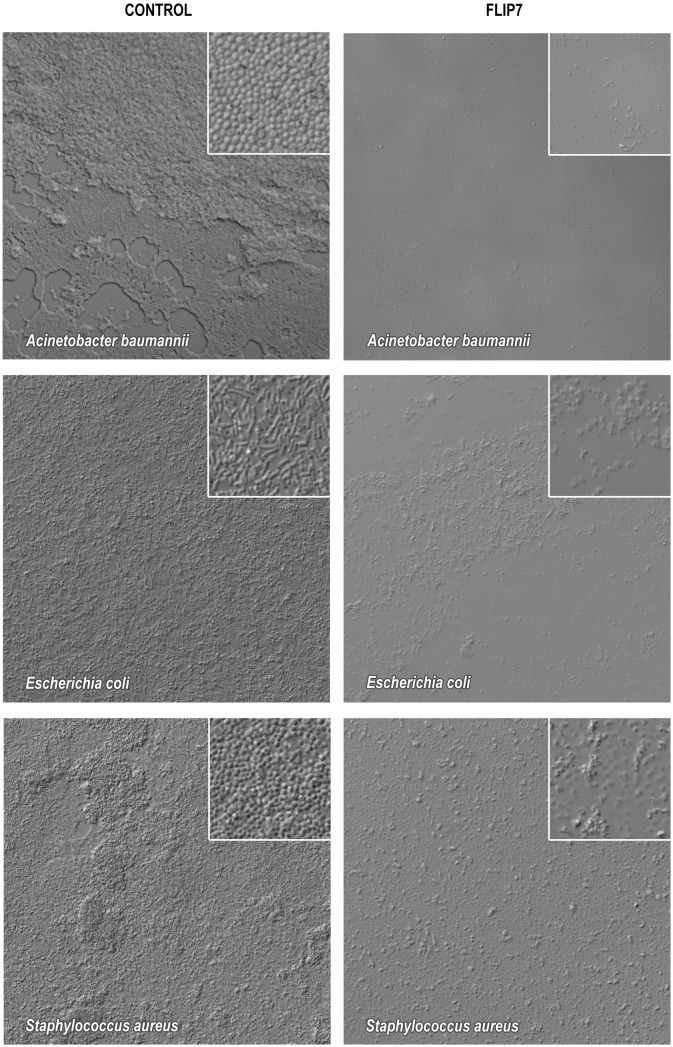
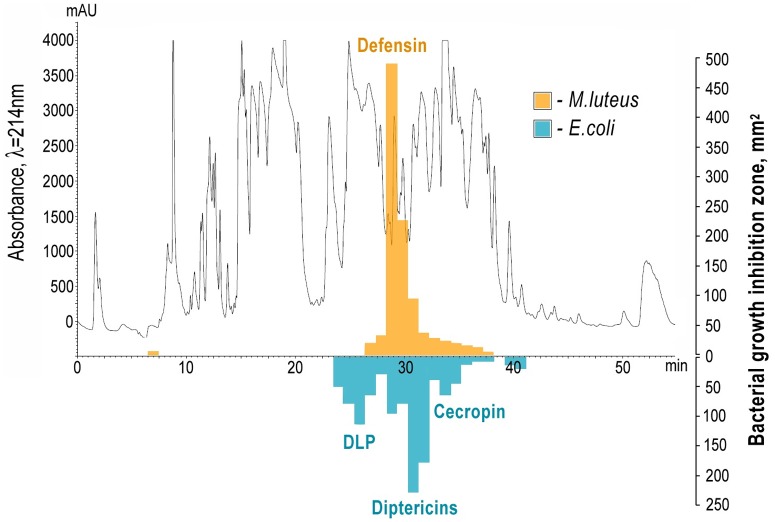
Biofilms, sedimented microbial communities embedded in a biopolymer matrix cause vast majority of human bacterial infections and many severe complications such as chronic inflammatory diseases and cancer. Biofilms' resistance to the host immunity and antibiotics makes this kind of infection particularly intractable. Antimicrobial peptides (AMPs) are a ubiquitous facet of innate immunity in animals. However, AMPs activity was studied mainly on planktonic bacteria and little is known about their effects on biofilms. We studied structure and anti-biofilm activity of AMP complex produced by the maggots of blowfly Calliphora vicina living in environments extremely contaminated by biofilm-forming germs. The complex exhibits strong cell killing and matrix destroying activity against human pathogenic antibiotic resistant Escherichia coli, Staphylococcus aureus and Acinetobacter baumannii biofilms as well as non-toxicity to human immune cells. The complex was found to contain AMPs from defensin, cecropin, diptericin and proline-rich peptide families simultaneously expressed in response to bacterial infection and encoded by hundreds mRNA isoforms. All the families combine cell killing and matrix destruction mechanisms, but the ratio of these effects and antibacterial activity spectrum are specific to each family. These molecules dramatically extend the list of known anti-biofilm AMPs. However, pharmacological development of the complex as a whole can provide significant advantages compared with a conventional one-component approach. In particular, a similar level of activity against biofilm and planktonic bacteria (MBEC/MIC ratio) provides the complex advantage over conventional antibiotics. Available methods of the complex in situ and in vitro biosynthesis make this idea practicable.
生物膜是嵌入生物聚合物基质中的沉积微生物群落,它导致了绝大多数人类细菌感染以及许多严重并发症,如慢性炎症性疾病和癌症。生物膜对宿主免疫和抗生素的抗性使得这种感染特别难以治疗。抗菌肽(AMPs)是动物先天免疫中普遍存在的一个方面。然而,AMPs的活性主要是在浮游细菌上进行研究的,而对于它们对生物膜的影响知之甚少。我们研究了生活在被形成生物膜的细菌严重污染环境中的红头丽蝇蛆产生的AMPs复合物的结构和抗生物膜活性。该复合物对人类致病性耐抗生素大肠杆菌、金黄色葡萄球菌和鲍曼不动杆菌生物膜具有强大的细胞杀伤和基质破坏活性,并且对人类免疫细胞无毒。发现该复合物同时含有来自防御素、天蚕素、双翅肽和富含脯氨酸肽家族的AMPs,这些家族在对细菌感染的反应中同时表达,并由数百种mRNA异构体编码。所有这些家族都结合了细胞杀伤和基质破坏机制,但这些作用的比例和抗菌活性谱因每个家族而异。这些分子极大地扩展了已知的抗生物膜AMPs的范围。然而,与传统的单组分方法相比,将该复合物作为一个整体进行药物开发可能具有显著优势。特别是,该复合物对生物膜和浮游细菌具有相似水平的活性(MBEC/MIC比值),这使其相对于传统抗生素具有优势。该复合物在原位和体外生物合成的现有方法使这一想法切实可行。