Monteiro Helena I G, Silva Vanessa, de Sousa Telma, Calouro Rita, Saraiva Sónia, Igrejas Gilberto, Poeta Patrícia
MicroART-Antibiotic Resistance Team, Department of Veterinary Sciences, University of Trás-os-Montes and Alto Douro, 5000-801 Vila Real, Portugal.
Department of Genetics and Biotechnology, University of Trás-os-Montes and Alto Douro, 5000-801 Vila Real, Portugal.
Animals (Basel). 2025 Jun 9;15(12):1708. doi: 10.3390/ani15121708.
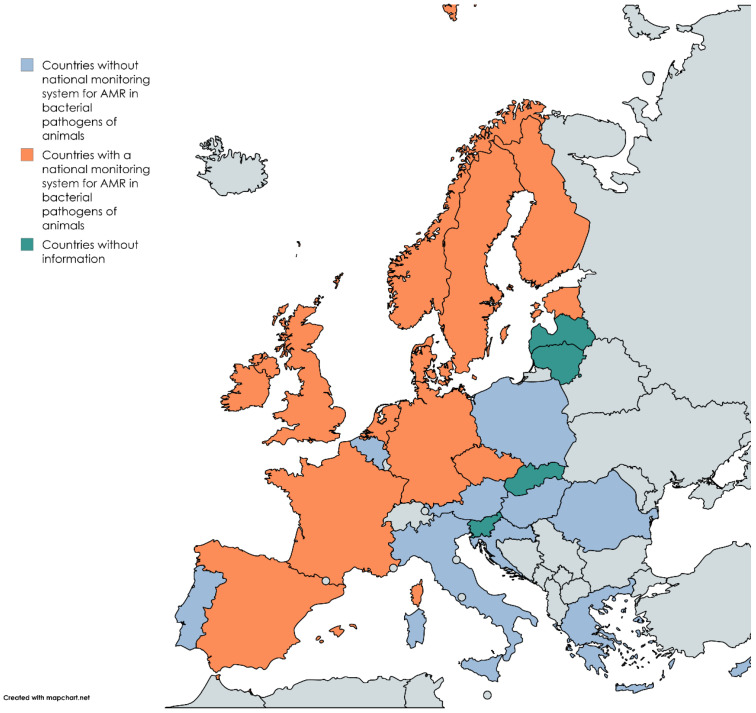
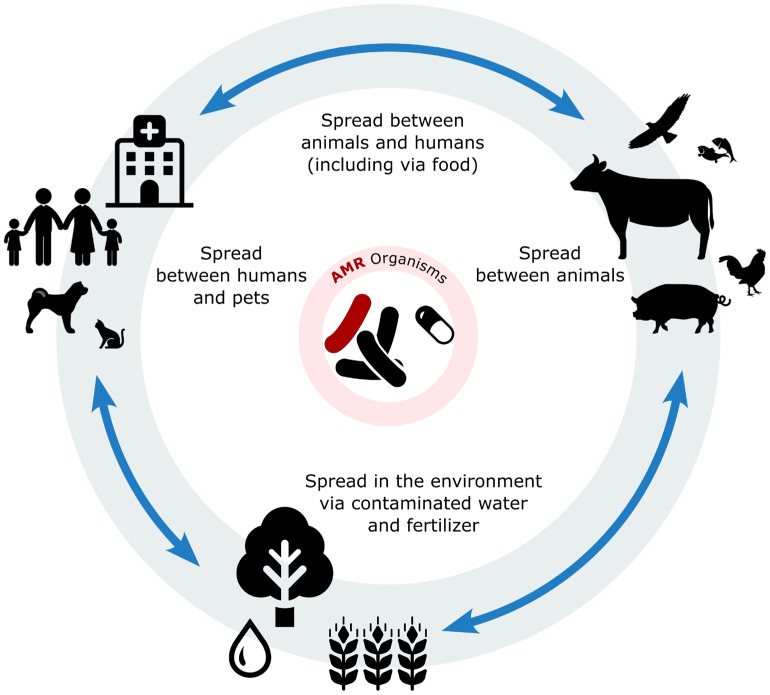
Antimicrobial resistance (AMR) is a global health emergency. The growing levels of multidrug-resistant bacteria in companion animals represent a critical but under-recognized threat, as pets can act as reservoirs and vectors of resistant pathogens, and bacteria can spread between species. Despite living in close proximity to humans and sharing many of the same antibiotic classes, companion animals remain largely overlooked in the AMR control strategies. A major obstacle to combating AMR in Europe is the absence of a mandatory and uniform surveillance system. Without a standardized approach, data collection remains inconsistent, leading to knowledge gaps and hindering effective investigation and policymaking. Surveillance failures prevent a comprehensive understanding of resistance patterns, making it difficult to implement timely and evidence-based measures. Existing laws and regulations are insufficient to contain the growing threat of AMR. Current policies fail to enforce strict antimicrobial stewardship across all European countries and lack the necessary scope to address resistance effectively. Urgent action is required-Europe must implement stronger, harmonized surveillance systems, enforce stricter veterinary antimicrobial regulations, and develop more active and binding programs to curb resistance before it reaches an uncontrollable level. A One Health approach, recognizing the interconnectedness of human, animal, and environmental health, is essential.
抗菌药物耐药性(AMR)是全球卫生紧急事件。伴侣动物中多重耐药菌水平不断上升,这是一个关键但未得到充分认识的威胁,因为宠物可能成为耐药病原体的宿主和传播媒介,而且细菌可在物种间传播。尽管伴侣动物与人类生活密切且使用许多相同种类的抗生素,但在抗菌药物耐药性控制策略中,伴侣动物在很大程度上仍被忽视。欧洲对抗菌药物耐药性的一个主要障碍是缺乏强制性和统一的监测系统。没有标准化方法,数据收集仍然不一致,导致知识空白,阻碍有效调查和决策制定。监测不力妨碍全面了解耐药模式,难以实施及时且基于证据的措施。现有法律法规不足以遏制抗菌药物耐药性日益增长的威胁。当前政策未能在所有欧洲国家强制实施严格的抗菌药物管理,且缺乏有效应对耐药性的必要范围。需要采取紧急行动——欧洲必须实施更强有力、协调一致的监测系统,执行更严格的兽医抗菌药物法规,并制定更积极且具约束力的计划,在耐药性达到无法控制的水平之前遏制耐药性。认识到人类、动物和环境卫生相互关联的“同一健康”方法至关重要。