Qaralleh Haitham, Saghir Sultan Ayesh Mohammed, Al-Limoun Muhamad O, Dmor Saif M, Khleifat Khaled, Al-Ahmad Basma Ezzat Mustafa, Al-Omari Laila, Tabana Yasser, Mothana Ramzi A, Al-Yousef Hanan M, Alqahtani Abdulaziz M
Department of Medical Laboratory Sciences, Mutah University, Mutah 61710, Jordan.
Department of Medical Analysis, Princess Aisha Bint Al-Hussein College of Nursing and Medical Sciences, Al-Hussein Bin Talal University, Ma'an 71111, Jordan.
Pharmaceuticals (Basel). 2024 Mar 18;17(3):386. doi: 10.3390/ph17030386.
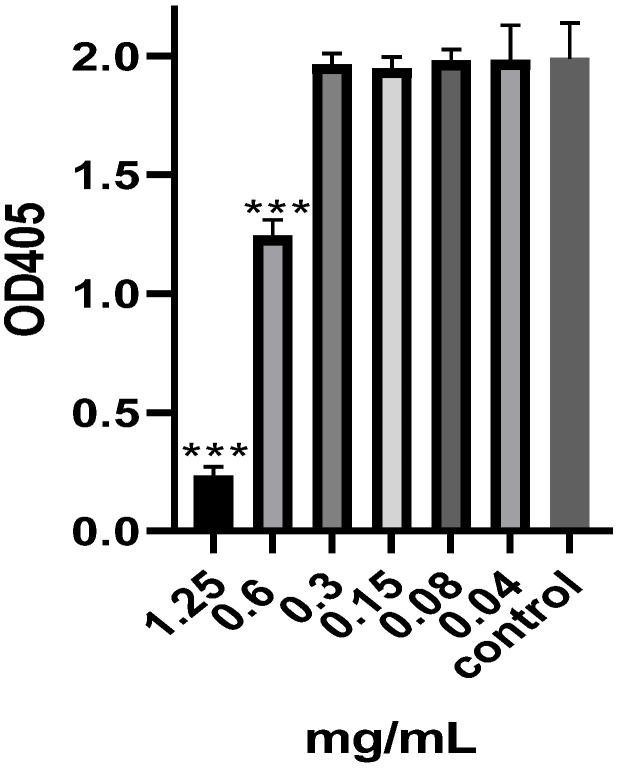
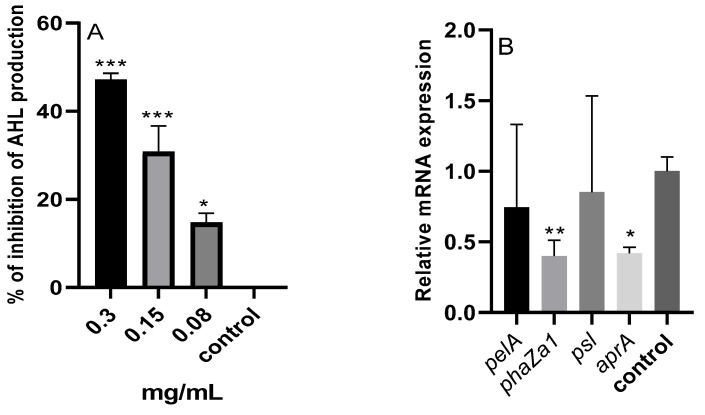
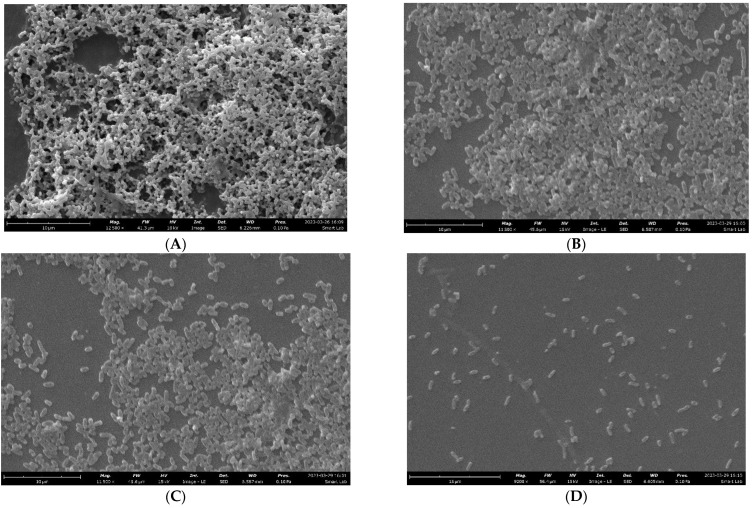
The emergence of drug-resistant microorganisms presents a substantial global public health threat. The increase in pathogens resistant to commonly prescribed antibiotics underscores the urgent requirement to explore alternative treatment strategies. This study adopts a novel approach by harnessing natural resources, specifically essential oils (EO), to combat bacterial pathogenicity. The primary aim of this research was to analyze the chemical composition of the aerial part of the () EO and evaluate its potential for inhibiting quorum sensing (QS) and disrupting biofilm formation in (. ). The gas chromatography-mass spectrometry (GCMS) analysis unveiled that α-bisabolol oxide A constituted the predominant portion, comprising 64.8% of the total, with β-bisabolene at 6.3% and α-farnesene at 4.8% following closely behind. The antibiofilm efficacy was observed at concentrations of 0.3, 0.15, and 0.08 mg/mL, demonstrating negligible effects on cell viability. Furthermore, the EO from effectively inhibited the formation of biofilms by diminishing aggregation, hydrophobicity, and swarming motility. Significantly, the EO treatment resulted in a conspicuous decrease in the production of pyocyanin, rhamnolipid, and extracellular polymeric substances (EPS), along with a reduction in the enzymatic activity of protease and chitinase. The EO effectively hindered QS by disrupting QS mechanisms, resulting in a marked decline in the secretion of N-Acyl homoserine lactone (AHL) molecules and the expression of and genes. This investigation offers compelling evidence supporting the potential of EO as a promising therapeutic candidate for addressing infectious diseases induced by biofilm formation.
耐药微生物的出现对全球公共卫生构成了重大威胁。对常用抗生素耐药的病原体增加凸显了探索替代治疗策略的迫切需求。本研究采用了一种新颖的方法,利用自然资源,特别是精油(EO)来对抗细菌致病性。本研究的主要目的是分析()EO地上部分的化学成分,并评估其抑制群体感应(QS)和破坏(.)生物膜形成的潜力。气相色谱 - 质谱(GCMS)分析表明,α - 红没药醇氧化物A占主要部分,占总量的64.8%,其次是β - 没药烯,占6.3%,α - 法呢烯占4.8%。在浓度为0.3、0.15和0.08 mg/mL时观察到抗生物膜效果,对细胞活力的影响可忽略不计。此外,来自的EO通过减少聚集、疏水性和群体运动性有效地抑制了生物膜的形成。值得注意的是,EO处理导致绿脓菌素、鼠李糖脂和细胞外聚合物(EPS)的产生显著减少,同时蛋白酶和几丁质酶的酶活性也降低。EO通过破坏QS机制有效地阻碍了QS,导致N - 酰基高丝氨酸内酯(AHL)分子的分泌以及和基因的表达显著下降。这项研究提供了有力的证据,支持EO作为治疗由生物膜形成引起的传染病的有前景的候选药物的潜力。