Mathematics Institute, University of Warwick, Coventry, UK; School of Life Sciences, University of Warwick, Coventry, UK.
Department of Public Health, Erasmus MC, University Medical Center Rotterdam, Rotterdam, The Netherlands.
Epidemics. 2017 Mar;18:56-66. doi: 10.1016/j.epidem.2017.02.002.
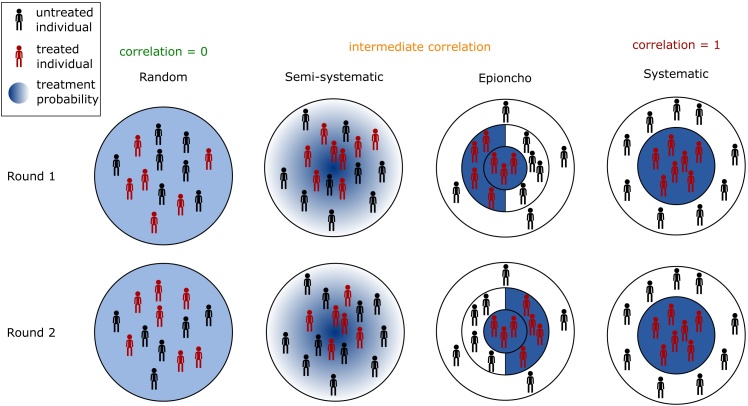
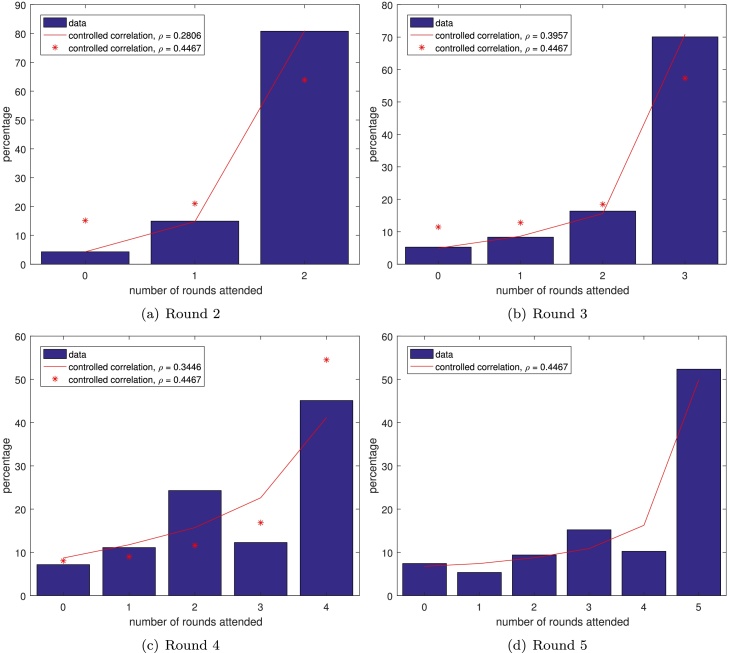
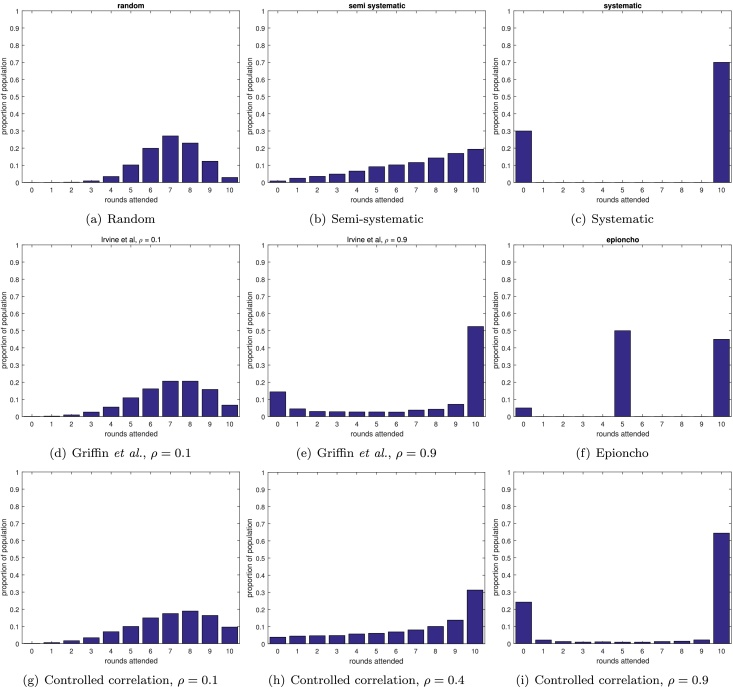
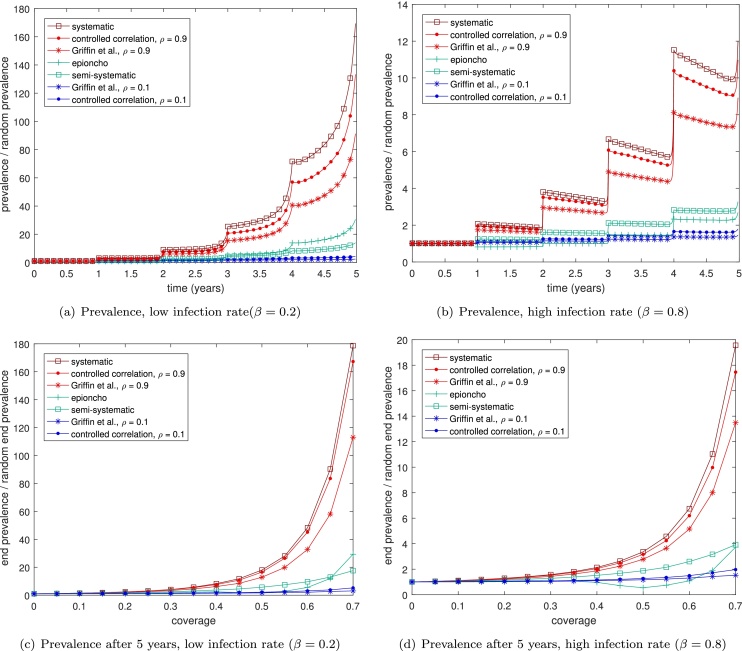
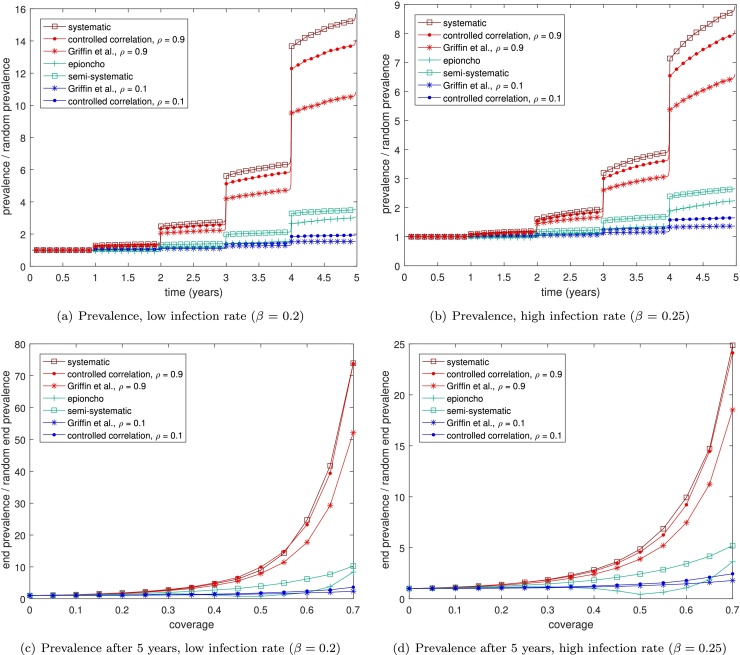
It is well understood that the success or failure of a mass drug administration campaign critically depends on the level of coverage achieved. To that end coverage levels are often closely scrutinised during campaigns and the response to underperforming campaigns is to attempt to improve coverage. Modelling work has indicated, however, that the quality of the coverage achieved may also have a significant impact on the outcome. If the coverage achieved is likely to miss similar people every round then this can have a serious detrimental effect on the campaign outcome. We begin by reviewing the current modelling descriptions of this effect and introduce a new modelling framework that can be used to simulate a given level of systematic non-adherence. We formalise the likelihood that people may miss several rounds of treatment using the correlation in the attendance of different rounds. Using two very simplified models of the infection of helminths and non-helminths, respectively, we demonstrate that the modelling description used and the correlation included between treatment rounds can have a profound effect on the time to elimination of disease in a population. It is therefore clear that more detailed coverage data is required to accurately predict the time to disease elimination. We review published coverage data in which individuals are asked how many previous rounds they have attended, and show how this information may be used to assess the level of systematic non-adherence. We note that while the coverages in the data found range from 40.5% to 95.5%, still the correlations found lie in a fairly narrow range (between 0.2806 and 0.5351). This indicates that the level of systematic non-adherence may be similar even in data from different years, countries, diseases and administered drugs.
众所周知,大规模药物治疗运动的成败取决于所达到的覆盖率水平。为此,在运动期间通常会密切监测覆盖率水平,如果发现覆盖率不达标,就会尝试提高覆盖率。然而,建模工作表明,所达到的覆盖率质量也可能对结果产生重大影响。如果每次治疗都有可能遗漏相似的人,那么这可能会对运动结果产生严重的不利影响。我们首先回顾当前对这种影响的建模描述,并引入一个新的建模框架,该框架可用于模拟给定水平的系统不依从性。我们用不同轮次的就诊之间的相关性来形式化人们可能错过几个轮次治疗的可能性。我们分别使用两种非常简化的蠕虫和非蠕虫感染模型来演示,建模描述的使用以及治疗轮次之间包含的相关性可能对人群中疾病消除的时间产生深远影响。因此,很明显,需要更详细的覆盖率数据来准确预测疾病消除的时间。我们回顾了已发表的覆盖率数据,这些数据询问了个体之前参加过多少轮治疗,并展示了如何利用这些信息来评估系统不依从的程度。我们注意到,尽管数据中的覆盖率范围从 40.5%到 95.5%不等,但发现的相关性仍在相当窄的范围内(在 0.2806 到 0.5351 之间)。这表明即使在来自不同年份、国家、疾病和给药药物的数据中,系统不依从的程度可能也相似。