Ng Cheng Teng, Yong Liang Qing, Hande Manoor Prakash, Ong Choon Nam, Yu Liya E, Bay Boon Huat, Baeg Gyeong Hun
Department of Anatomy, Yong Loo Lin School of Medicine, National University of Singapore, Singapore; Environmental Research Institute, National University of Singapore, Singapore.
Department of Anatomy, Yong Loo Lin School of Medicine, National University of Singapore, Singapore.
Int J Nanomedicine. 2017 Feb 28;12:1621-1637. doi: 10.2147/IJN.S124403. eCollection 2017.
Although zinc oxide nanoparticles (ZnO NPs) have been widely used, there has been an increasing number of reports on the toxicity of ZnO NPs. However, study on the underlying mechanisms under in vivo conditions is insufficient.
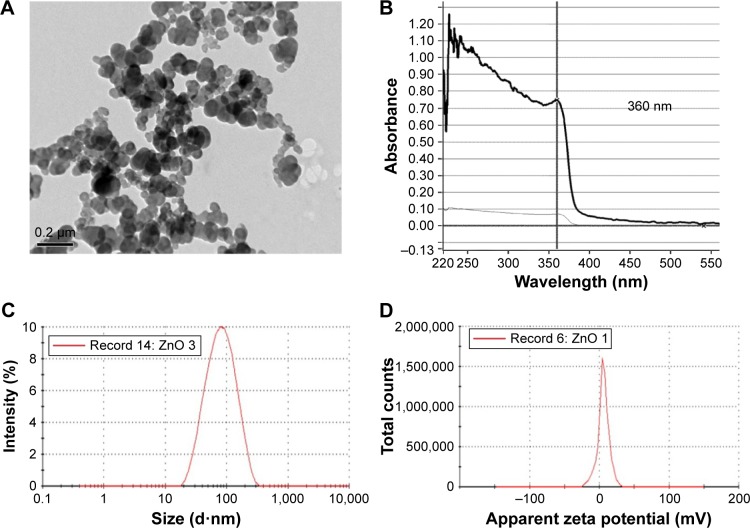
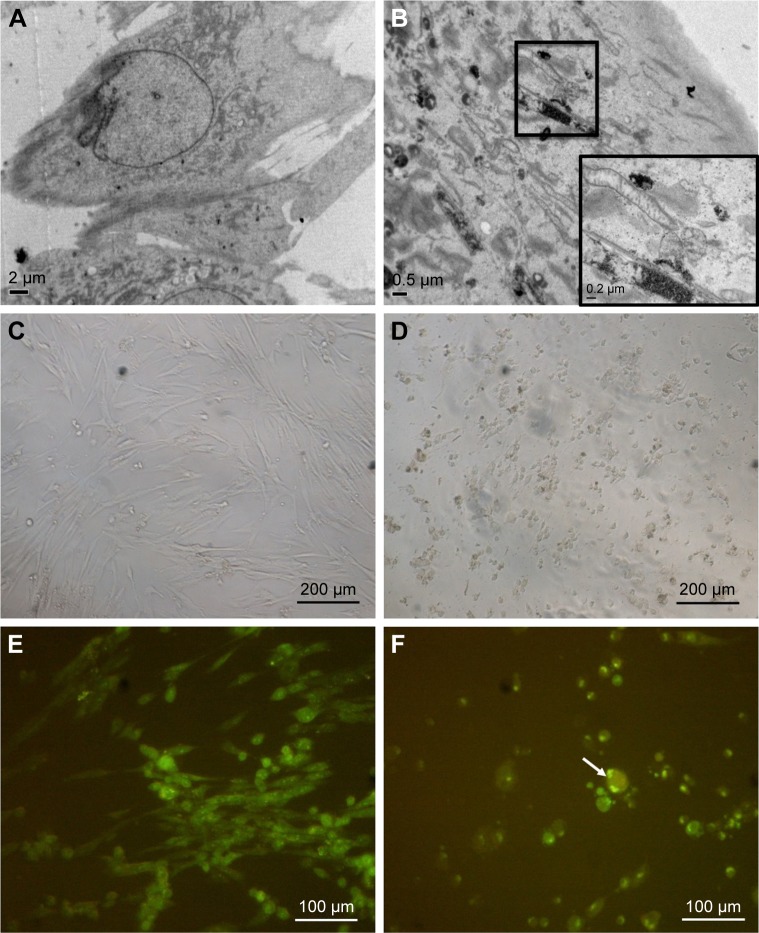
In this study, we investigated the toxicological profiles of ZnO NPs in MRC5 human lung fibroblasts in vitro and in an in vivo model using the fruit fly . A comprehensive study was conducted to evaluate the uptake, cytotoxicity, reactive oxygen species (ROS) formation, gene expression profiling and genotoxicity induced by ZnO NPs.
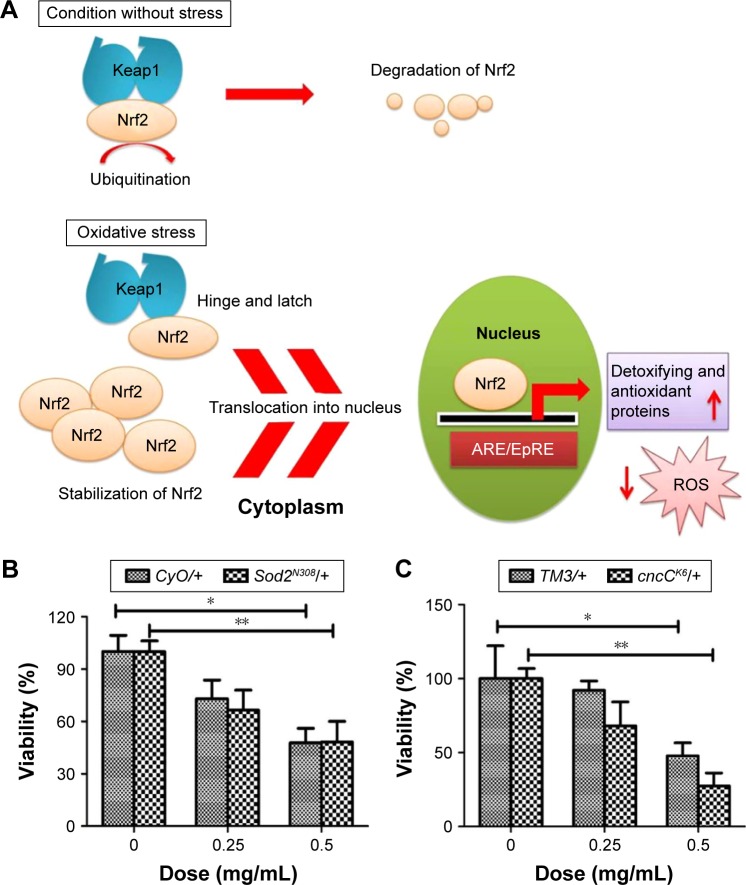
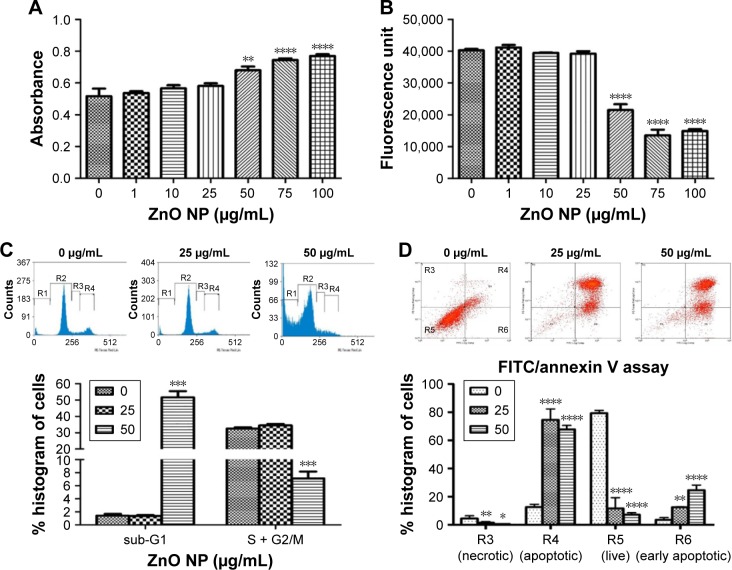
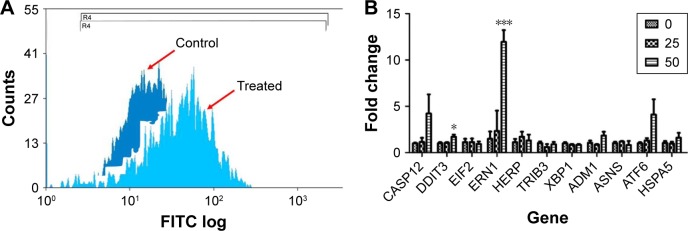
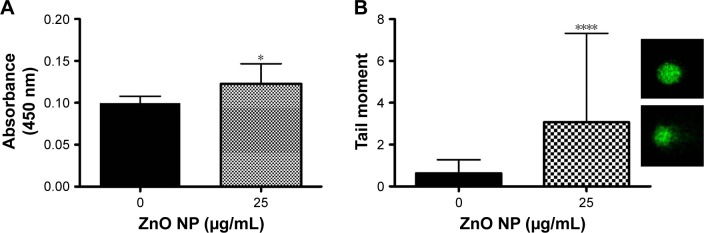
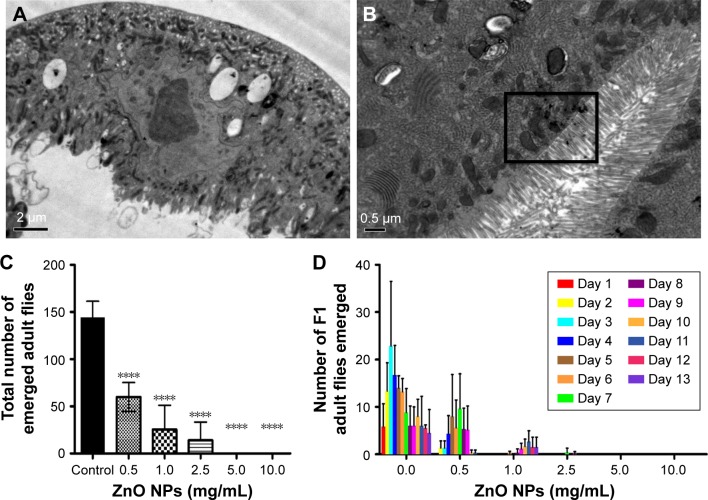
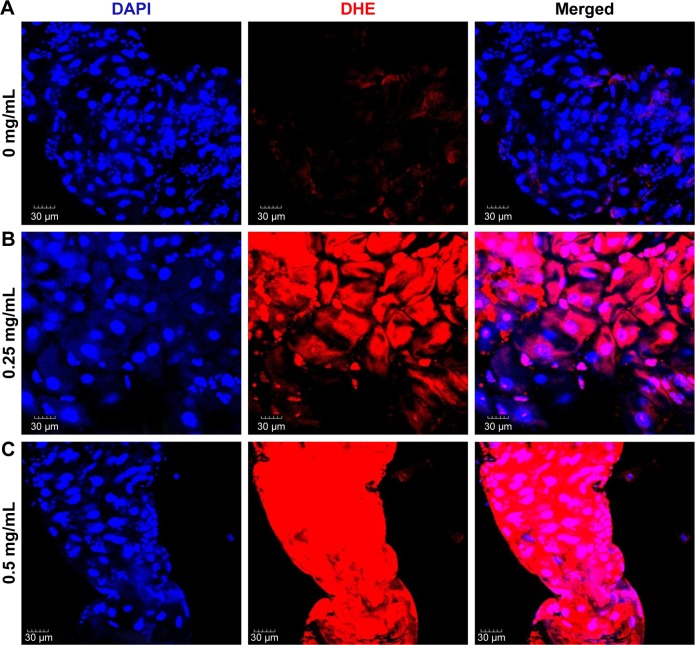
For in vitro toxicity, the results showed that there was a significant release of extracellular lactate dehydrogenase and decreased cell viability in ZnO NP-treated MRC5 lung cells, indicating cellular damage and cytotoxicity. Generation of ROS was observed to be related to significant expression of DNA Damage Inducible Transcript () and endoplasmic reticulum (ER) to nucleus signaling 1 () genes, which are ER stress-related genes. Oxidative stress induced DNA damage was further verified by a significant release of DNA oxidation product, 8-hydroxydeoxyguanosine (8-OHdG), as well as by the Comet assay. For the in vivo study using the fruit fly as a model, significant toxicity was observed in F1 progenies upon ingestion of ZnO NPs. ZnO NPs induced significant decrease in the egg-to-adult viability of the flies. We further showed that the decreased viability is closely associated with ROS induction by ZnO NPs. Removal of one copy of the alleles further decreased the ZnO NPs-induced lethality due to increased production of ROS, indicating that nuclear factor E2-related factor 2 (Nrf2) plays important role in ZnO NPs-mediated ROS production.
The present study suggests that ZnO NPs induced significant oxidative stress-related cytotoxicity and genotoxicity in human lung fibroblasts in vitro and in in vivo. More extensive studies would be needed to verify the safety issues related to increased usage of ZnO NPs by consumers.
尽管氧化锌纳米颗粒(ZnO NPs)已被广泛使用,但关于ZnO NPs毒性的报道越来越多。然而,对体内条件下潜在机制的研究还不够充分。
在本研究中,我们在体外使用MRC5人肺成纤维细胞以及在体内使用果蝇模型研究了ZnO NPs的毒理学特征。进行了一项全面研究以评估ZnO NPs诱导的摄取、细胞毒性、活性氧(ROS)形成、基因表达谱和遗传毒性。
对于体外毒性,结果表明,在经ZnO NPs处理的MRC5肺细胞中,细胞外乳酸脱氢酶显著释放,细胞活力降低,表明细胞损伤和细胞毒性。观察到ROS的产生与DNA损伤诱导转录物()和内质网(ER)到细胞核信号传导1()基因的显著表达有关,这两个基因是与ER应激相关的基因。DNA氧化产物8-羟基脱氧鸟苷(8-OHdG)的显著释放以及彗星试验进一步证实了氧化应激诱导的DNA损伤。对于以果蝇为模型的体内研究,在摄入ZnO NPs后,F1代后代中观察到显著毒性。ZnO NPs导致果蝇的卵到成虫存活率显著降低。我们进一步表明,存活率降低与ZnO NPs诱导的ROS密切相关。去除一个拷贝的等位基因由于ROS产生增加进一步降低了ZnO NPs诱导的致死率,表明核因子E2相关因子2(Nrf2)在ZnO NPs介导的ROS产生中起重要作用。
本研究表明,ZnO NPs在体外人肺成纤维细胞和体内果蝇中诱导了显著的氧化应激相关细胞毒性和遗传毒性。需要更广泛的研究来验证与消费者增加使用ZnO NPs相关的安全问题。