Kuo Yung-Chih, Lin Che-Yu, Li Jay-Shake, Lou Yung-I
Department of Chemical Engineering.
Department of Psychology, National Chung Cheng University, Chia-Yi.
Int J Nanomedicine. 2017 Mar 2;12:1757-1774. doi: 10.2147/IJN.S128396. eCollection 2017.
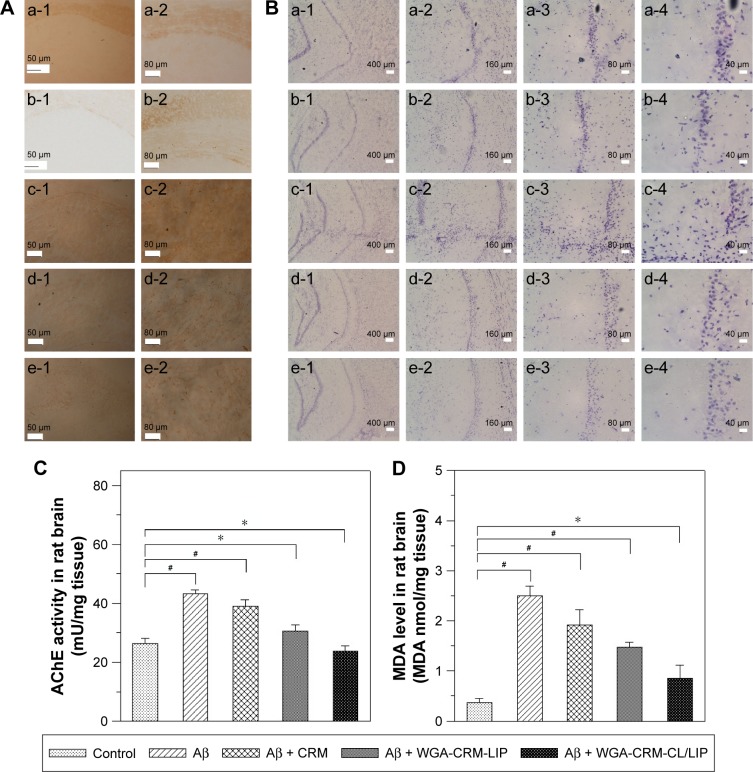
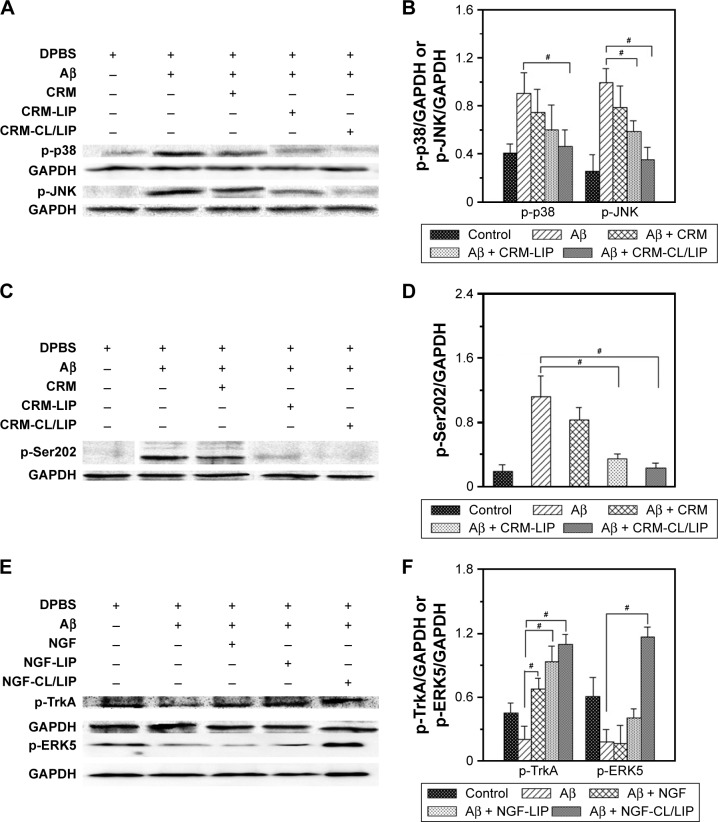
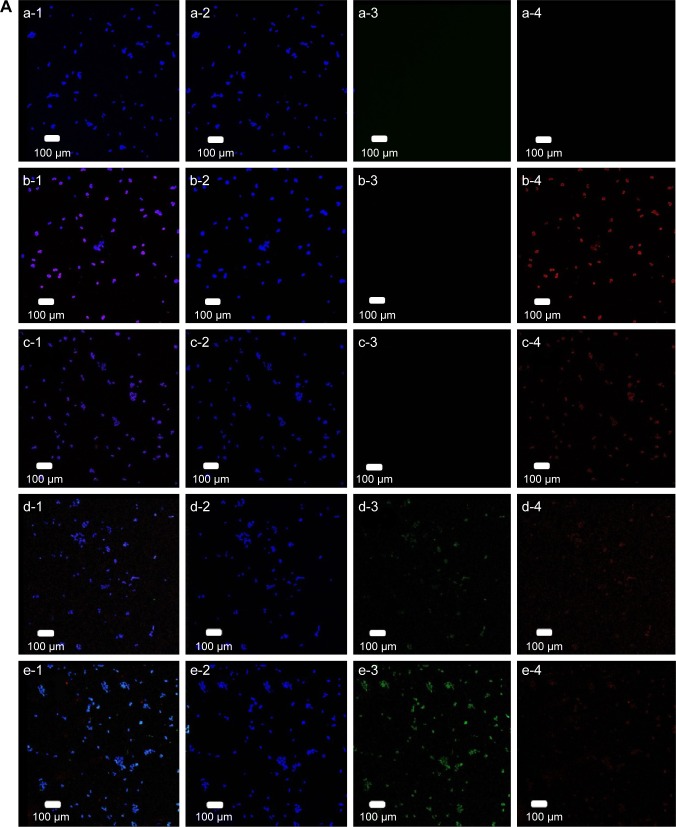
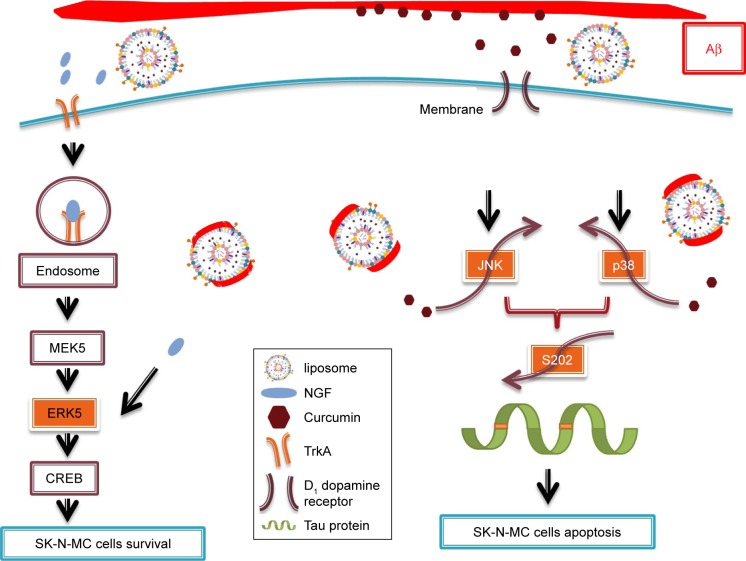
Curcumin (CRM) and nerve growth factor (NGF) were entrapped in liposomes (LIP) with surface wheat germ agglutinin (WGA) to downregulate the phosphorylation of kinases in Alzheimer's disease (AD) therapy. Cardiolipin (CL)-conjugated LIP carrying CRM (CRM-CL/LIP) and also carrying NGF (NGF-CL/LIP) were used with AD models of SK-N-MC cells and Wistar rats after an insult with β-amyloid peptide (Aβ). We found that CRM-CL/LIP inhibited the expression of phosphorylated p38 (p-p38), phosphorylated c-Jun N-terminal kinase (p-JNK), and p-tau protein at serine 202 and prevented neurodegeneration of SK-N-MC cells. In addition, NGF-CL/LIP could enhance the quantities of p-neurotrophic tyrosine kinase receptor type 1 and p-extracellular signal-regulated kinase 5 for neuronal rescue. Moreover, WGA-grafted CRM-CL/LIP and WGA-grafted NGF-CL/LIP significantly improved the permeation of CRM and NGF across the blood-brain barrier, reduced Aβ plaque deposition and the malondialdehyde level, and increased the percentage of normal neurons and cholinergic activity in the hippocampus of AD rats. Based on the marker expressions and in vivo evidence, current LIP carriers can be promising drug delivery systems to protect nervous tissue against Aβ-induced apoptosis in the brain during the clinical management of AD.
姜黄素(CRM)和神经生长因子(NGF)被包裹于含有表面小麦胚芽凝集素(WGA)的脂质体(LIP)中,用于在阿尔茨海默病(AD)治疗中下调激酶的磷酸化。携带CRM(CRM-CL/LIP)以及携带NGF(NGF-CL/LIP)的心磷脂(CL)共轭脂质体在β-淀粉样肽(Aβ)损伤后的SK-N-MC细胞和Wistar大鼠AD模型中使用。我们发现,CRM-CL/LIP抑制了磷酸化p38(p-p38)、磷酸化c-Jun氨基末端激酶(p-JNK)以及丝氨酸202位点的p-tau蛋白的表达,并防止了SK-N-MC细胞的神经变性。此外,NGF-CL/LIP可以增加p-神经营养酪氨酸激酶受体1型和p-细胞外信号调节激酶5的量以挽救神经元。而且,WGA嫁接的CRM-CL/LIP和WGA嫁接的NGF-CL/LIP显著提高了CRM和NGF穿过血脑屏障的渗透率,减少了Aβ斑块沉积和丙二醛水平,并增加了AD大鼠海马中正常神经元的百分比和胆碱能活性。基于标志物表达和体内证据,当前的脂质体载体有望成为在AD临床管理期间保护神经组织免受Aβ诱导的大脑细胞凋亡影响的药物递送系统。