Malerba Paola, Straudi Sofia, Fregni Felipe, Bazhenov Maxim, Basaglia Nino
Department of Medicine, University of California San Diego , La Jolla, CA , USA.
Neuroscience and Rehabilitation Department, Ferrara University Hospital , Ferrara , Italy.
Front Neurol. 2017 Feb 23;8:58. doi: 10.3389/fneur.2017.00058. eCollection 2017.
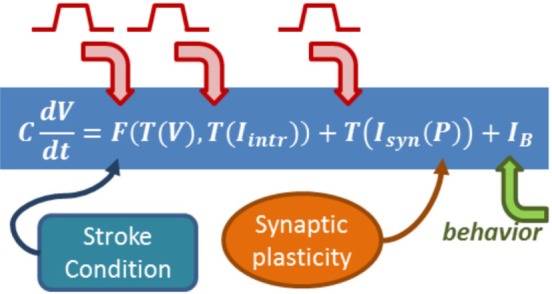
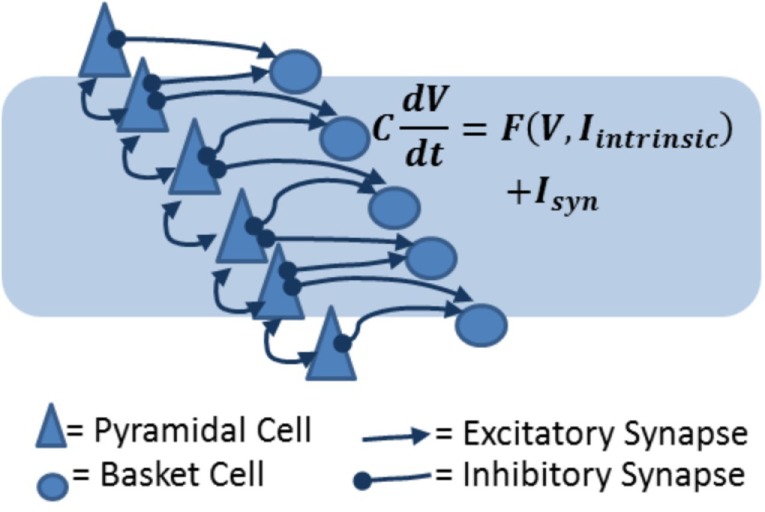
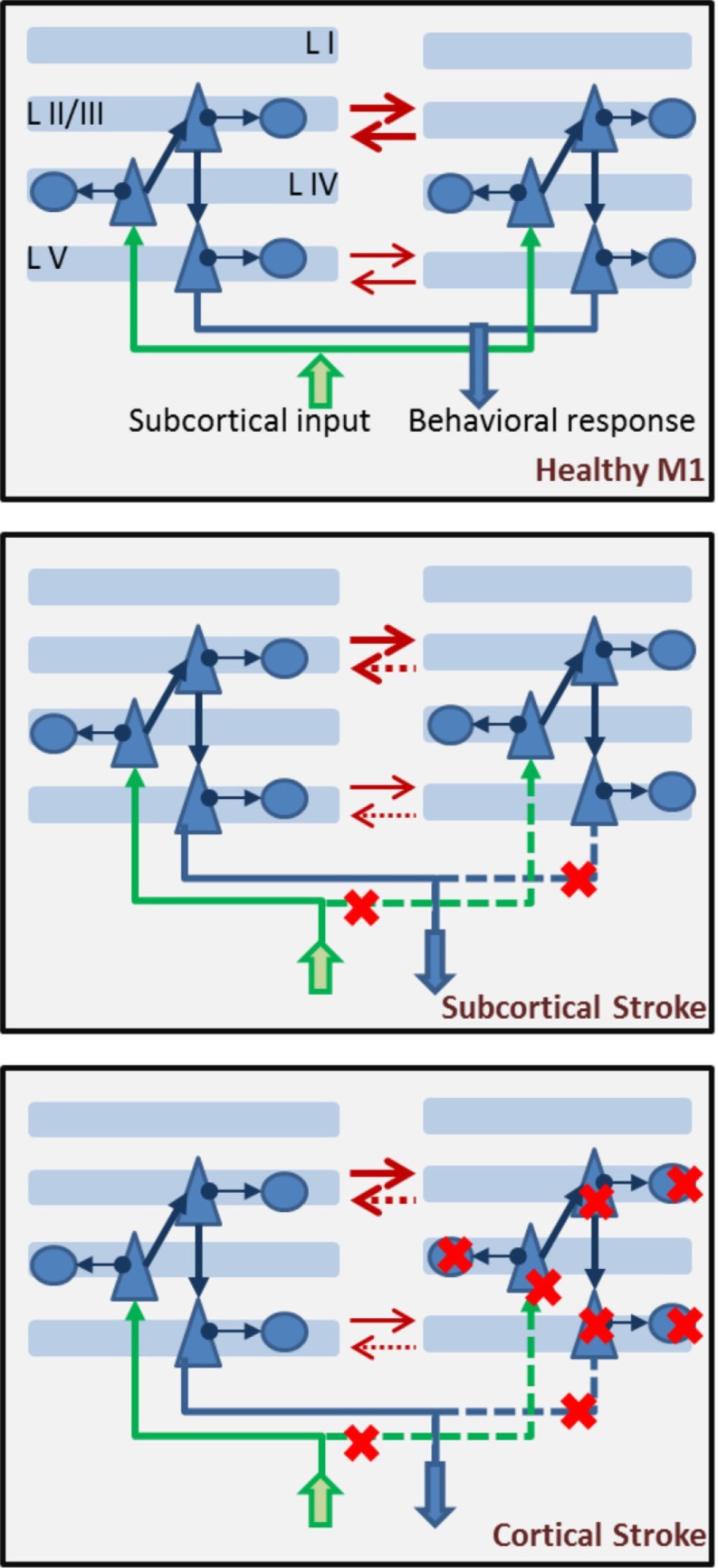
Stroke is a leading cause of worldwide disability, and up to 75% of survivors suffer from some degree of arm paresis. Recently, rehabilitation of stroke patients has focused on recovering motor skills by taking advantage of use-dependent neuroplasticity, where high-repetition of goal-oriented movement is at times combined with non-invasive brain stimulation, such as transcranial direct current stimulation (tDCS). Merging the two approaches is thought to provide outlasting clinical gains, by enhancing synaptic plasticity and motor relearning in the motor cortex primary area. However, this general approach has shown mixed results across the stroke population. In particular, stroke location has been found to correlate with the likelihood of success, which suggests that different patients might require different protocols. Understanding how motor rehabilitation and stimulation interact with ongoing neural dynamics is crucial to optimize rehabilitation strategies, but it requires theoretical and computational models to consider the multiple levels at which this complex phenomenon operate. In this work, we argue that biophysical models of cortical dynamics are uniquely suited to address this problem. Specifically, biophysical models can predict treatment efficacy by introducing explicit variables and dynamics for damaged connections, changes in neural excitability, neurotransmitters, neuromodulators, plasticity mechanisms, and repetitive movement, which together can represent brain state, effect of incoming stimulus, and movement-induced activity. In this work, we hypothesize that effects of tDCS depend on ongoing neural activity and that tDCS effects on plasticity may be also related to enhancing inhibitory processes. We propose a model design for each step of this complex system, and highlight strengths and limitations of the different modeling choices within our approach. Our theoretical framework proposes a change in paradigm, where biophysical models can contribute to the future design of novel protocols, in which combined tDCS and motor rehabilitation strategies are tailored to the ongoing dynamics that they interact with, by considering the known biophysical factors recruited by such protocols and their interaction.
中风是全球残疾的主要原因,高达75%的幸存者患有某种程度的手臂麻痹。最近,中风患者的康复重点是利用使用依赖性神经可塑性来恢复运动技能,其中高重复的目标导向运动有时与非侵入性脑刺激相结合,如经颅直流电刺激(tDCS)。人们认为,将这两种方法结合起来可以通过增强运动皮层主要区域的突触可塑性和运动再学习来提供持久的临床收益。然而,这种一般方法在中风人群中的结果好坏参半。特别是,已发现中风部位与成功的可能性相关,这表明不同的患者可能需要不同的方案。了解运动康复和刺激如何与正在进行的神经动力学相互作用对于优化康复策略至关重要,但这需要理论和计算模型来考虑这一复杂现象运作的多个层面。在这项工作中,我们认为皮层动力学的生物物理模型特别适合解决这个问题。具体而言,生物物理模型可以通过引入受损连接、神经兴奋性变化、神经递质、神经调质、可塑性机制和重复运动的明确变量和动力学来预测治疗效果,这些因素共同可以代表脑状态、传入刺激的效果和运动诱导的活动。在这项工作中,我们假设tDCS的效果取决于正在进行的神经活动,并且tDCS对可塑性的影响可能也与增强抑制过程有关。我们为这个复杂系统的每个步骤提出了一种模型设计,并强调了我们方法中不同建模选择的优点和局限性。我们的理论框架提出了一种范式转变,即生物物理模型可以为新型方案的未来设计做出贡献,在新型方案中,结合tDCS和运动康复策略是根据它们与之相互作用的正在进行的动力学量身定制的,通过考虑此类方案所涉及的已知生物物理因素及其相互作用。