Matos Liliana, Gouveia Alexandra Monteiro, Almeida Henrique
Departamento de Biologia Experimental, Faculdade de Medicina, IBMC, Instituto de Biologia Molecular e Celular and I3S, Instituto de Investigação e Inovação em Saúde, Universidade do Porto, Alameda Prof. Hernâni Monteiro, 4200-319 Porto, Portugal; Faculdade de Ciências da Nutrição e Alimentação, Universidade do Porto, Rua Dr. Roberto Frias, 4200-465 Porto, Portugal.
Departamento de Biologia Experimental, Faculdade de Medicina, IBMC, Instituto de Biologia Molecular e Celular and I3S, Instituto de Investigação e Inovação em Saúde, Universidade do Porto, Alameda Prof. Hernâni Monteiro, 4200-319 Porto, Portugal.
Oxid Med Cell Longev. 2017;2017:3793817. doi: 10.1155/2017/3793817. Epub 2017 Feb 9.
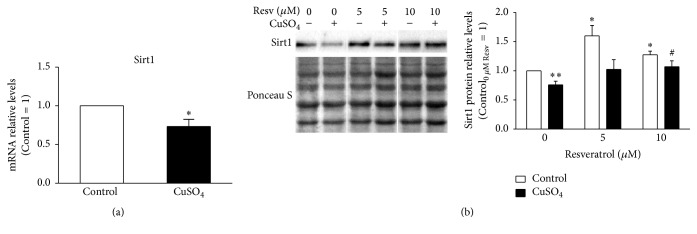
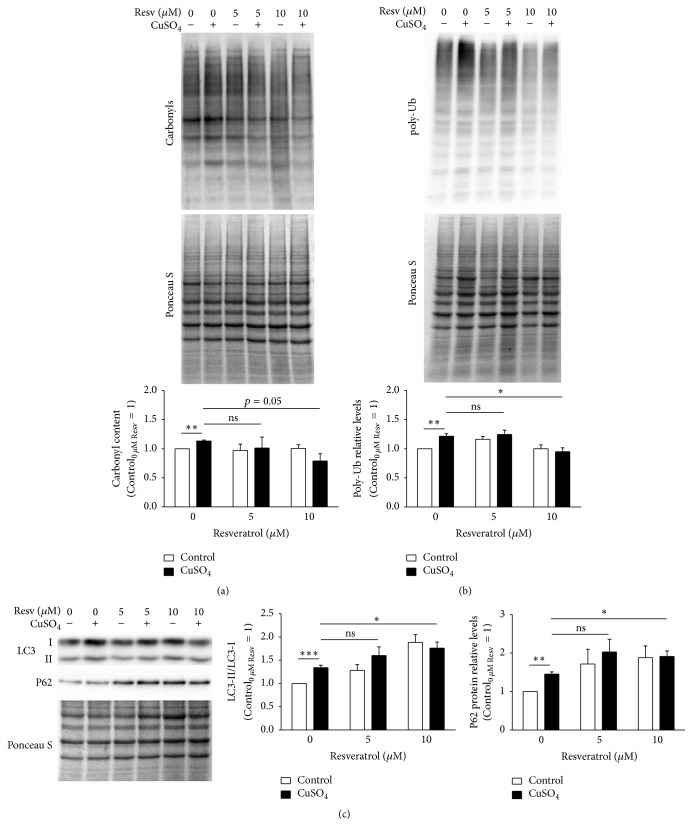
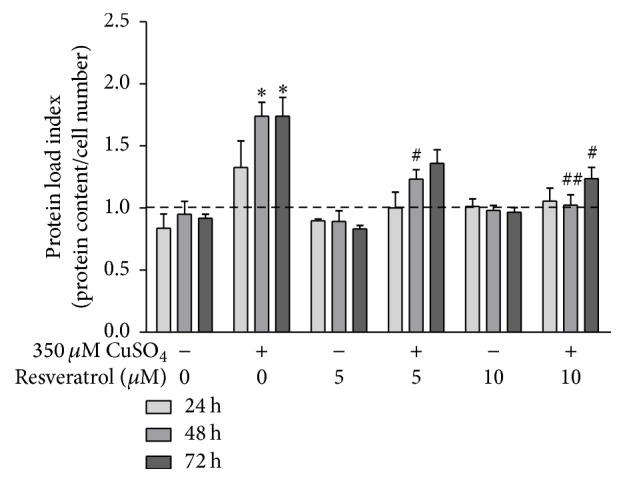
Copper sulfate-induced premature senescence (CuSO-SIPS) consistently mimetized molecular mechanisms of replicative senescence, particularly at the endoplasmic reticulum proteostasis level. In fact, disruption of protein homeostasis has been associated to age-related cell/tissue dysfunction and human disorders susceptibility. Resveratrol is a polyphenolic compound with proved antiaging properties under particular conditions. In this setting, we aimed to evaluate resveratrol ability to attenuate cellular senescence induction and to unravel related molecular mechanisms. Using CuSO-SIPS WI-38 fibroblasts, resveratrol is shown to attenuate typical senescence alterations on cell morphology, senescence-associated beta-galactosidase activity, and cell proliferation. The mechanisms implicated in this antisenescence effect seem to be independent of senescence-associated genes and proteins regulation but are reliant on cellular proteostasis improvement. In fact, resveratrol supplementation restores copper-induced increased protein content, attenuates BiP level, and reduces carbonylated and polyubiquitinated proteins by autophagy induction. Our data provide compelling evidence for the beneficial effects of resveratrol by mitigating CuSO-SIPS stressful consequences by the modulation of protein quality control systems. These findings highlight the importance of a balanced cellular proteostasis and add further knowledge on molecular mechanisms mediating resveratrol antisenescence effects. Moreover, they contribute to identifying specific molecular targets whose modulation will prevent age-associated cell dysfunction and improve human healthspan.
硫酸铜诱导的早衰(CuSO-SIPS)始终模拟复制性衰老的分子机制,特别是在内质网蛋白质稳态水平上。事实上,蛋白质稳态的破坏与年龄相关的细胞/组织功能障碍和人类疾病易感性有关。白藜芦醇是一种多酚类化合物,在特定条件下具有已被证实的抗衰老特性。在此背景下,我们旨在评估白藜芦醇减轻细胞衰老诱导的能力,并阐明相关的分子机制。使用CuSO-SIPS WI-38成纤维细胞,白藜芦醇显示出可减轻细胞形态、衰老相关β-半乳糖苷酶活性和细胞增殖方面的典型衰老改变。这种抗衰老作用所涉及的机制似乎独立于衰老相关基因和蛋白质的调控,但依赖于细胞蛋白质稳态的改善。事实上,补充白藜芦醇可恢复铜诱导的蛋白质含量增加,减轻结合免疫球蛋白重链结合蛋白(BiP)水平,并通过诱导自噬减少羰基化和多聚泛素化蛋白质。我们的数据为白藜芦醇通过调节蛋白质质量控制系统减轻CuSO-SIPS应激后果的有益作用提供了有力证据。这些发现突出了平衡细胞蛋白质稳态的重要性,并增加了对介导白藜芦醇抗衰老作用的分子机制的进一步了解。此外,它们有助于确定特定的分子靶点,对其进行调节将预防与年龄相关的细胞功能障碍并改善人类健康寿命。