Institut national de la santé et de la recherche médicale (Inserm), Institut de recherche en santé, environnement et travail (Irset - Inserm UMR 1085), Université de Rennes 1, 9 Avenue Léon Bernard, F-35000 RENNES, France.
LUNAM Université, Oniris, USC INRA 1329, Laboratoire d'Etude des Résidus et Contaminants dans les Aliments (LABERCA), Nantes, F-44307, France.
Sci Rep. 2017 Mar 10;7:44184. doi: 10.1038/srep44184.
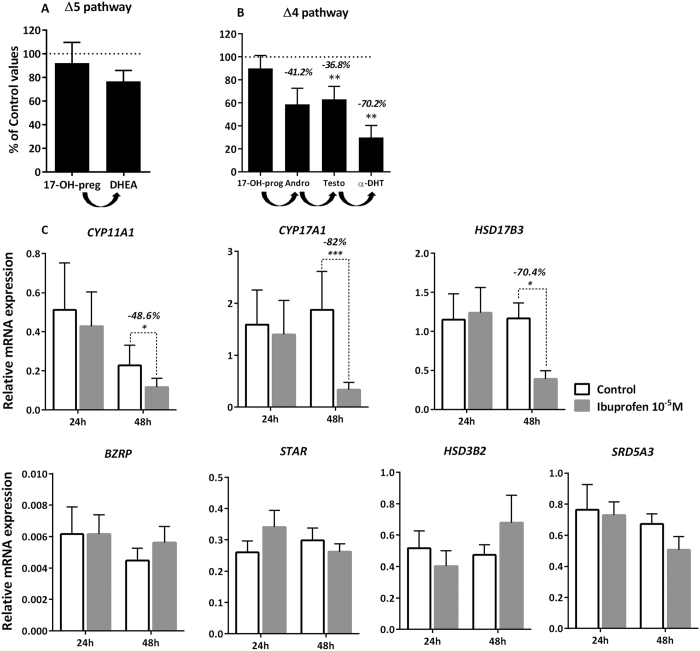
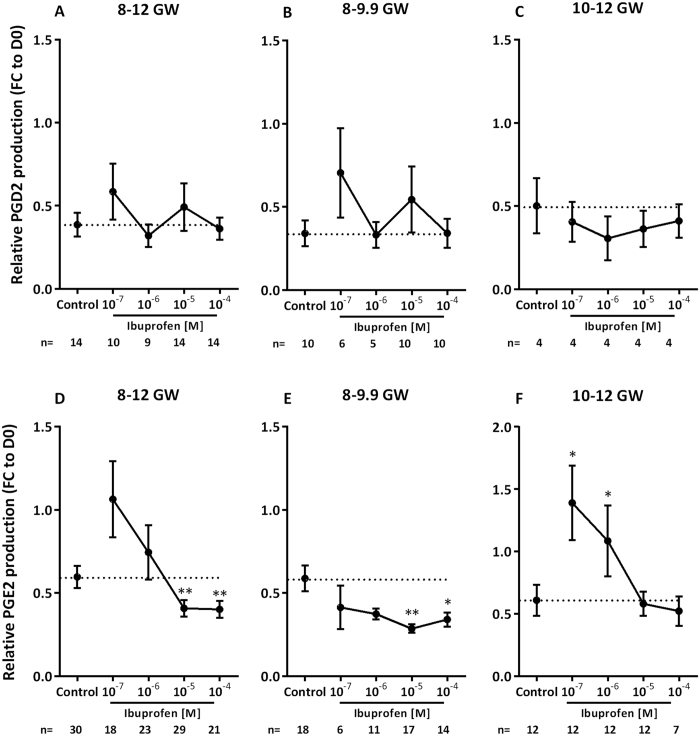
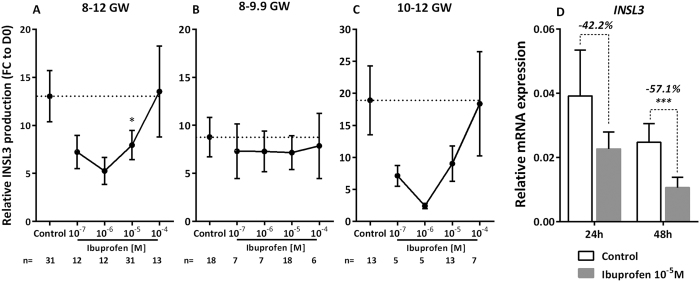
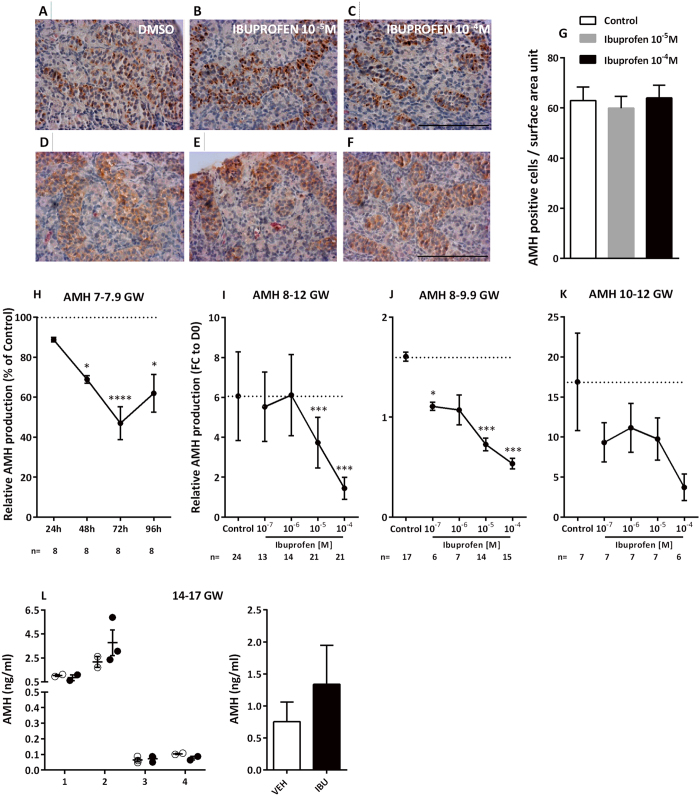
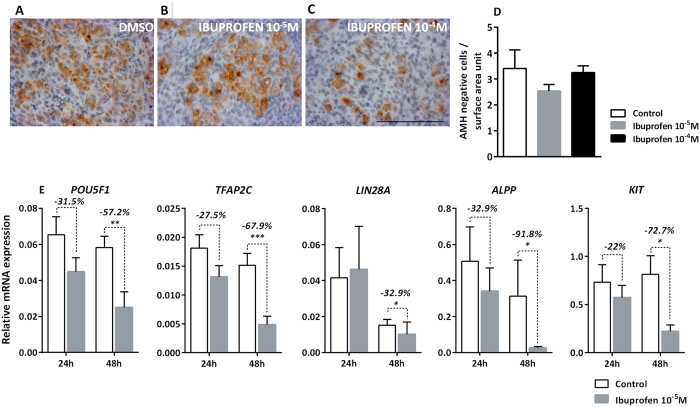
Among pregnant women ibuprofen is one of the most frequently used pharmaceutical compounds with up to 28% reporting use. Regardless of this, it remains unknown whether ibuprofen could act as an endocrine disruptor as reported for fellow analgesics paracetamol and aspirin. To investigate this, we exposed human fetal testes (7-17 gestational weeks (GW)) to ibuprofen using ex vivo culture and xenograft systems. Ibuprofen suppressed testosterone and Leydig cell hormone INSL3 during culture of 8-9 GW fetal testes with concomitant reduction in expression of the steroidogenic enzymes CYP11A1, CYP17A1 and HSD17B3, and of INSL3. Testosterone was not suppressed in testes from fetuses younger than 8 GW, older than 10-12 GW, or in second trimester xenografted testes (14-17 GW). Ex vivo, ibuprofen also affected Sertoli cell by suppressing AMH production and mRNA expression of AMH, SOX9, DHH, and COL2A1. While PGE2 production was suppressed by ibuprofen, PGD2 production was not. Germ cell transcripts POU5F1, TFAP2C, LIN28A, ALPP and KIT were also reduced by ibuprofen. We conclude that, at concentrations relevant to human exposure and within a particular narrow 'early window' of sensitivity within first trimester, ibuprofen causes direct endocrine disturbances in the human fetal testis and alteration of the germ cell biology.
在孕妇中,布洛芬是最常使用的药物化合物之一,有高达 28%的报告显示孕妇使用过布洛芬。尽管如此,目前仍不清楚布洛芬是否像同为镇痛药的对乙酰氨基酚和阿司匹林那样,具有内分泌干扰作用。为了研究这一点,我们使用离体培养和异种移植系统,将布洛芬暴露于人类胎儿睾丸(7-17 孕周(GW))中。布洛芬在培养 8-9 GW 胎儿睾丸时抑制了睾酮和间质细胞激素 INSL3 的产生,同时降低了类固醇生成酶 CYP11A1、CYP17A1 和 HSD17B3 的表达以及 INSL3 的表达。在 8 GW 以下、10-12 GW 以上或在 14-17 GW 的中孕期异种移植睾丸中,睾酮未受抑制。在离体培养中,布洛芬还通过抑制 AMH 的产生和 AMH、SOX9、DHH 和 COL2A1 的 mRNA 表达来影响支持细胞。虽然布洛芬抑制了 PGE2 的产生,但 PGD2 的产生不受影响。生殖细胞转录物 POU5F1、TFAP2C、LIN28A、ALPP 和 KIT 也被布洛芬下调。我们得出结论,在与人类暴露相关的浓度下,并且在头三个月内的特定早期敏感“窗口期”内,布洛芬会导致人类胎儿睾丸的直接内分泌紊乱,并改变生殖细胞生物学。