Koole Cassandra, Reynolds Christopher A, Mobarec Juan C, Hick Caroline, Sexton Patrick M, Sakmar Thomas P
From the Laboratory of Chemical Biology and Signal Transduction, The Rockefeller University, New York, New York 10065.
the School of Biological Sciences, University of Essex, Wivenhoe Park, Colchester CO4 3SQ, United Kingdom.
J Biol Chem. 2017 Apr 28;292(17):7131-7144. doi: 10.1074/jbc.M117.779496. Epub 2017 Mar 10.
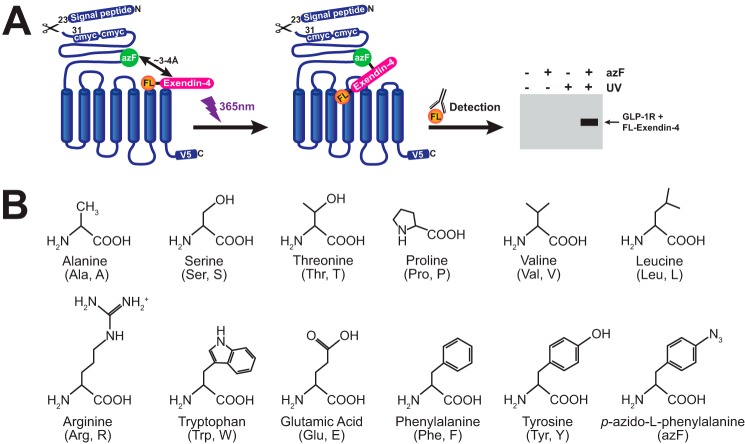
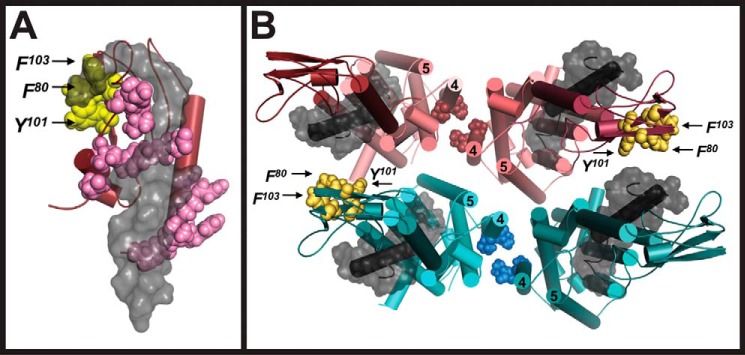
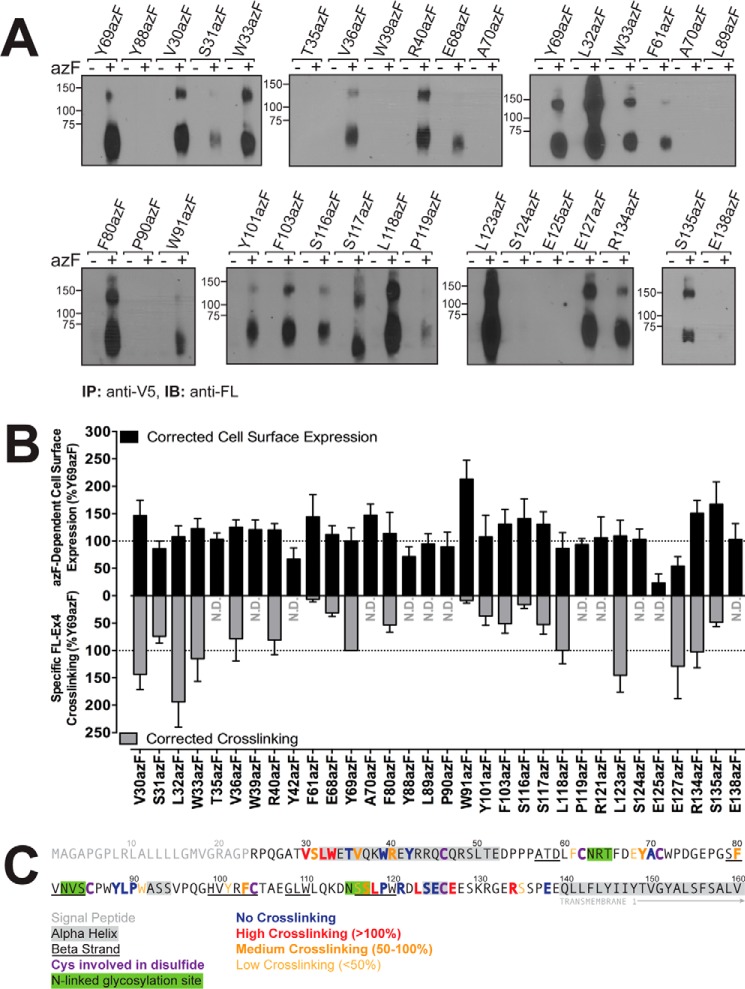
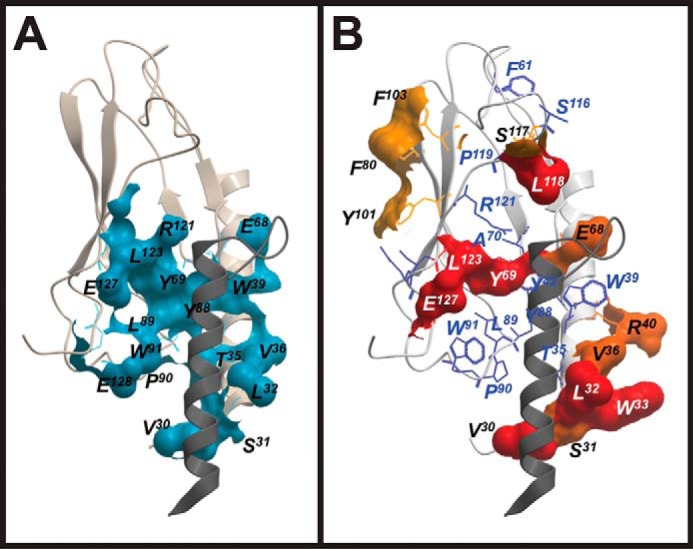
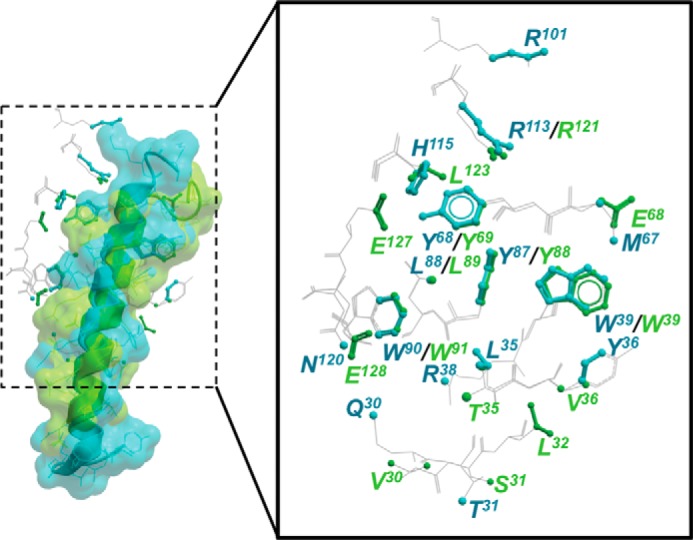
The glucagon-like peptide-1 receptor (GLP-1R) is a key therapeutic target in the management of type II diabetes mellitus, with actions including regulation of insulin biosynthesis and secretion, promotion of satiety, and preservation of β-cell mass. Like most class B G protein-coupled receptors (GPCRs), there is limited knowledge linking biological activity of the GLP-1R with the molecular structure of an intact, full-length, and functional receptor·ligand complex. In this study, we have utilized genetic code expansion to site-specifically incorporate the photoactive amino acid -azido-l-phenylalanine (azF) into N-terminal residues of a full-length functional human GLP-1R in mammalian cells. UV-mediated photolysis of azF was then carried out to induce targeted photocross-linking to determine the proximity of the azido group in the mutant receptor with the peptide exendin-4. Cross-linking data were compared directly with the crystal structure of the isolated N-terminal extracellular domain of the GLP-1R in complex with exendin(9-39), revealing both similarities as well as distinct differences in the mode of interaction. Generation of a molecular model to accommodate the photocross-linking constraints highlights the potential influence of environmental conditions on the conformation of the receptor·peptide complex, including folding dynamics of the peptide and formation of dimeric and higher order oligomeric receptor multimers. These data demonstrate that crystal structures of isolated receptor regions may not give a complete reflection of peptide/receptor interactions and should be combined with additional experimental constraints to reveal peptide/receptor interactions occurring in the dynamic, native, and full-length receptor state.
胰高血糖素样肽-1受体(GLP-1R)是II型糖尿病治疗中的关键靶点,其作用包括调节胰岛素生物合成与分泌、促进饱腹感以及维持β细胞量。与大多数B类G蛋白偶联受体(GPCR)一样,关于GLP-1R的生物活性与完整、全长且有功能的受体-配体复合物分子结构之间的联系,人们了解有限。在本研究中,我们利用遗传密码扩展技术,在哺乳动物细胞中将光活性氨基酸叠氮基-L-苯丙氨酸(azF)位点特异性地掺入全长功能性人GLP-1R的N端残基中。然后进行紫外线介导的azF光解,以诱导靶向光交联,从而确定突变受体中叠氮基团与肽艾塞那肽-4的接近程度。将交联数据直接与GLP-1R分离的N端胞外结构域与艾塞那肽(9-39)复合物的晶体结构进行比较,揭示了相互作用模式中的相似性和明显差异。生成一个适应光交联限制的分子模型,突出了环境条件对受体-肽复合物构象的潜在影响,包括肽的折叠动力学以及二聚体和更高阶寡聚体受体多聚体的形成。这些数据表明,分离的受体区域的晶体结构可能无法完全反映肽/受体相互作用,应结合额外的实验限制条件,以揭示在动态、天然和全长受体状态下发生的肽/受体相互作用。