Tao Yan-Fang, Wang Na-Na, Xu Li-Xiao, Li Zhi-Heng, Li Xiao-Lu, Xu Yun-Yun, Fang Fang, Li Mei, Qian Guang-Hui, Li Yan-Hong, Li Yi-Ping, Wu Yi, Ren Jun-Li, Du Wei-Wei, Lu Jun, Feng Xing, Wang Jian, He Wei-Qi, Hu Shao-Yan, Pan Jian
Institute of Pediatrics, Children's Hospital of Soochow University, Suzhou, China.
Department of Hematology and Oncology, Children's Hospital of Soochow University, Suzhou, China.
Cancer Cell Int. 2017 Mar 6;17:35. doi: 10.1186/s12935-017-0405-y. eCollection 2017.
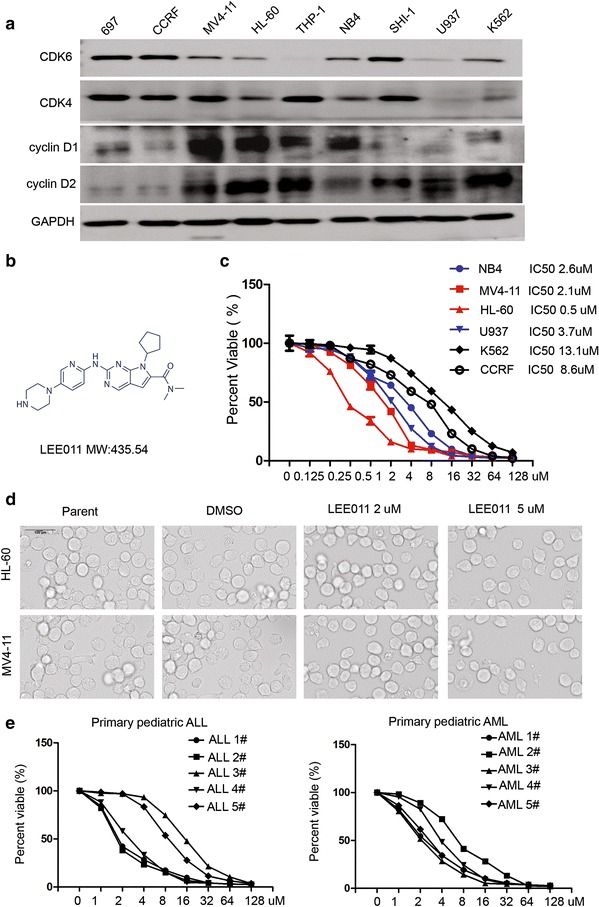
Overexpression of cyclin D1 dependent kinases 4 and 6 (CDK4/6) is a common feature of many human cancers including leukemia. LEE011 is a novel inhibitor of both CDK4 and 6. To date, the molecular function of LEE011 in leukemia remains unclear.
Leukemia cell growth and apoptosis following LEE011 treatment was assessed through CCK-8 and annexin V/propidium iodide staining assays. Cell senescence was assessed by β-galactosidase staining and p16 expression analysis. Gene expression profiles of LEE011 treated HL-60 cells were investigated using an Arraystar Human LncRNA array. Gene ontology and KEGG pathway analysis were then used to analyze the differentially expressed genes from the cluster analysis.
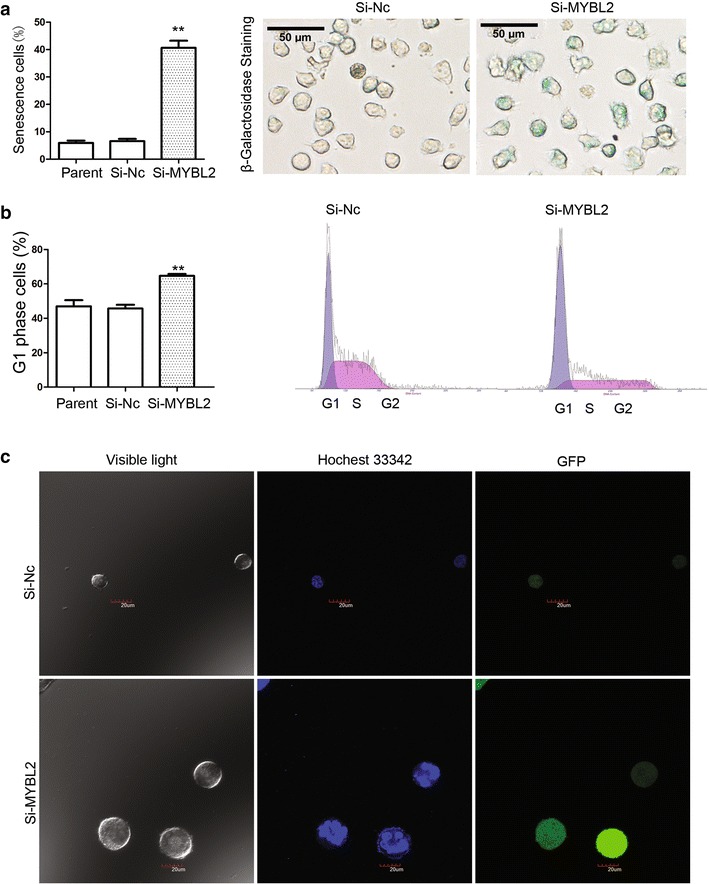
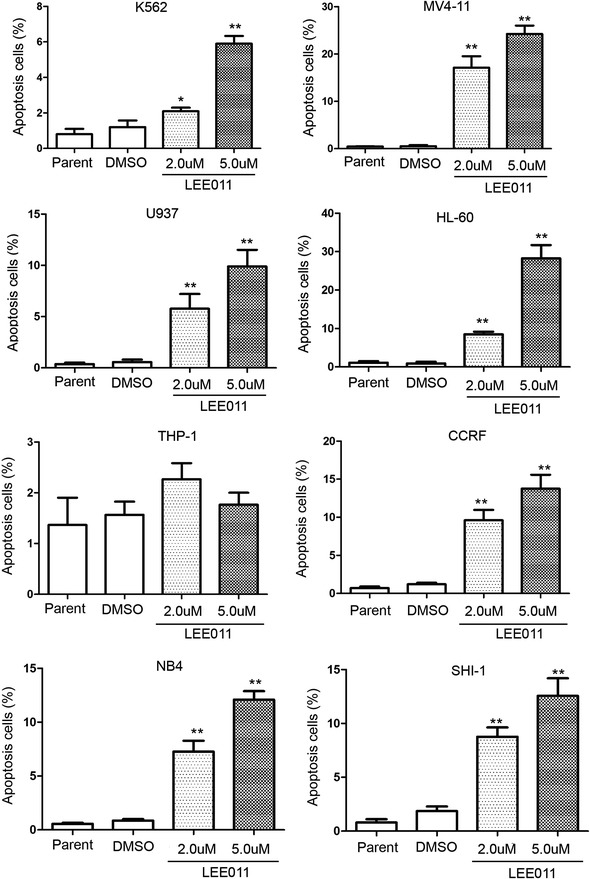
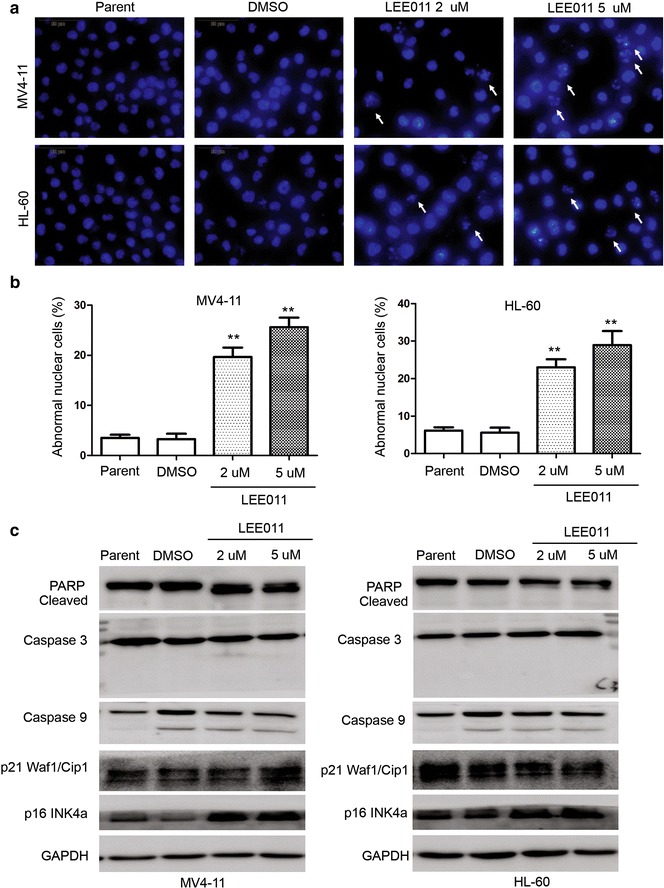
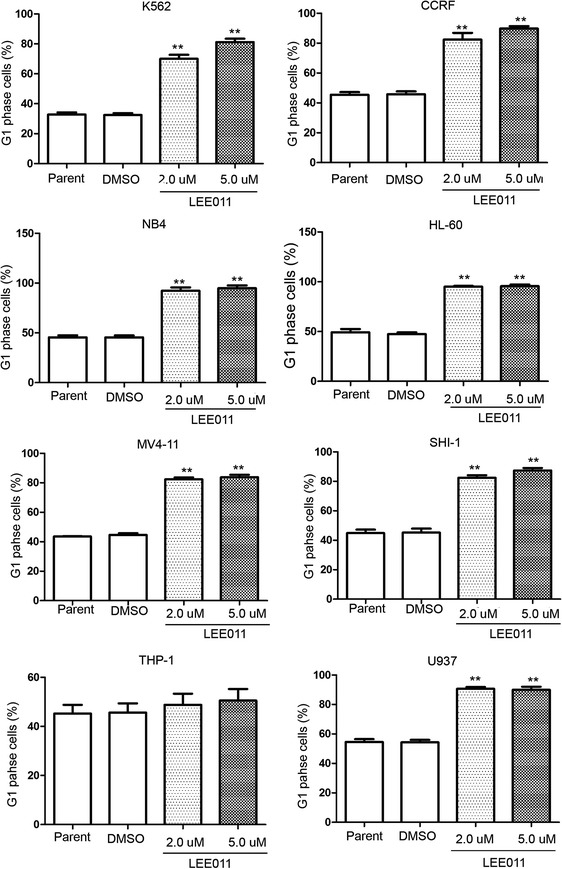
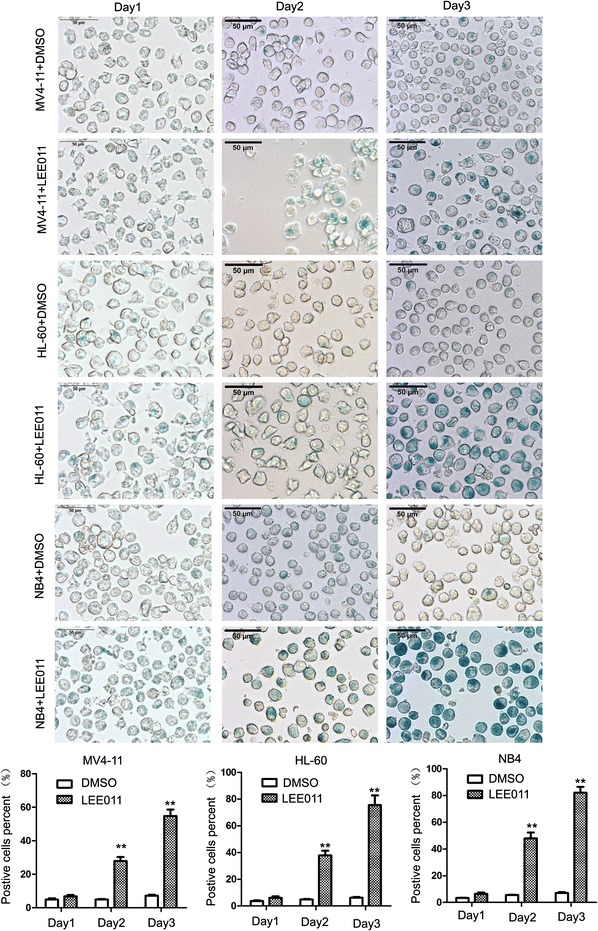
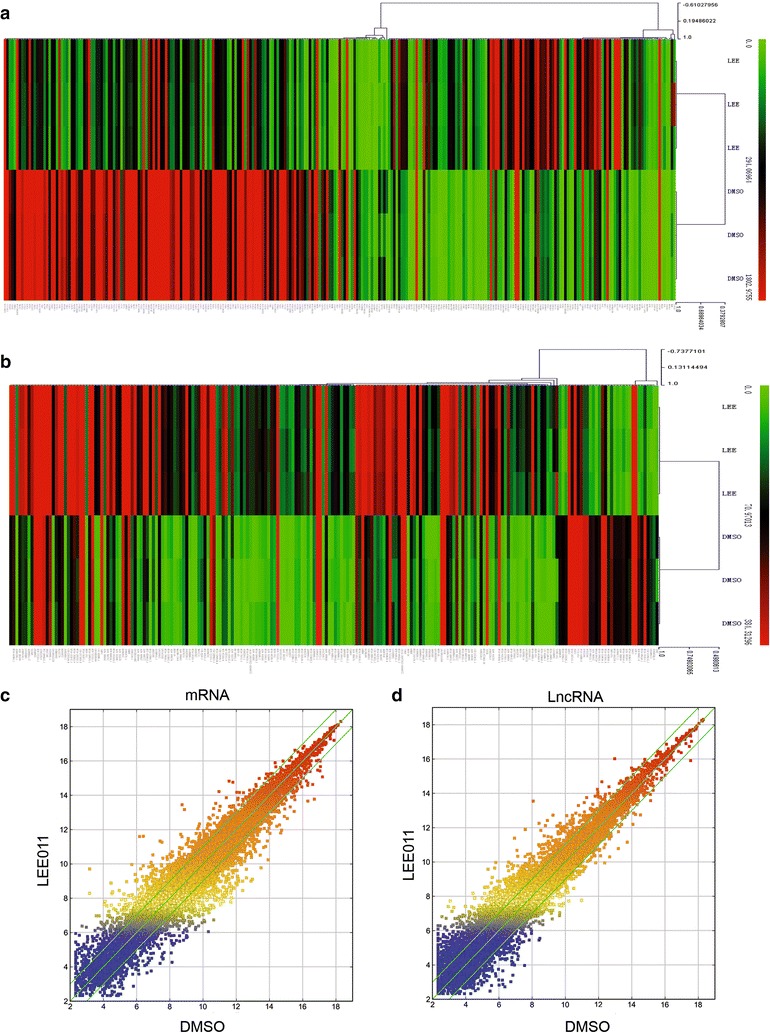
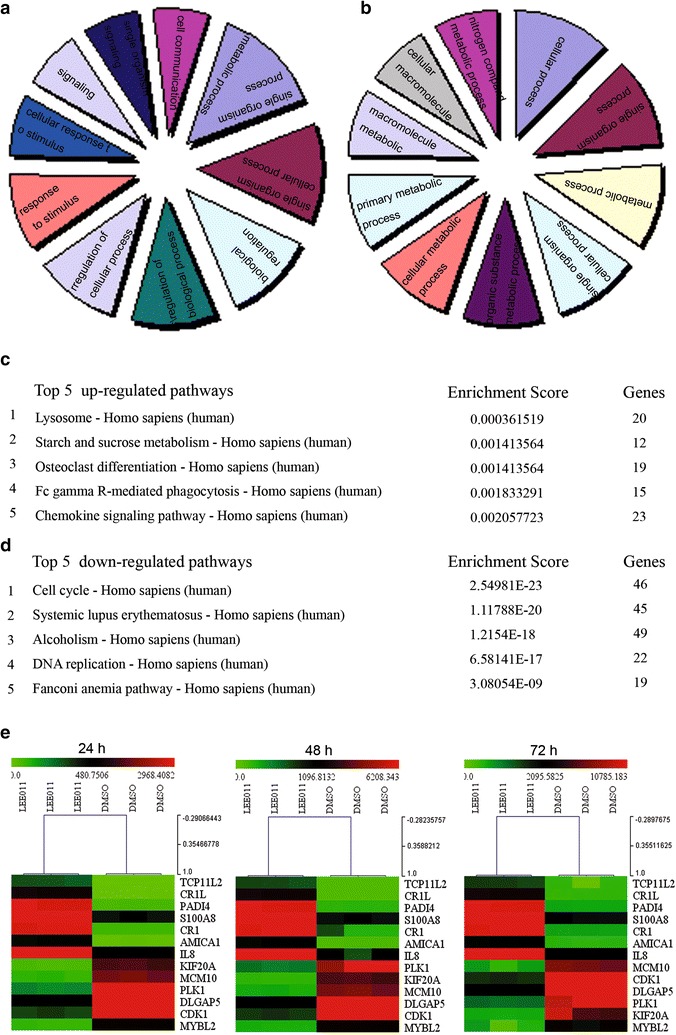
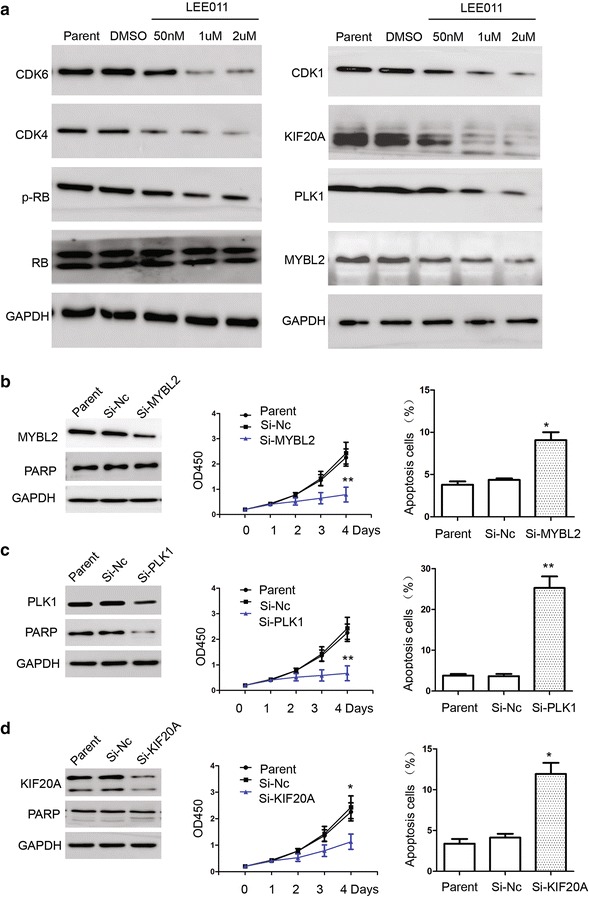
Our studies demonstrated that LEE011 inhibited proliferation of leukemia cells and could induce apoptosis. Hoechst 33,342 staining analysis showed DNA fragmentation and distortion of nuclear structures following LEE011 treatment. Cell cycle analysis showed LEE011 significantly induced cell cycle G arrest in seven of eight acute leukemia cells lines, the exception being THP-1 cells. β-Galactosidase staining analysis and p16 expression analysis showed that LEE011 treatment can induce cell senescence of leukemia cells. LncRNA microarray analysis showed 2083 differentially expressed mRNAs and 3224 differentially expressed lncRNAs in LEE011-treated HL-60 cells compared with controls. Molecular function analysis showed that LEE011 induced senescence in leukemia cells partially through downregulation of the transcriptional expression of MYBL2.
We demonstrate for the first time that LEE011 treatment results in inhibition of cell proliferation and induction of G arrest and cellular senescence in leukemia cells. LncRNA microarray analysis showed differentially expressed mRNAs and lncRNAs in LEE011-treated HL-60 cells and we demonstrated that LEE011 induces cellular senescence partially through downregulation of the expression of MYBL2. These results may open new lines of investigation regarding the molecular mechanism of LEE011 induced cellular senescence.
细胞周期蛋白D1依赖性激酶4和6(CDK4/6)的过表达是包括白血病在内的许多人类癌症的共同特征。LEE011是一种新型的CDK4和6抑制剂。迄今为止,LEE011在白血病中的分子功能仍不清楚。
通过CCK-8和膜联蛋白V/碘化丙啶染色试验评估LEE011处理后白血病细胞的生长和凋亡情况。通过β-半乳糖苷酶染色和p16表达分析评估细胞衰老。使用Arraystar人类lncRNA芯片研究LEE011处理的HL-60细胞的基因表达谱。然后使用基因本体论和KEGG通路分析来分析聚类分析中差异表达的基因。
我们的研究表明,LEE011可抑制白血病细胞的增殖并诱导凋亡。Hoechst 33342染色分析显示,LEE011处理后DNA片段化且核结构变形。细胞周期分析表明,LEE011在八个急性白血病细胞系中的七个中显著诱导细胞周期G期阻滞,THP-1细胞除外。β-半乳糖苷酶染色分析和p16表达分析表明,LEE011处理可诱导白血病细胞衰老。lncRNA芯片分析显示,与对照组相比,LEE011处理的HL-60细胞中有2083个差异表达的mRNA和3224个差异表达的lncRNA。分子功能分析表明,LEE011通过下调MYBL2的转录表达部分诱导白血病细胞衰老。
我们首次证明,LEE011处理可导致白血病细胞的细胞增殖受到抑制,并诱导G期阻滞和细胞衰老。lncRNA芯片分析显示,LEE011处理的HL-60细胞中有差异表达的mRNA和lncRNA,并且我们证明LEE011通过下调MYBL2的表达部分诱导细胞衰老。这些结果可能为LEE011诱导细胞衰老的分子机制开辟新的研究方向。