Ronai Z A, Weinstein I B
Comprehensive Cancer Center, Columbia University, New York, New York 10032.
J Virol. 1988 Mar;62(3):1057-60. doi: 10.1128/JVI.62.3.1057-1060.1988.
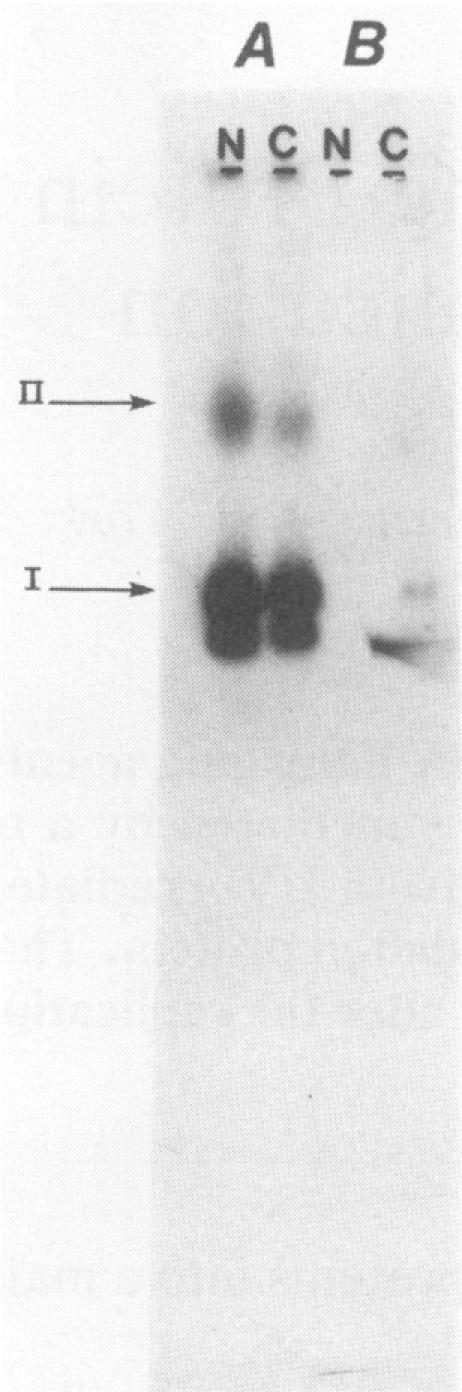
Previous studies provided indirect evidence that the ability of a variety of DNA-damaging agents to induce asynchronous polyomavirus DNA replication in the H3 rat fibroblast cell line is mediated by a trans-acting factor. Using an erythrocyte insertion technique to introduce protein fractions from UV-irradiated cells into unirradiated H3 cells, we have now obtained evidence that this factor is a 60-kilodalton protein. These findings provide evidence that DNA damage in mammalian cells induces a factor that can alter the replication of a viral DNA.
先前的研究提供了间接证据,表明多种DNA损伤剂在H3大鼠成纤维细胞系中诱导异步多瘤病毒DNA复制的能力是由一种反式作用因子介导的。我们使用红细胞插入技术将紫外线照射细胞的蛋白质组分引入未照射的H3细胞,现在已经获得证据表明该因子是一种60千道尔顿的蛋白质。这些发现提供了证据,表明哺乳动物细胞中的DNA损伤会诱导一种能够改变病毒DNA复制的因子。