Lavi S
Proc Natl Acad Sci U S A. 1981 Oct;78(10):6144-8. doi: 10.1073/pnas.78.10.6144.
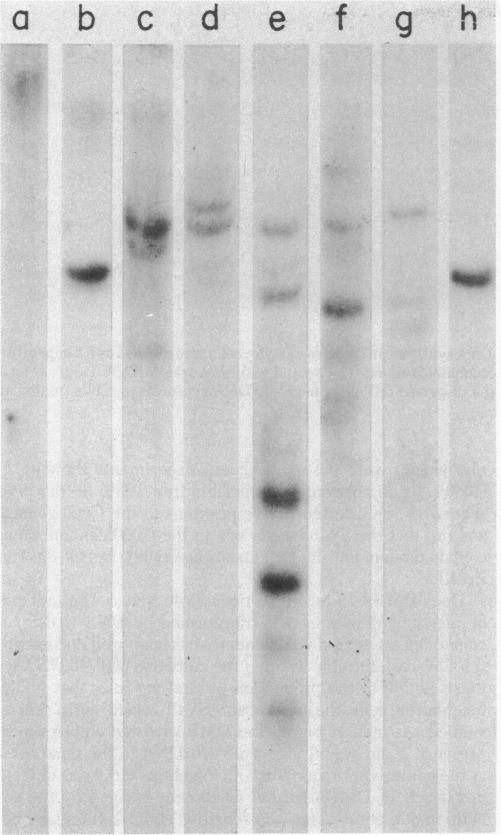
Exposure of simian virus 40 (SV40)-transformed Chinese hamster embryo cells to various chemical and physical carcinogens induced SV40 DNA synthesis. Although the carcinogen-mediated amplification of SV40 DNA is regulated by the viral A gene, the induction of viral DNA synthesis does not result in the rescue of infectious virus or the formation of complete viral DNA molecules. Instead, a heterogeneous collection of DNA molecules containing SV40 sequences was generated by treatment with 7,12-dimethylbenz[a]anthracene. Restriction enzyme analysis of the amplified DNA molecules in the Hirt supernatant showed that not all sequences in the integrated SV40 inserts are present. The possibility that amplification of SV40 sequences is a reflection of a general-gene-amplification phenomenon mediated by carcinogens is discussed.
将猿猴病毒40(SV40)转化的中国仓鼠胚胎细胞暴露于各种化学和物理致癌物中会诱导SV40 DNA合成。尽管致癌物介导的SV40 DNA扩增受病毒A基因调控,但病毒DNA合成的诱导并未导致感染性病毒的拯救或完整病毒DNA分子的形成。相反,用7,12-二甲基苯并[a]蒽处理产生了含有SV40序列的异质DNA分子集合。对Hirt上清液中扩增的DNA分子进行限制性酶切分析表明,整合的SV40插入片段中的并非所有序列都存在。本文讨论了SV40序列扩增是致癌物介导的一般基因扩增现象的一种反映的可能性。