Kaisar Maria M M, Brienen Eric A T, Djuardi Yenny, Sartono Erliyani, Yazdanbakhsh Maria, Verweij Jaco J, Supali Taniawati, VAN Lieshout Lisette
Department of Parasitology,Faculty of Medicine,Universitas Indonesia,Jakarta,Indonesia.
Department of Parasitology,Leiden University Medical Center,Leiden,The Netherlands.
Parasitology. 2017 Jun;144(7):965-974. doi: 10.1017/S0031182017000129. Epub 2017 Mar 14.
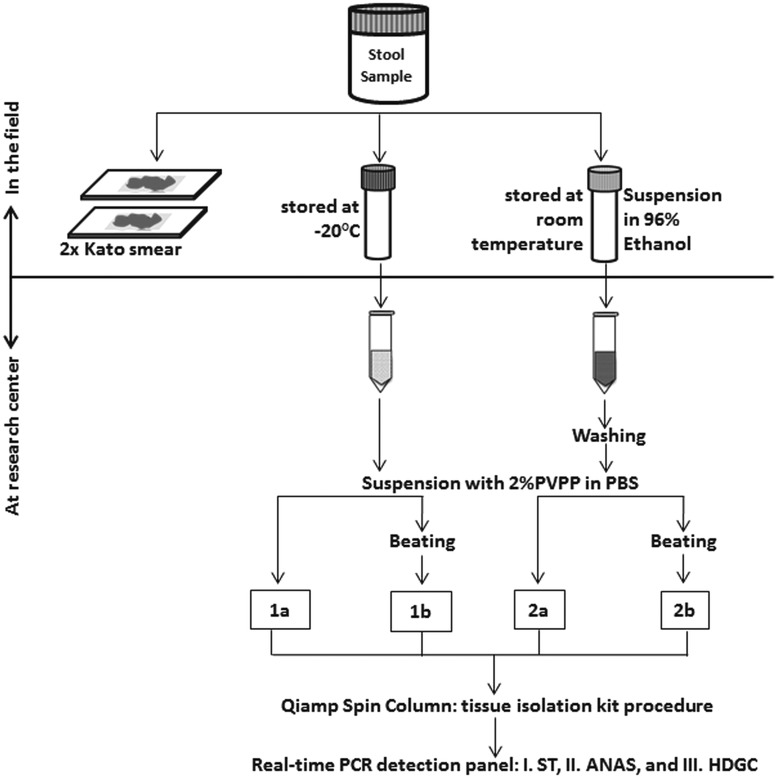
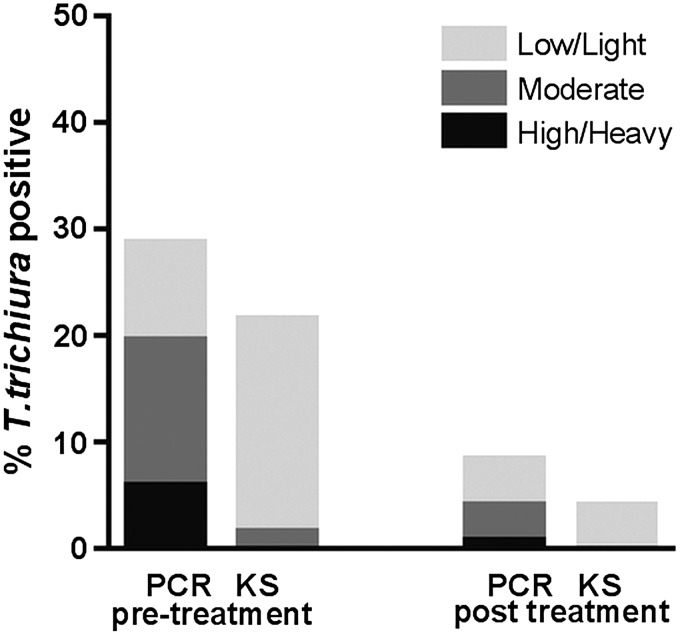
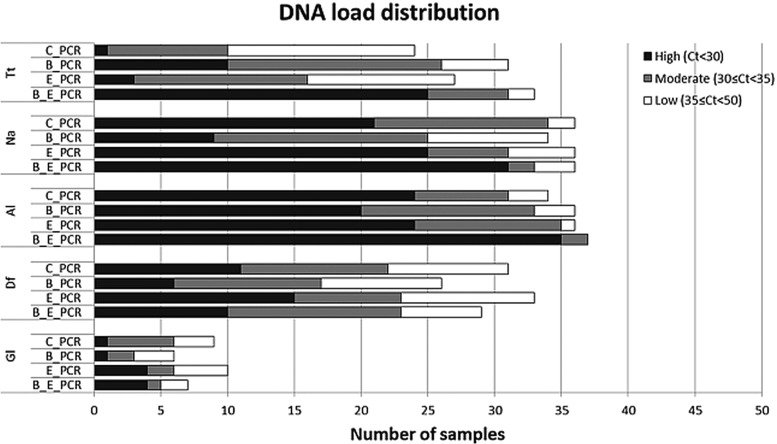
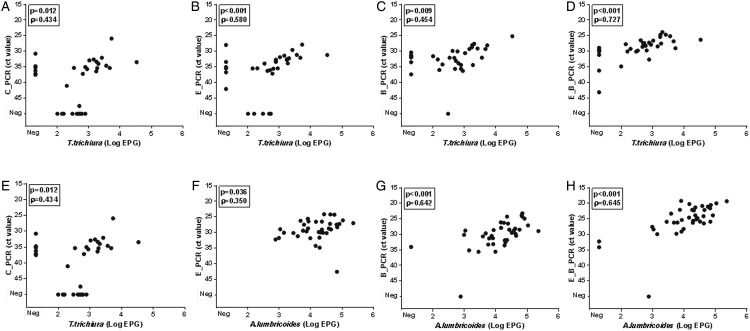
For the majority of intestinal parasites, real-time PCR-based diagnosis outperforms microscopy. However, the data for Trichuris trichiura have been less convincing and most comparative studies have been performed in populations with low prevalence. This study aims to improve detection of T. trichuria DNA in human stool by evaluating four sample preparation methods. Faecal samples (n = 60) were collected at Flores island, Indonesia and examined by microscopy. Aliquots were taken and a bead-beating procedure was used both on directly frozen stool and on material preserved with 96% ethanol. PCR on frozen samples showed 40% to be positive for T. trichiura, compared with 45% positive by microscopy. The percentage positive increased when using ethanol preservation (45·0%), bead-beating (51·7%) and a combination (55·0%) and all three methods showed significantly higher DNA loads. The various procedures had a less pronounced effect on the PCR results of nine other parasite targets tested. Most prevalent were Ascaris lumbricoides (≈60%), Necator americanus (≈60%), Dientamoeba fragilis (≈50%) and Giardia lamblia (≈12%). To validate the practicality of the procedure, bead-beating was applied in a population-based survey testing 910 stool samples. Findings confirmed bead-beating before DNA extraction to be a highly efficient procedure for the detection of T. trichiura DNA in stool.
对于大多数肠道寄生虫而言,基于实时聚合酶链反应(PCR)的诊断方法优于显微镜检查。然而,关于鞭虫的相关数据却不那么令人信服,并且大多数比较研究是在低流行率人群中进行的。本研究旨在通过评估四种样本制备方法来提高人粪便中鞭虫DNA的检测率。在印度尼西亚弗洛雷斯岛采集了60份粪便样本,并通过显微镜检查。取等分样本,对直接冷冻的粪便以及用96%乙醇保存的样本均采用珠磨法处理。冷冻样本的PCR检测显示,鞭虫阳性率为40%,而显微镜检查的阳性率为45%。使用乙醇保存(45.0%)、珠磨法(51.7%)以及两者结合(55.0%)时,阳性百分比增加,并且这三种方法均显示出显著更高的DNA载量。各种方法对所检测的其他九种寄生虫靶点的PCR结果影响较小。最常见的是蛔虫(约60%)、美洲板口线虫(约60%)、脆弱双核阿米巴(约50%)和蓝氏贾第鞭毛虫(约12%)。为验证该方法的实用性,在一项基于人群的调查中对910份粪便样本应用了珠磨法。研究结果证实,DNA提取前的珠磨法是检测粪便中鞭虫DNA的高效方法。