McGinnity Colm J, Riaño Barros Daniela A, Rosso Lula, Veronese Mattia, Rizzo Gaia, Bertoldo Alessandra, Hinz Rainer, Turkheimer Federico E, Koepp Matthias J, Hammers Alexander
Centre for Neuroscience, Department of Medicine, Imperial College London, London, UK; Medical Research Council Clinical Sciences Centre, Hammersmith Hospital, London, UK; Division of Imaging Sciences & Biomedical Engineering, King's College London, London, UK.
Centre for Neuroscience, Department of Medicine, Imperial College London, London, UK; Medical Research Council Clinical Sciences Centre, Hammersmith Hospital, London, UK.
Neuroimage. 2017 May 15;152:270-282. doi: 10.1016/j.neuroimage.2016.12.038. Epub 2017 Mar 11.
Alteration of γ-aminobutyric acid "A" (GABA) receptor-mediated neurotransmission has been associated with various neurological and psychiatric disorders. [C]Ro15-4513 is a PET ligand with high affinity for α5-subunit-containing GABA receptors, which are highly expressed in limbic regions of the human brain (Sur et al., 1998). We quantified the test-retest reproducibility of measures of [C]Ro15-4513 binding derived from six different quantification methods (12 variants).
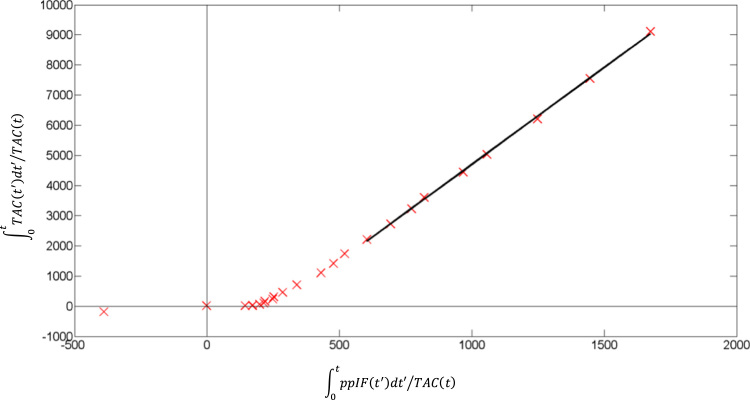
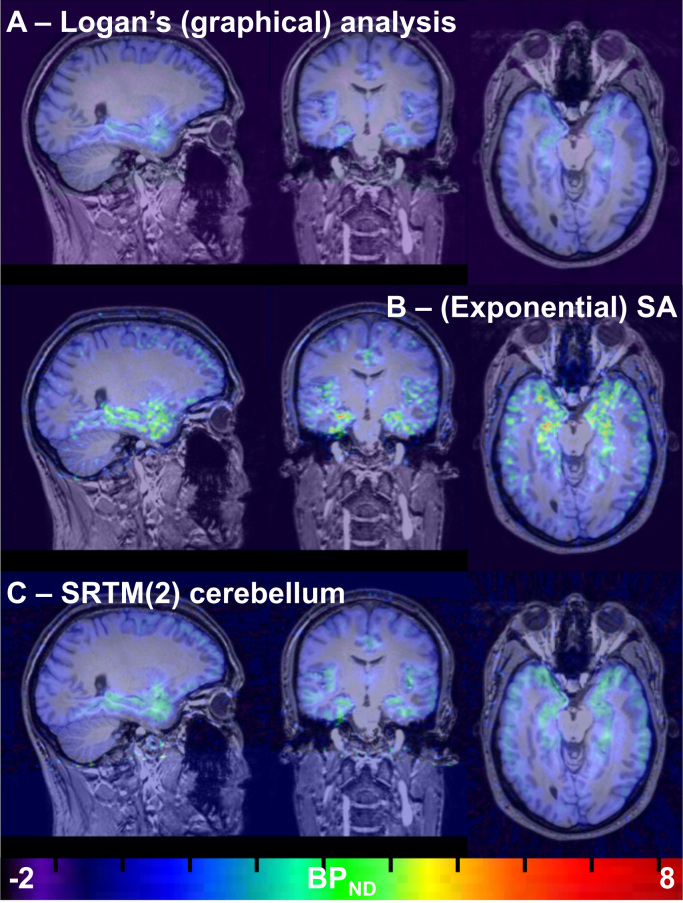
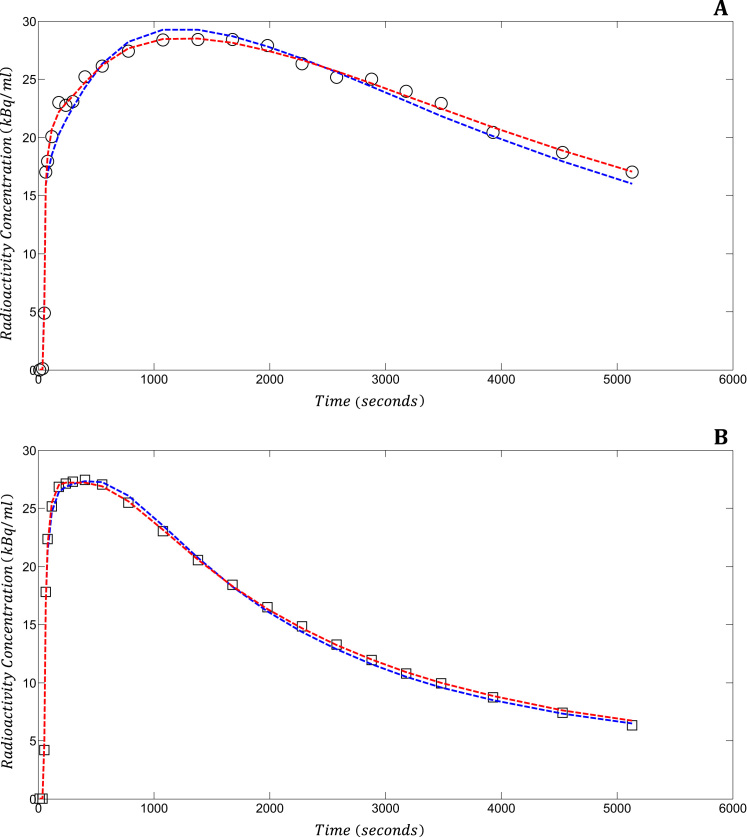
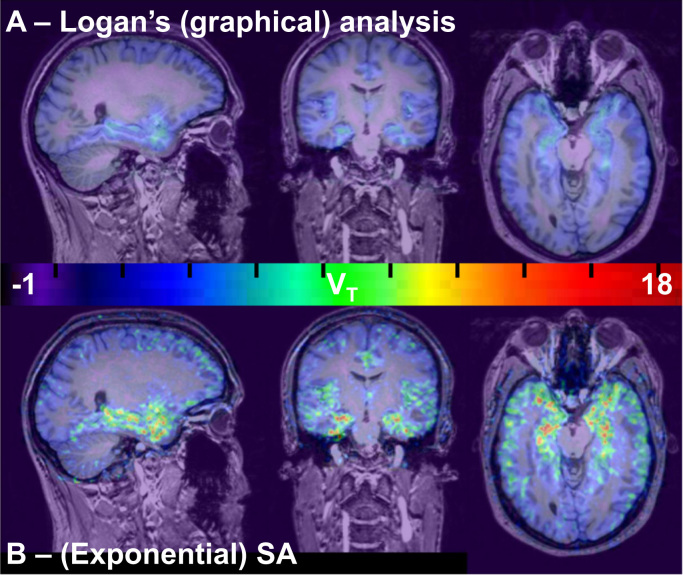
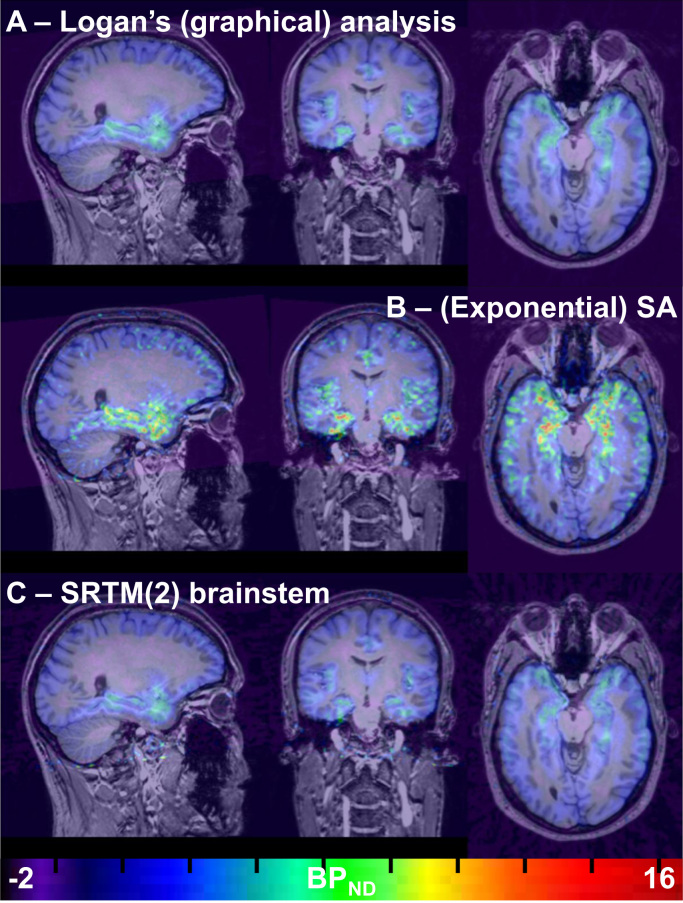
Five healthy males (median age 40 years, range 38-49 years) had a 90-min PET scan on two occasions (median interval 12 days, range 11-30 days), after injection of a median dose of 441 MegaBequerels of [C]Ro15-4513. Metabolite-corrected arterial plasma input functions (parent plasma input functions, ppIFs) were generated for all scans. We quantified regional binding using six methods (12 variants), some of which were region-based (applied to the average time-activity curve within a region) and others were voxel-based: 1) Models requiring arterial ppIFs - regional reversible compartmental models with one and two tissue compartments (2kbv and 4kbv); 2) Regional and voxelwise Logan's graphical analyses (Logan et al., 1990), which required arterial ppIFs; 3) Model-free regional and voxelwise (exponential) spectral analyses (SA; (Cunningham and Jones, 1993)), which also required arterial ppIFs; 4) methods not requiring arterial ppIFs - voxelwise standardised uptake values (Kenney et al., 1941), and regional and voxelwise simplified reference tissue models (SRTM/SRTM2) using brainstem or alternatively cerebellum as pseudo-reference regions (Lammertsma and Hume, 1996; Gunn et al., 1997). To compare the variants, we sampled the mean values of the outcome parameters within six bilateral, non-reference grey matter regions-of-interest. Reliability was quantified in terms of median absolute percentage test-retest differences (MA-TDs; preferentially low) and between-subject coefficient of variation (BS-CV, preferentially high), both compounded by the intraclass correlation coefficient (ICC). These measures were compared between variants, with particular interest in the hippocampus.
Two of the six methods (5/12 variants) yielded reproducible data (i.e. MA-TD <10%): regional SRTMs and voxelwise SRTM2s, both using either the brainstem or the cerebellum; and voxelwise SA. However, the SRTMs using the brainstem yielded a lower median BS-CV (7% for regional, 7% voxelwise) than the other variants (8-11%), resulting in lower ICCs. The median ICCs across six regions were 0.89 (interquartile range 0.75-0.90) for voxelwise SA, 0.71 (0.64-0.84) for regional SRTM-cerebellum and 0.83 (0.70-0.86) for voxelwise SRTM-cerebellum. The ICCs for the hippocampus were 0.89 for voxelwise SA, 0.95 for regional SRTM-cerebellum and 0.93 for voxelwise SRTM-cerebellum.
Quantification of [C]Ro15-4513 binding shows very good to excellent reproducibility with SRTM and with voxelwise SA which, however, requires an arterial ppIF. Quantification in the α5 subunit-rich hippocampus is particularly reliable. The very low expression of the α5 in the cerebellum (Fritschy and Mohler, 1995; Veronese et al., 2016) and the substantial α1 subunit density in this region may hamper the application of reference tissue methods.
γ-氨基丁酸“A”(GABA)受体介导的神经传递改变与多种神经和精神疾病有关。[C]Ro15 - 4513是一种对含α5亚基的GABA受体具有高亲和力的正电子发射断层扫描(PET)配体,该受体在人类大脑边缘区域高度表达(Sur等人,1998年)。我们量化了源自六种不同量化方法(12种变体)的[C]Ro15 - 4513结合测量的重测再现性。
五名健康男性(年龄中位数40岁,范围38 - 49岁)在注射中位数剂量为441兆贝可勒尔的[C]Ro15 - 4513后,分两次进行了90分钟的PET扫描(间隔中位数为12天,范围11 - 30天)。为所有扫描生成了代谢物校正的动脉血浆输入函数(母体血浆输入函数,ppIFs)。我们使用六种方法(12种变体)对区域结合进行了量化,其中一些是基于区域的(应用于区域内的平均时间 - 活性曲线),其他是基于体素的:1)需要动脉ppIFs的模型 - 具有一个和两个组织隔室的区域可逆隔室模型(2kbv和4kbv);2)区域和体素级的洛根图形分析(洛根等人,1990年),其需要动脉ppIFs;3)无需动脉ppIFs的模型 - 体素级标准化摄取值(肯尼等人,1941年),以及使用脑干或小脑作为伪参考区域的区域和体素级简化参考组织模型(SRTM/SRTM2)(拉默茨马和休姆,1996年;冈恩等人,1997年)。为了比较这些变体,我们在六个双侧、非参考灰质感兴趣区域内对结果参数的平均值进行了采样。可靠性通过中位数绝对百分比重测差异(MA - TDs;优先较低)和受试者间变异系数(BS - CV,优先较高)进行量化,两者均由组内相关系数(ICC)复合。在变体之间比较了这些测量值,特别关注海马体。
六种方法中的两种(5/12种变体)产生了可重复的数据(即MA - TD <10%):区域SRTM和体素级SRTM2,两者均使用脑干或小脑;以及体素级谱分析(SA)。然而,使用脑干的SRTM产生的中位数BS - CV低于其他变体(区域为7%,体素级为7%,而其他变体为8 - 11%),导致ICC较低。六个区域的中位数ICC对于体素级SA为0.89(四分位间距0.75 - 0.90),对于区域SRTM - 小脑为0.71(0.64 - 0.84),对于体素级SRTM - 小脑为0.83(0.70 - 0.86)。海马体的ICC对于体素级SA为0.89,对于区域SRTM - 小脑为0.95,对于体素级SRTM - 小脑为0.93。
[C]Ro15 - 4513结合的量化显示,SRTM和体素级SA具有非常好到极好的再现性,不过体素级SA需要动脉ppIF。在富含α5亚基的海马体中的量化特别可靠。小脑α5的极低表达(弗里施奇和莫勒,1995年;韦罗内塞等人,2016年)以及该区域大量的α1亚基密度可能会妨碍参考组织方法的应用。