Ebadi Ashkan, Dalboni da Rocha Josué L, Nagaraju Dushyanth B, Tovar-Moll Fernanda, Bramati Ivanei, Coutinho Gabriel, Sitaram Ranganatha, Rashidi Parisa
Department of Biomedical Engineering, University of Florida Gainesville, FL, USA.
Brain and Language Lab, Department of Clinical Neuroscience, University of Geneva Geneva, Switzerland.
Front Neurosci. 2017 Feb 28;11:56. doi: 10.3389/fnins.2017.00056. eCollection 2017.
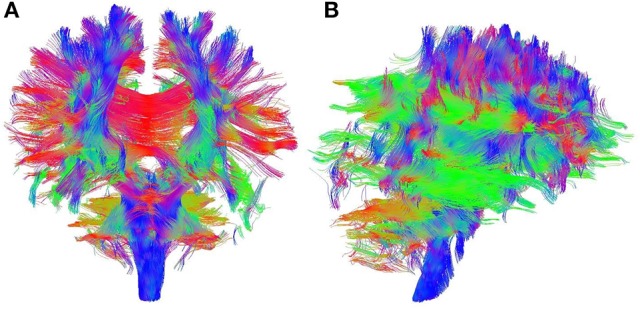
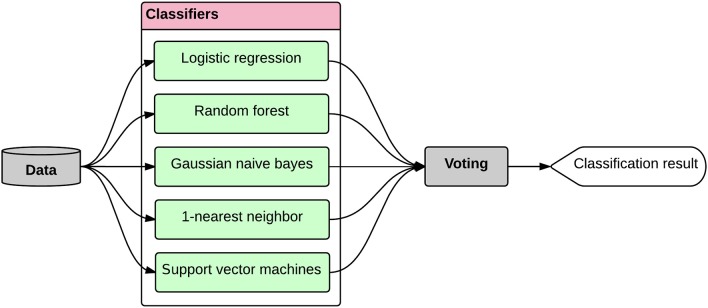
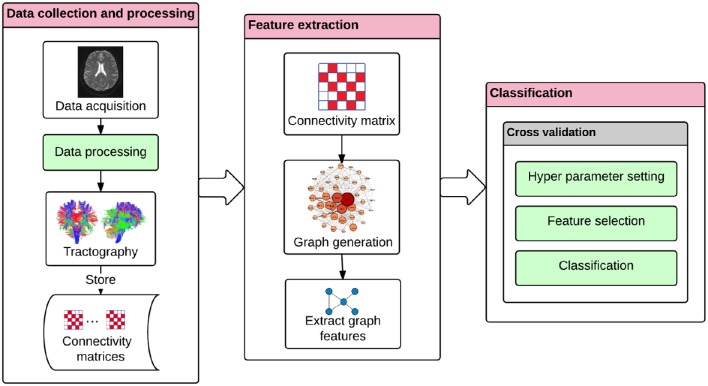
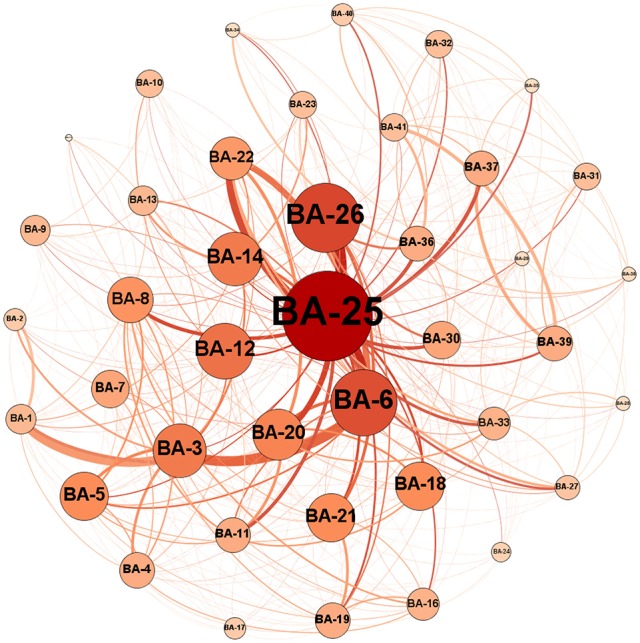
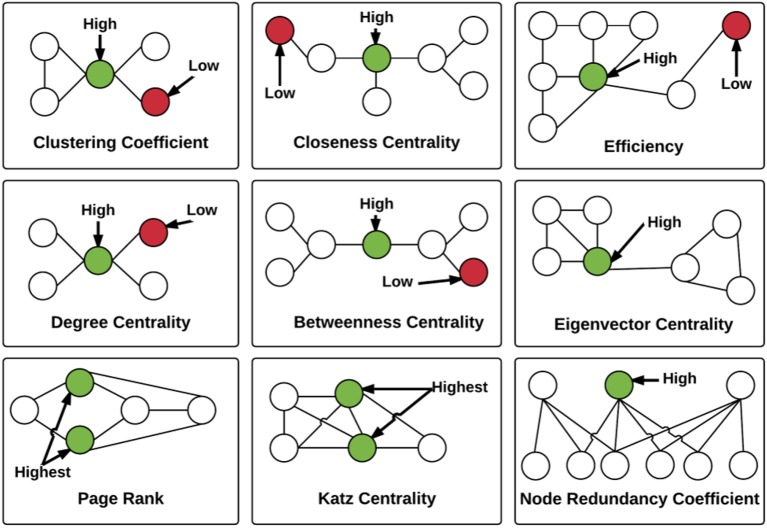
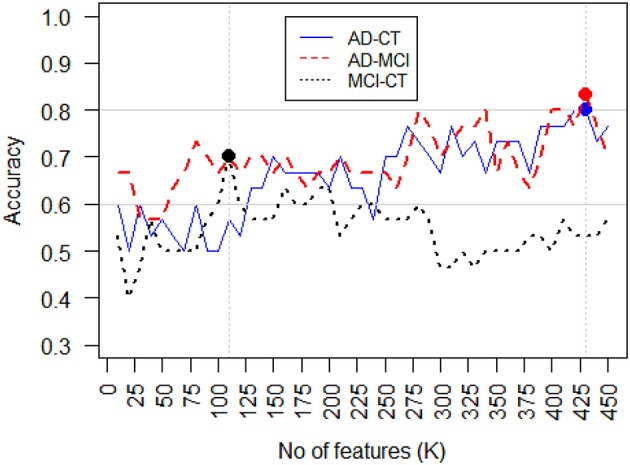
The human brain is a complex network of interacting regions. The gray matter regions of brain are interconnected by white matter tracts, together forming one integrative complex network. In this article, we report our investigation about the potential of applying brain connectivity patterns as an aid in diagnosing Alzheimer's disease and Mild Cognitive Impairment (MCI). We performed pattern analysis of graph theoretical measures derived from Diffusion Tensor Imaging (DTI) data representing structural brain networks of 45 subjects, consisting of 15 patients of Alzheimer's disease (AD), 15 patients of MCI, and 15 healthy subjects (CT). We considered pair-wise class combinations of subjects, defining three separate classification tasks, i.e., AD-CT, AD-MCI, and CT-MCI, and used an ensemble classification module to perform the classification tasks. Our ensemble framework with feature selection shows a promising performance with classification accuracy of 83.3% for AD vs. MCI, 80% for AD vs. CT, and 70% for MCI vs. CT. Moreover, our findings suggest that AD can be related to graph measures abnormalities at Brodmann areas in the sensorimotor cortex and piriform cortex. In this way, node redundancy coefficient and load centrality in the primary motor cortex were recognized as good indicators of AD in contrast to MCI. In general, load centrality, betweenness centrality, and closeness centrality were found to be the most relevant network measures, as they were the top identified features at different nodes. The present study can be regarded as a "proof of concept" about a procedure for the classification of MRI markers between AD dementia, MCI, and normal old individuals, due to the small and not well-defined groups of AD and MCI patients. Future studies with larger samples of subjects and more sophisticated patient exclusion criteria are necessary toward the development of a more precise technique for clinical diagnosis.
人类大脑是一个由相互作用区域组成的复杂网络。大脑的灰质区域通过白质束相互连接,共同形成一个整合的复杂网络。在本文中,我们报告了关于应用脑连接模式辅助诊断阿尔茨海默病和轻度认知障碍(MCI)的潜力的研究。我们对来自扩散张量成像(DTI)数据的图论测量进行了模式分析,这些数据代表了45名受试者的结构脑网络,其中包括15名阿尔茨海默病(AD)患者、15名MCI患者和15名健康受试者(CT)。我们考虑了受试者的两两类别组合,定义了三个单独的分类任务,即AD-CT、AD-MCI和CT-MCI,并使用一个集成分类模块来执行这些分类任务。我们带有特征选择的集成框架表现出了有前景的性能,AD与MCI的分类准确率为83.3%,AD与CT的分类准确率为80%,MCI与CT的分类准确率为70%。此外,我们的研究结果表明,AD可能与感觉运动皮层和梨状皮层的布罗德曼区域的图测量异常有关。通过这种方式,与MCI相比,初级运动皮层中的节点冗余系数和负载中心性被认为是AD的良好指标。总体而言,可以发现负载中心性、中介中心性和接近中心性是最相关的网络测量指标,因为它们是在不同节点上被识别出的首要特征。由于AD和MCI患者群体较小且定义不明确,本研究可被视为关于AD痴呆、MCI和正常老年人之间MRI标记物分类程序的“概念验证”。为了开发更精确的临床诊断技术,未来需要对更大样本的受试者进行研究,并采用更复杂的患者排除标准。