Restovic Franko, Espinoza-Corral Roberto, Gómez Isabel, Vicente-Carbajosa Jesús, Jordana Xavier
Departamento de Genética Molecular y Microbiología, Facultad de Ciencias Biológicas, Pontificia Universidad Católica de Chile Santiago, Chile.
Centro de Biotecnología y Genómica de Plantas - UPM-INIA, Campus de Montegancedo, Universidad Politécnica de Madrid Madrid, Spain.
Front Plant Sci. 2017 Feb 28;8:277. doi: 10.3389/fpls.2017.00277. eCollection 2017.
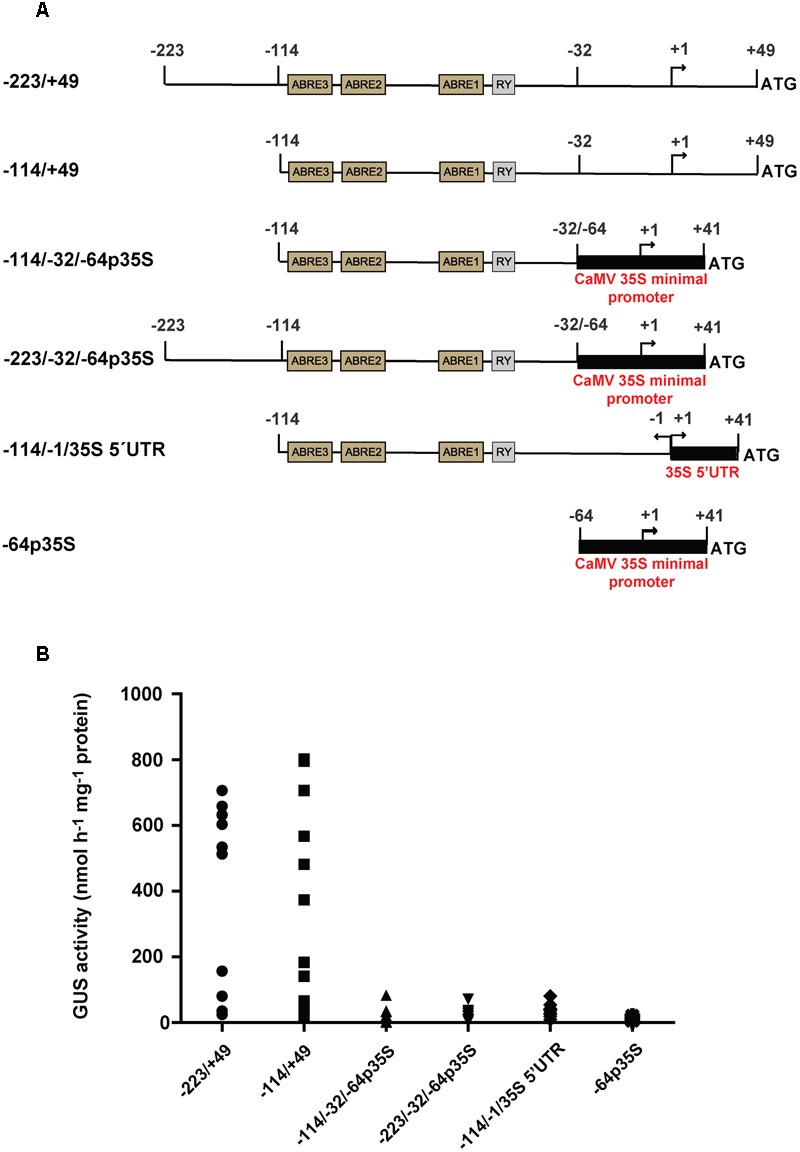
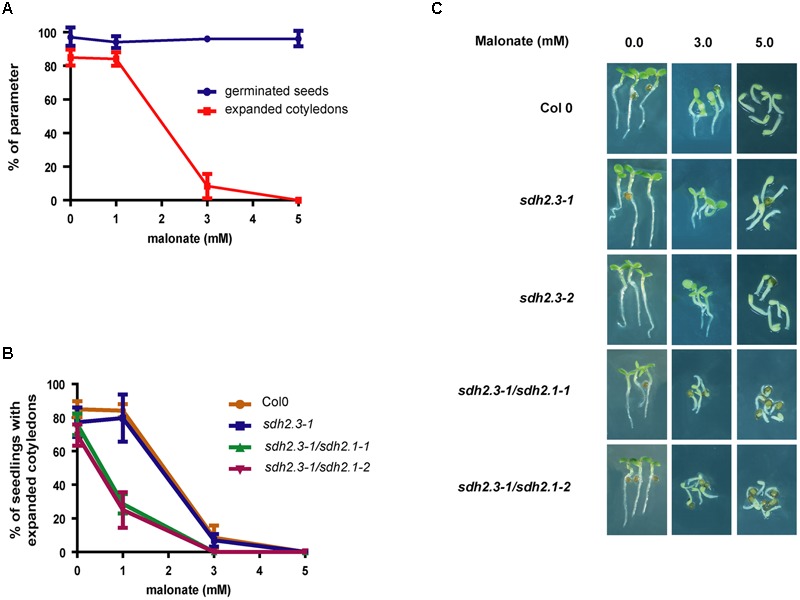
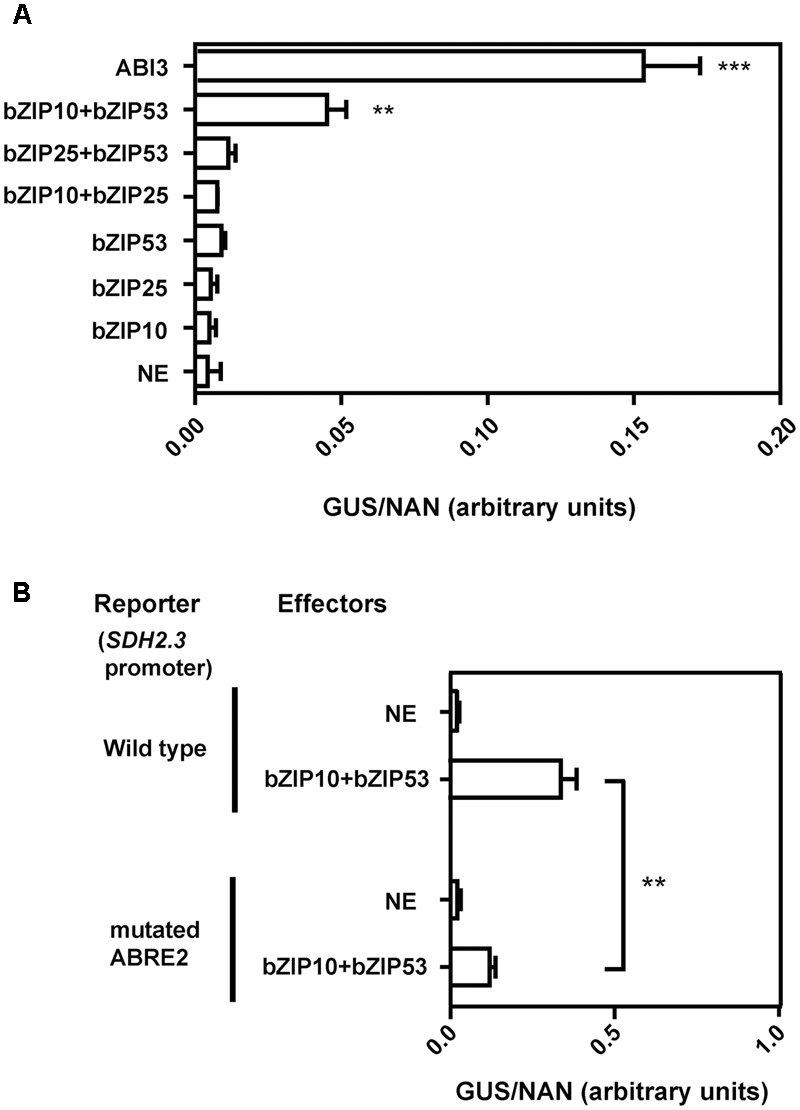
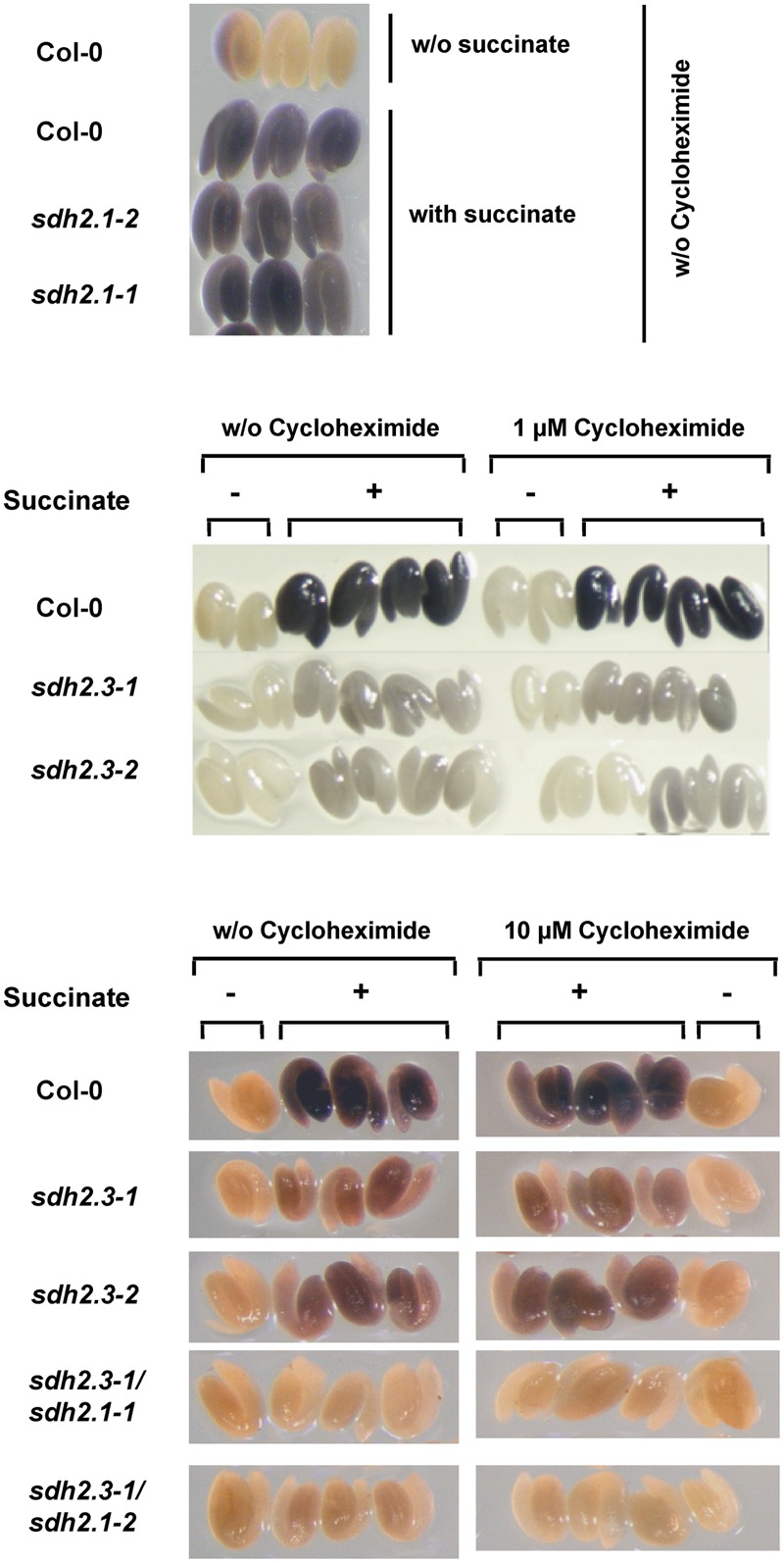
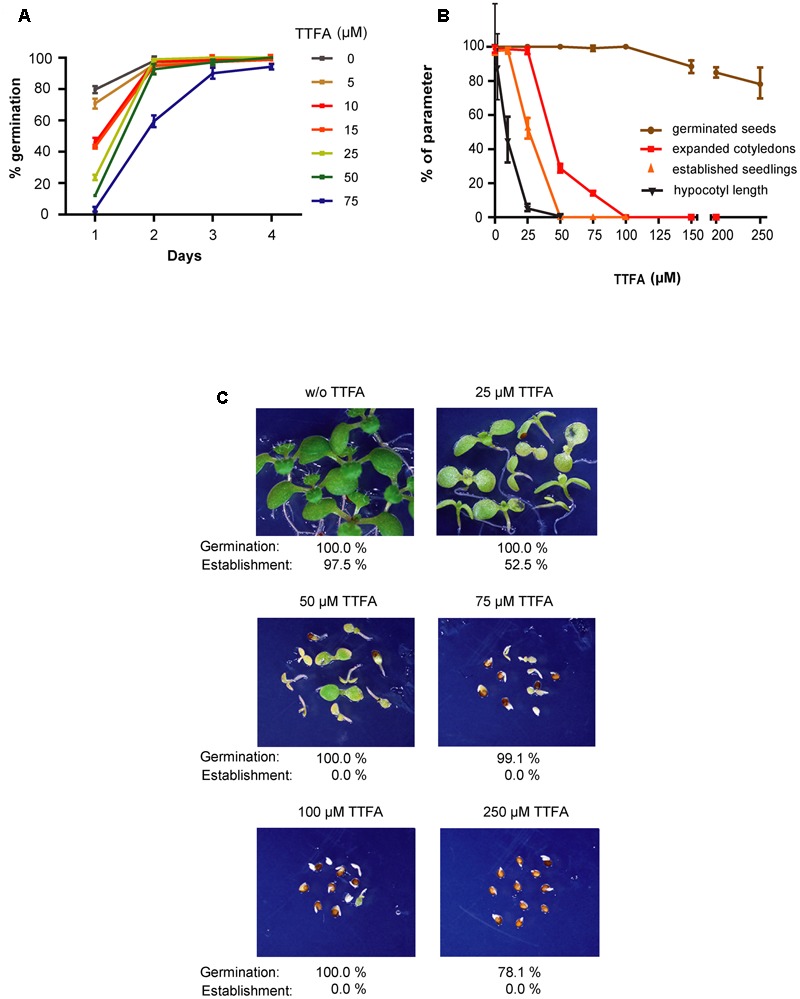
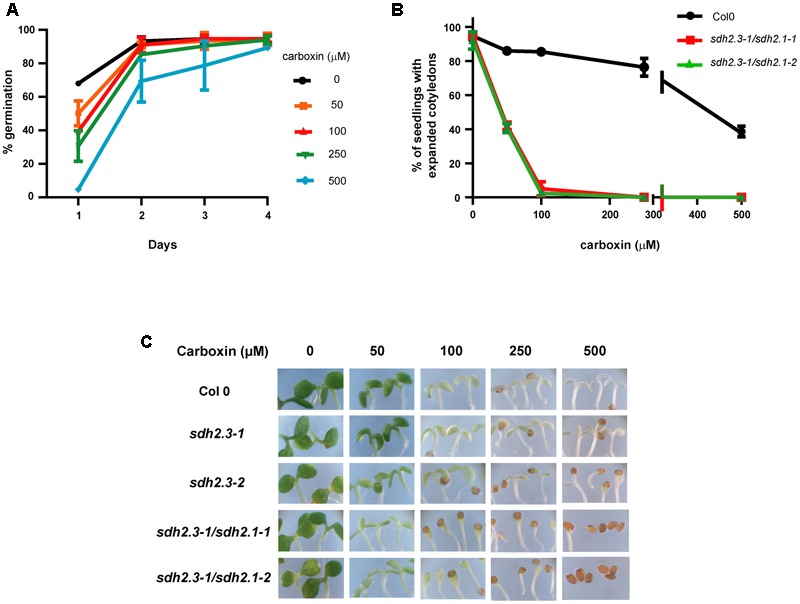
Complex II (succinate dehydrogenase) is an essential mitochondrial enzyme involved in both the tricarboxylic acid cycle and the respiratory chain. In , its iron-sulfur subunit (SDH2) is encoded by three genes, one of them () being specifically expressed during seed maturation in the embryo. Here we show that seed expression is regulated by abscisic acid (ABA) and we define the promoter region (-114 to +49) possessing all the -elements necessary and sufficient for high expression in seeds. This region includes between -114 and -32 three ABRE (ABA-responsive) elements and one RY-enhancer like element, and we demonstrate that these elements, although necessary, are not sufficient for seed expression, our results supporting a role for the region encoding the 5' untranslated region (+1 to +49). The promoter is activated in leaf protoplasts by heterodimers between the basic leucine zipper transcription factors bZIP53 (group S1) and bZIP10 (group C) acting through the ABRE elements, and by the B3 domain transcription factor ABA insensitive 3 (ABI3). The role of bZIP53 is further supported by decreased expression in a knockdown mutant. By using the protein synthesis inhibitor cycloheximide and mutants we have been able to conclusively show that complex II is already present in mature embryos before imbibition, and contains mainly SDH2.3 as iron-sulfur subunit. This complex plays a role during seed germination since we have previously shown that seeds lacking SDH2.3 show retarded germination and now we demonstrate that low concentrations of thenoyltrifluoroacetone, a complex II inhibitor, also delay germination. Furthermore, complex II inhibitors completely block hypocotyl elongation in the dark and seedling establishment in the light, highlighting an essential role of complex II in the acquisition of photosynthetic competence and the transition from heterotrophy to autotrophy.
复合体II(琥珀酸脱氢酶)是一种参与三羧酸循环和呼吸链的重要线粒体酶。在拟南芥中,其铁硫亚基(SDH2)由三个基因编码,其中一个基因(SDH2.3)在胚胎种子成熟过程中特异性表达。在此我们表明,种子中SDH2.3的表达受脱落酸(ABA)调控,并且我们确定了启动子区域(-114至+49),该区域拥有在种子中高表达所必需且充分的所有顺式作用元件。该区域在-114至-32之间包含三个ABRE(ABA响应)元件和一个类RY增强子元件,并且我们证明这些元件虽然是必需的,但对于种子表达并不充分,我们的结果支持编码5'非翻译区(+1至+49)的区域发挥作用。SDH2.3启动子在叶原生质体中通过碱性亮氨酸拉链转录因子bZIP53(S1组)和bZIP10(C组)之间的异二聚体通过ABRE元件起作用而被激活,并且还通过B3结构域转录因子脱落酸不敏感3(ABI3)被激活。在bZIP53基因敲低突变体中SDH2.3表达降低进一步支持了bZIP53的作用。通过使用蛋白质合成抑制剂环己酰亚胺和突变体,我们已经能够确凿地表明复合体II在吸胀前的成熟胚中已经存在,并且主要包含SDH2.3作为铁硫亚基。该复合体在种子萌发过程中发挥作用,因为我们之前已经表明缺乏SDH2.3的种子发芽延迟,现在我们证明低浓度的噻吩甲酰三氟丙酮,一种复合体II抑制剂,也会延迟发芽。此外,复合体II抑制剂在黑暗中完全阻断下胚轴伸长以及在光照下阻断幼苗建立,突出了复合体II在获得光合能力以及从异养向自养转变中的重要作用。