Pathan Sameer A, Bhutta Zain A, Moinudheen Jibin, Jenkins Dominic, Silva Ashwin D, Sharma Yogdutt, Saleh Warda A, Khudabakhsh Zeenat, Irfan Furqan B, Thomas Stephen H
Department of Emergency Medicine, Hamad Medical Corporation, Bin Omran, Off Al-Rayyan Road, P.O. Box 3050, Doha, Qatar.
Qatar Med J. 2017 Feb 24;2016(2):18. doi: 10.5339/qmj.2016.18. eCollection 2016.
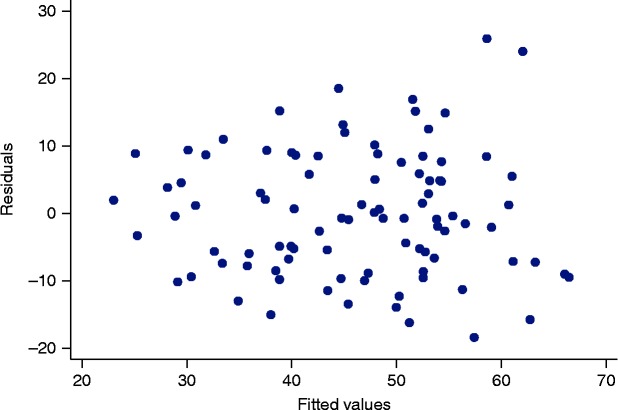
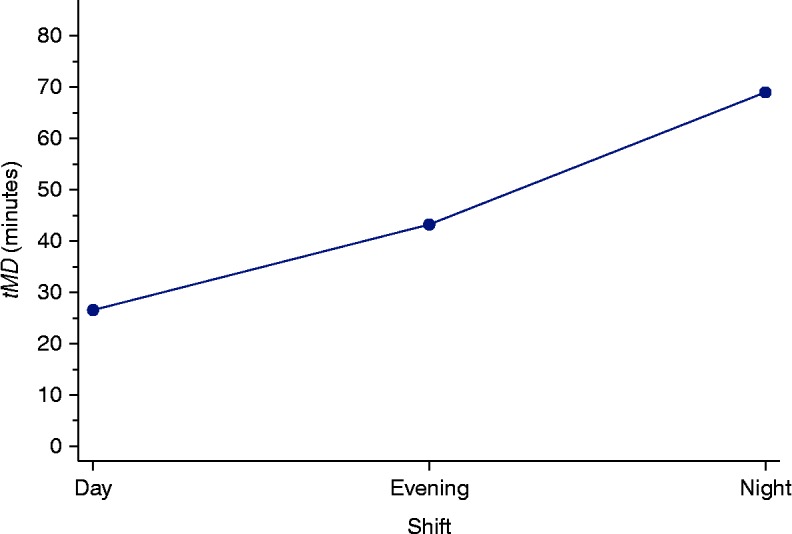
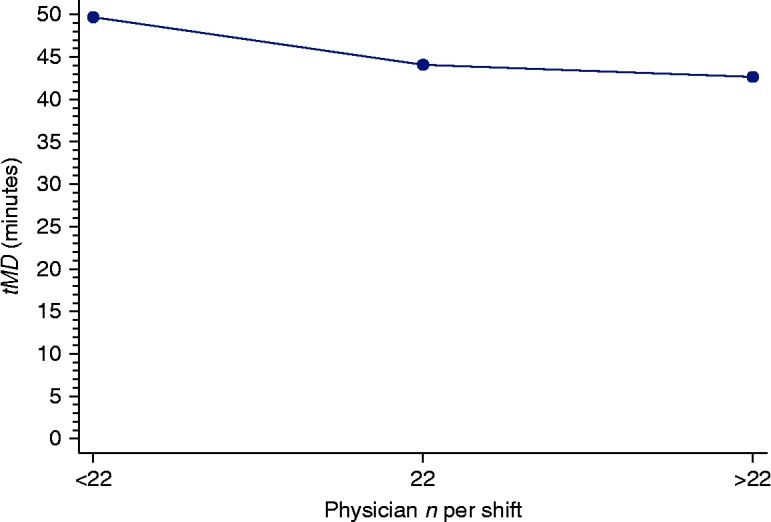
Standard Emergency Department (ED) operations goals include minimization of the time interval (tMD) between patients' initial ED presentation and initial physician evaluation. This study assessed factors known (or suspected) to influence tMD with a two-step goal. The first step was generation of a multivariate model identifying parameters associated with prolongation of tMD at a single study center. The second step was the use of a study center-specific multivariate tMD model as a basis for predictive marginal probability analysis; the marginal model allowed for prediction of the degree of ED operations benefit that would be affected with specific ED operations improvements. The study was conducted using one month (May 2015) of data obtained from an ED administrative database (EDAD) in an urban academic tertiary ED with an annual census of approximately 500,000; during the study month, the ED saw 39,593 cases. The EDAD data were used to generate a multivariate linear regression model assessing the various demographic and operational covariates' effects on the dependent variable tMD. Predictive marginal probability analysis was used to calculate the relative contributions of key covariates as well as demonstrate the likely tMD impact on modifying those covariates with operational improvements. Analyses were conducted with Stata 14MP, with significance defined at < 0.05 and confidence intervals (CIs) reported at the 95% level. In an acceptable linear regression model that accounted for just over half of the overall variance in tMD (adjusted 0.51), important contributors to tMD included shift census ( = 0.008), shift time of day ( = 0.002), and physician coverage ( = 0.004). These strong associations remained even after adjusting for each other and other covariates. Marginal predictive probability analysis was used to predict the overall tMD impact (improvement from 50 to 43 minutes, < 0.001) of consistent staffing with 22 physicians. The analysis identified expected variables contributing to tMD with regression demonstrating significance and effect magnitude of alterations in covariates including patient census, shift time of day, and number of physicians. Marginal analysis provided operationally useful demonstration of the need to adjust physician coverage numbers, prompting changes at the study ED. The methods used in this analysis may prove useful in other EDs wishing to analyze operations information with the goal of predicting which interventions may have the most benefit.
标准急诊科(ED)的运营目标包括尽量缩短患者首次到急诊科就诊与医生首次评估之间的时间间隔(tMD)。本研究分两步评估已知(或疑似)影响tMD的因素。第一步是建立一个多变量模型,确定在单个研究中心与tMD延长相关的参数。第二步是以特定研究中心的多变量tMD模型为基础进行预测边际概率分析;边际模型可预测特定急诊科运营改进对急诊科运营效益的影响程度。本研究使用从一个城市学术三级急诊科的急诊科管理数据库(EDAD)获取的一个月(2015年5月)数据进行,该急诊科年接诊量约为50万;在研究月份,急诊科共接诊39593例。EDAD数据用于建立一个多变量线性回归模型,评估各种人口统计学和运营协变量对因变量tMD的影响。预测边际概率分析用于计算关键协变量的相对贡献,并证明运营改进对这些协变量进行调整可能对tMD产生的影响。分析使用Stata 14MP进行,显著性定义为<0.05,置信区间(CI)报告为95%水平。在一个可接受的线性回归模型中,该模型解释了tMD总体方差的一半多一点(调整后为0.51),tMD的重要影响因素包括轮班时的就诊人数(=0.008)、轮班时间(=0.002)和医生覆盖情况(=0.004)。即使在相互调整以及调整其他协变量之后,这些强关联仍然存在。边际预测概率分析用于预测配备22名医生的固定人员配置对总体tMD的影响(从50分钟改善到43分钟,<0.001)。该分析确定了对tMD有影响的预期变量,回归显示协变量(包括患者就诊人数、轮班时间和医生人数)变化的显著性和影响程度。边际分析从运营角度有力地证明了调整医生覆盖人数的必要性,促使研究中的急诊科做出改变。本分析中使用的方法可能对其他希望分析运营信息以预测哪些干预措施可能最有益的急诊科有用。