McMahon Laura A, Rachlow Janet L, Shipley Lisa A, Forbey Jennifer S, Johnson Timothy R, Olsoy Peter J
Department of Fish and Wildlife Sciences, University of Idaho, Moscow, Idaho, United States of America.
School of the Environment, Washington State University, Pullman, Washington, United States of America.
PLoS One. 2017 Mar 16;12(3):e0173185. doi: 10.1371/journal.pone.0173185. eCollection 2017.
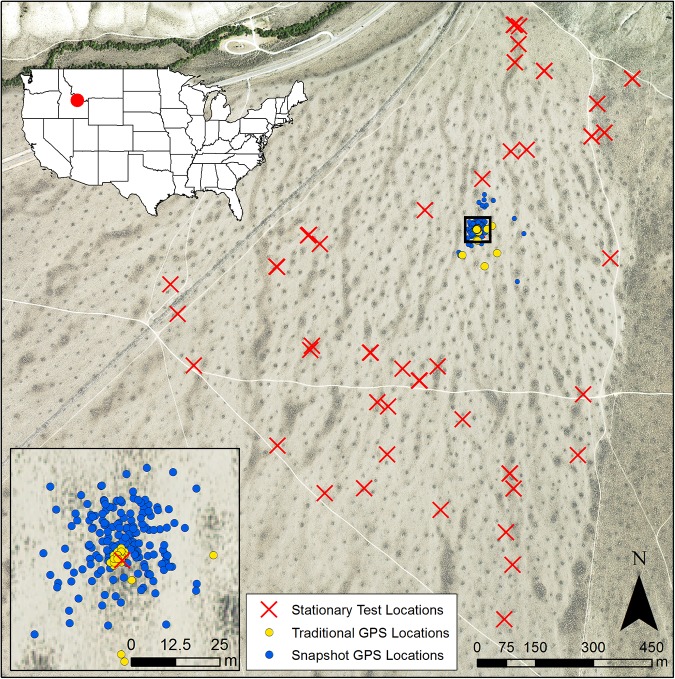
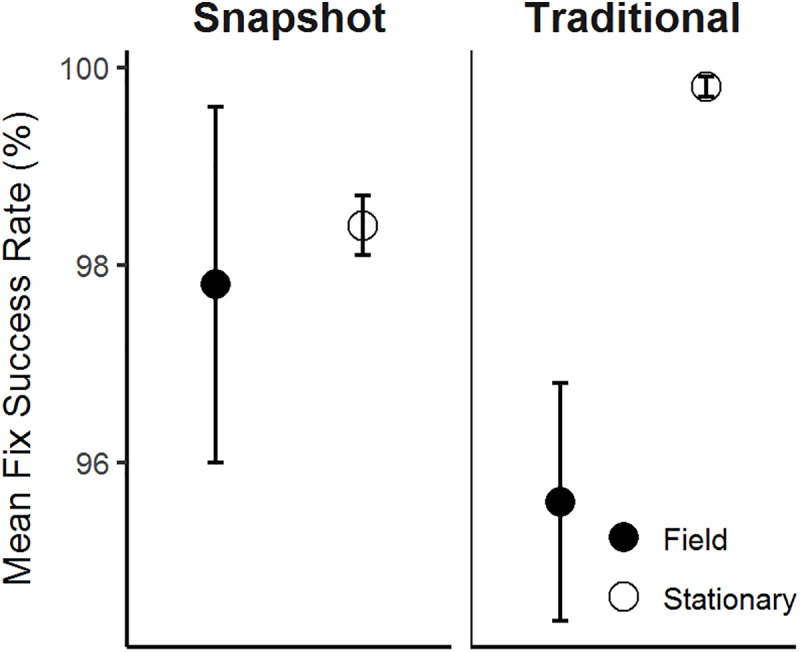
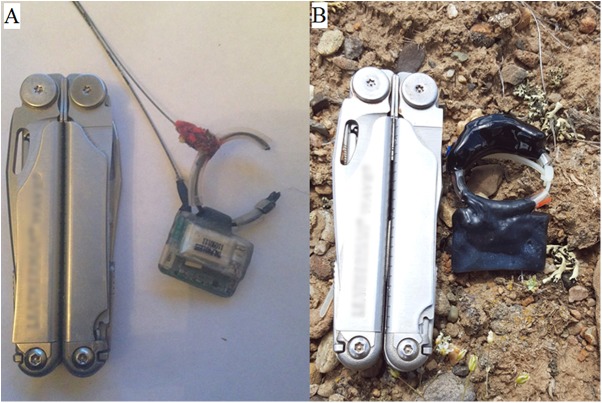
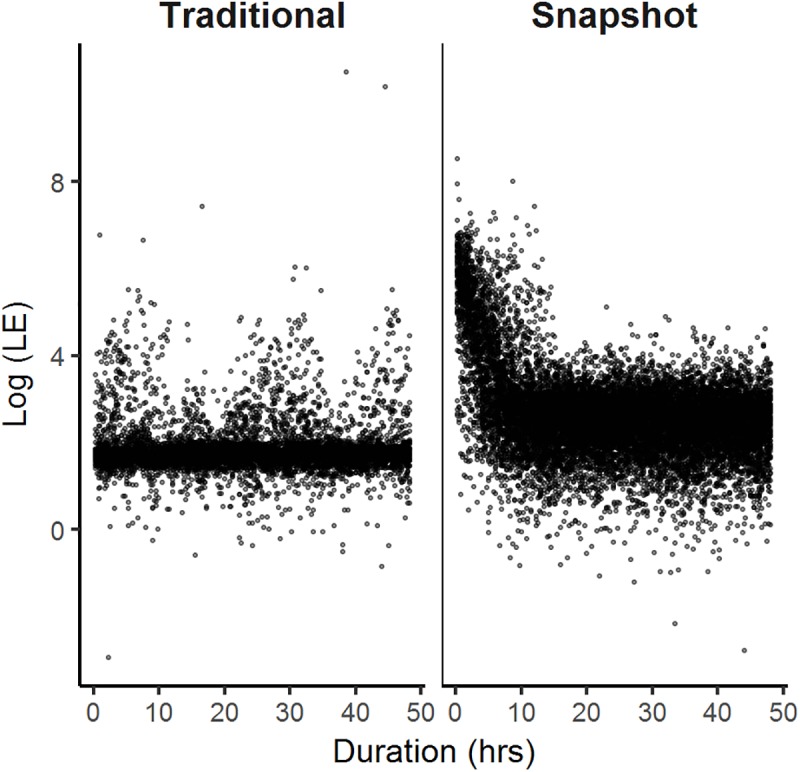
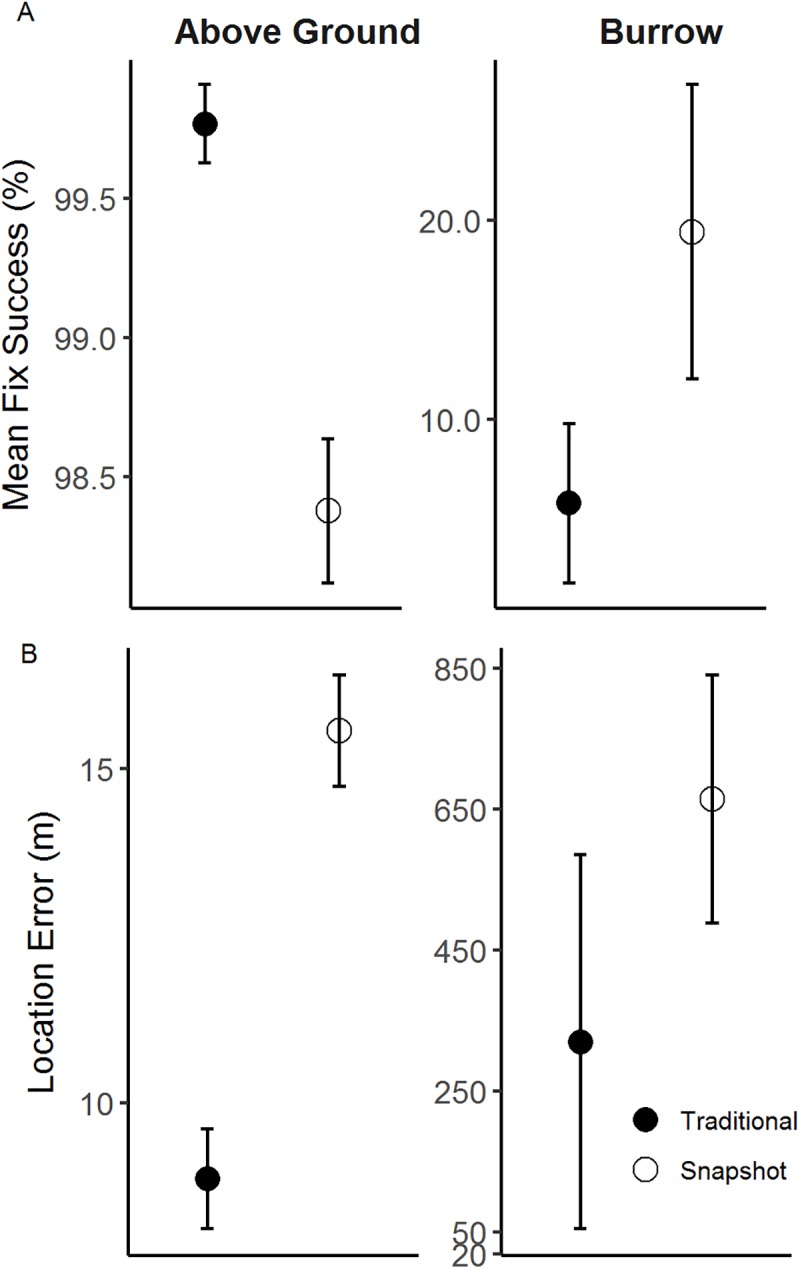
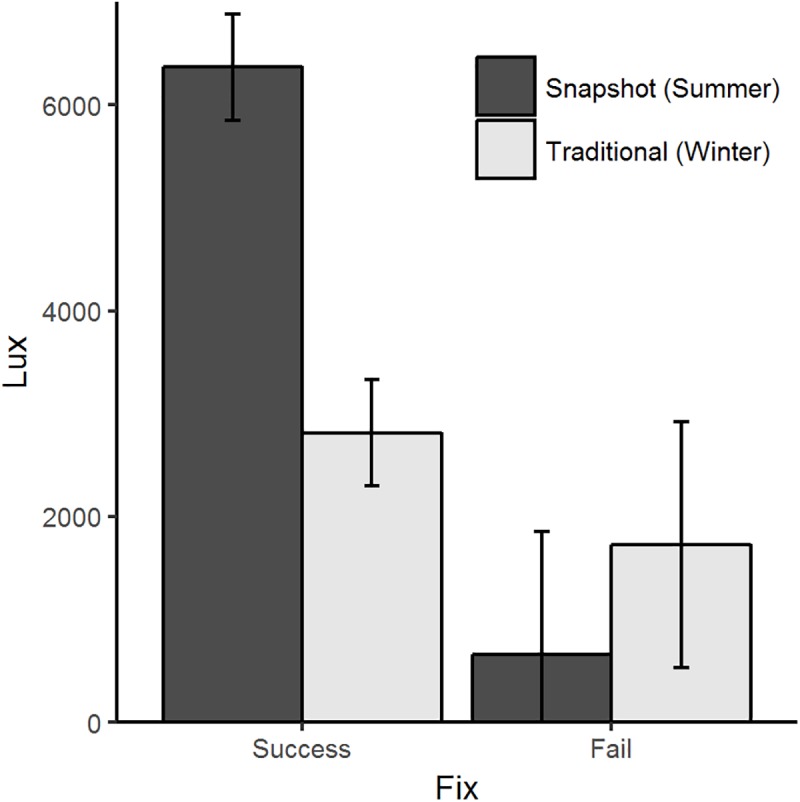
GPS telemetry markedly enhances the temporal and spatial resolution of animal location data, and recent advances in micro-GPS receivers permit their deployment on small mammals. One such technological advance, snapshot technology, allows for improved battery life by reducing the time to first fix via postponing recovery of satellite ephemeris (satellite location) data and processing of locations. However, no previous work has employed snapshot technology for small, terrestrial mammals. We evaluated performance of two types of micro-GPS (< 20 g) receivers (traditional and snapshot) on a small, semi-fossorial lagomorph, the pygmy rabbit (Brachylagus idahoensis), to understand how GPS errors might influence fine-scale assessments of space use and habitat selection. During stationary tests, microtopography (i.e., burrows) and satellite geometry had the largest influence on GPS fix success rate (FSR) and location error (LE). There was no difference between FSR while animals wore the GPS collars above ground (determined via light sensors) and FSR generated during stationary, above-ground trials, suggesting that animal behavior other than burrowing did not markedly influence micro-GPS errors. In our study, traditional micro-GPS receivers demonstrated similar FSR and LE to snapshot receivers, however, snapshot receivers operated inconsistently due to battery and software failures. In contrast, the initial traditional receivers deployed on animals experienced some breakages, but a modified collar design consistently functioned as expected. If such problems were resolved, snapshot technology could reduce the tradeoff between fix interval and battery life that occurs with traditional micro-GPS receivers. Our results suggest that micro-GPS receivers are capable of addressing questions about space use and resource selection by small mammals, but that additional techniques might be needed to identify use of habitat structures (e.g., burrows, tree cavities, rock crevices) that could affect micro-GPS performance and bias study results.
全球定位系统(GPS)遥测技术显著提高了动物位置数据的时间和空间分辨率,并且微型GPS接收器的最新进展使其能够部署在小型哺乳动物身上。其中一项技术进步,即快照技术,通过推迟卫星星历(卫星位置)数据的恢复和位置处理来减少首次定位时间,从而延长电池寿命。然而,以前没有研究将快照技术应用于小型陆生哺乳动物。我们评估了两种类型的微型GPS(<20克)接收器(传统型和快照型)在小型半穴居兔形目动物——侏兔(Brachylagus idahoensis)上的性能,以了解GPS误差如何影响空间利用和栖息地选择的精细尺度评估。在静态测试中,微地形(即洞穴)和卫星几何形状对GPS定位成功率(FSR)和定位误差(LE)影响最大。动物佩戴GPS项圈在地面以上时的FSR(通过光传感器确定)与静态地面试验期间产生的FSR之间没有差异,这表明除挖掘行为外的动物行为不会显著影响微型GPS误差。在我们的研究中,传统微型GPS接收器的FSR和LE与快照接收器相似,然而,由于电池和软件故障,快照接收器运行不稳定。相比之下,最初部署在动物身上的传统接收器出现了一些损坏,但改良后的项圈设计始终能按预期运行。如果解决了这些问题,快照技术可以减少传统微型GPS接收器在定位间隔和电池寿命之间的权衡。我们的结果表明,微型GPS接收器能够解决关于小型哺乳动物空间利用和资源选择的问题,但可能需要额外的技术来识别可能影响微型GPS性能和研究结果偏差的栖息地结构(如洞穴、树洞、岩石裂缝)的使用情况。