Das Krishna, Eisel David, Lenkl Clarissa, Goyal Ashish, Diederichs Sven, Dickes Elke, Osen Wolfram, Eichmüller Stefan B
GMP & T Cell Therapy Unit, German Cancer Research Center (DKFZ), Heidelberg, Germany.
Division of RNA Biology and Cancer, German Cancer Research Center (DKFZ), Heidelberg, Germany.
PLoS One. 2017 Mar 16;12(3):e0174077. doi: 10.1371/journal.pone.0174077. eCollection 2017.
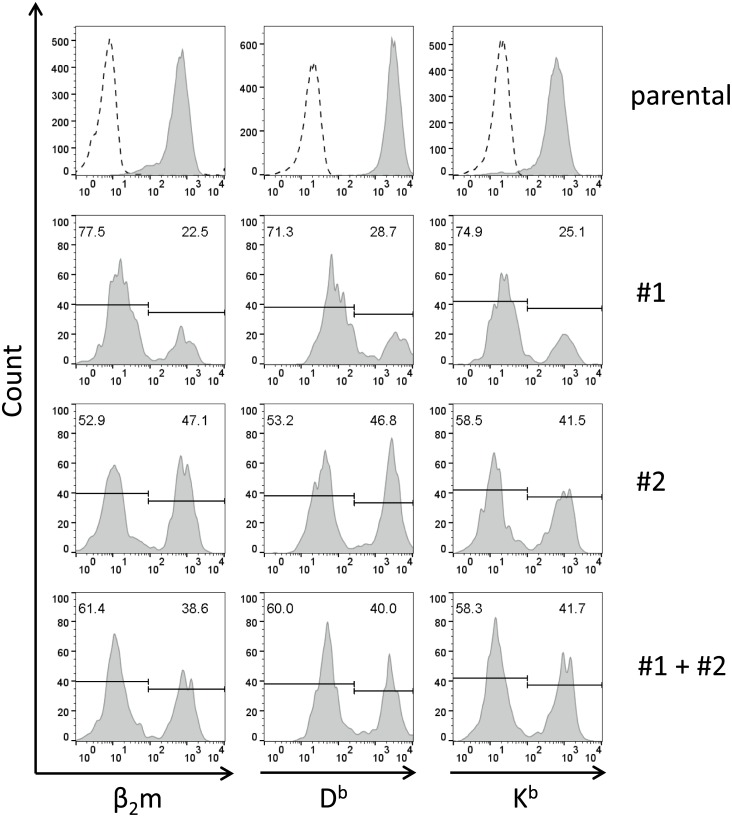
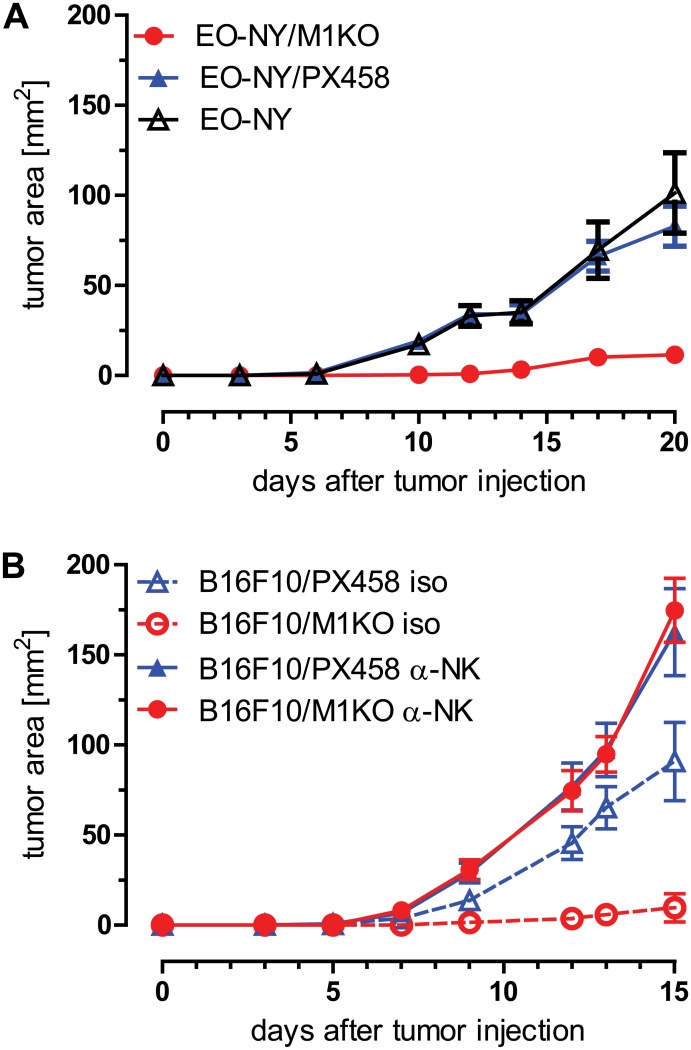
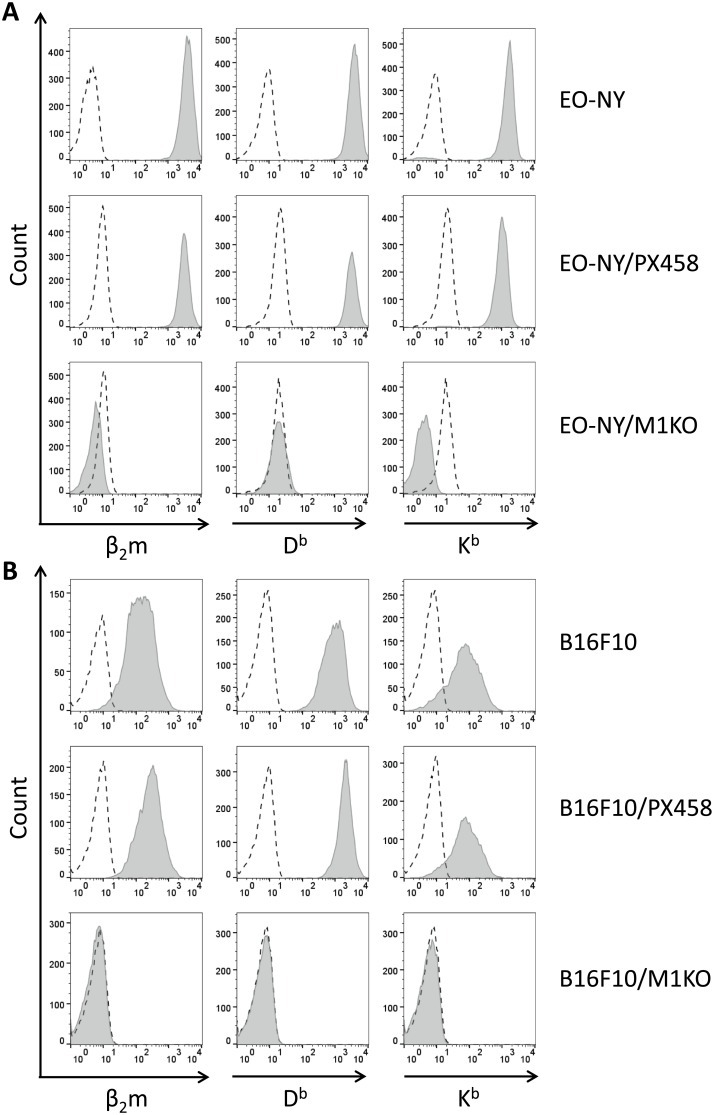
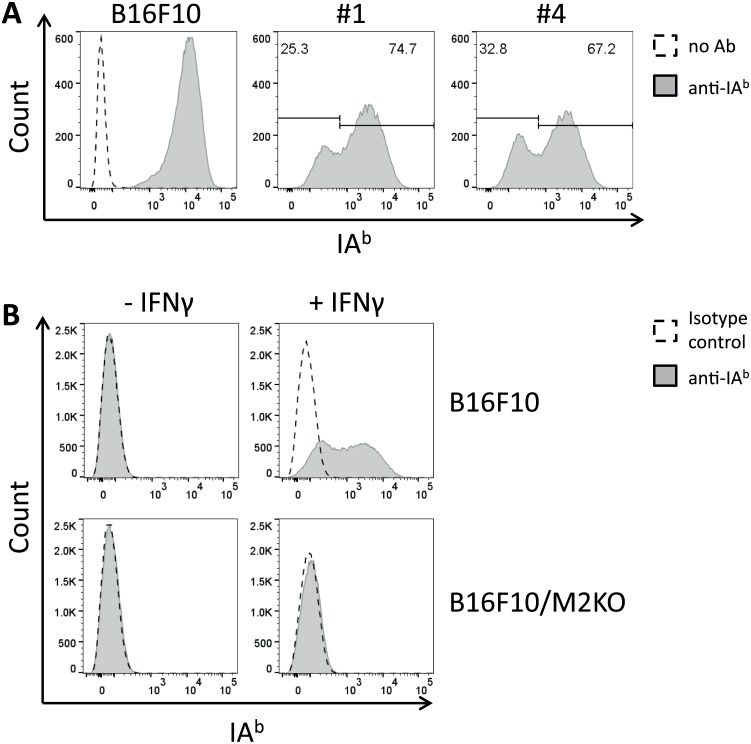
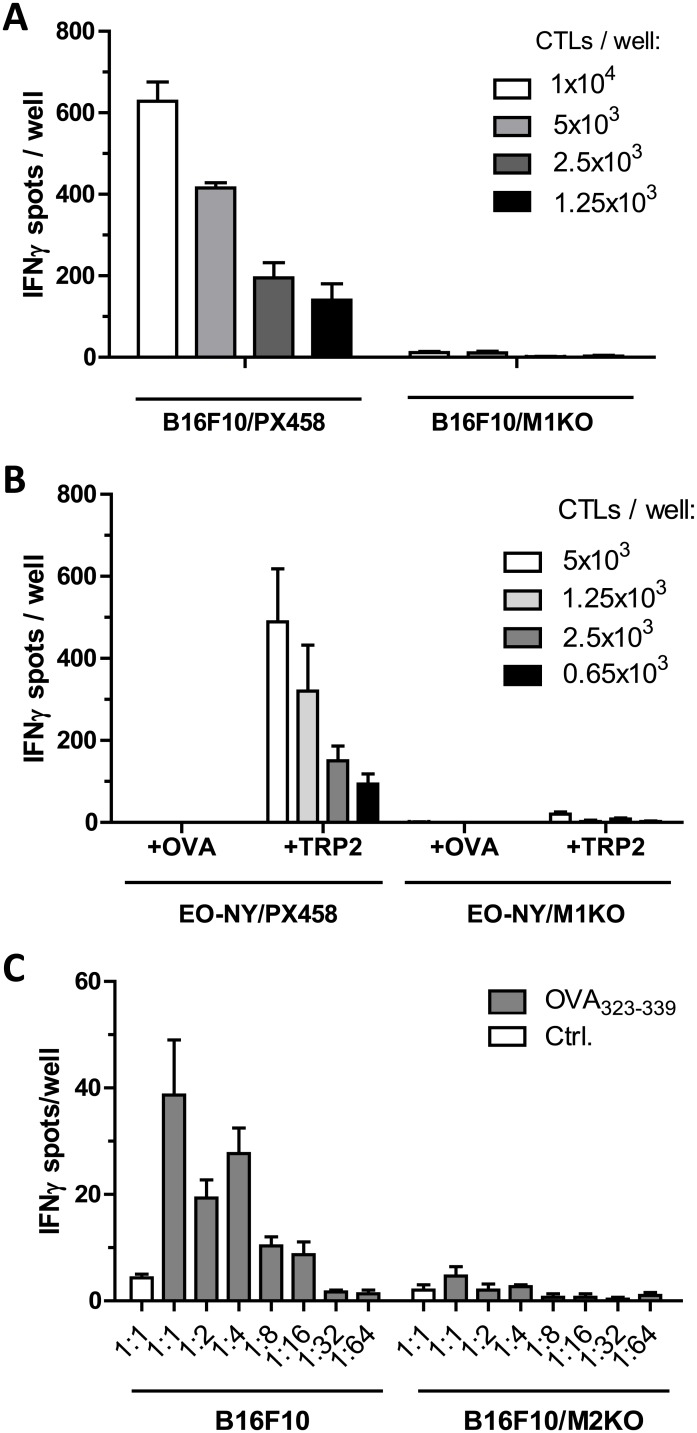
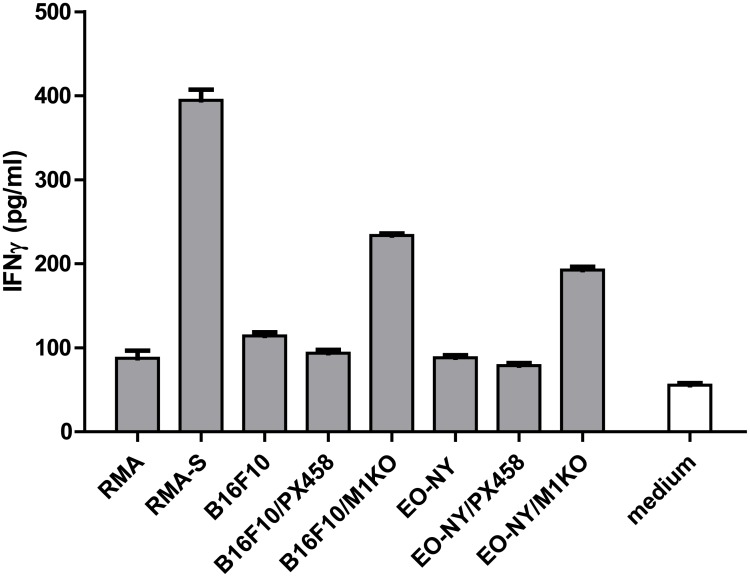
In this study, the CRISPR/Cas9 technology was used to establish murine tumor cell lines, devoid of MHC I or MHC II surface expression, respectively. The melanoma cell line B16F10 and the murine breast cancer cell line EO-771, the latter stably expressing the tumor antigen NY-BR-1 (EO-NY), were transfected with an expression plasmid encoding a β2m-specific single guide (sg)RNA and Cas9. The resulting MHC I negative cells were sorted by flow cytometry to obtain single cell clones, and loss of susceptibility of peptide pulsed MHC I negative clones to peptide-specific CTL recognition was determined by IFNγ ELISpot assay. The β2m knockout (KO) clones did not give rise to tumors in syngeneic mice (C57BL/6N), unless NK cells were depleted, suggesting that outgrowth of the β2m KO cell lines was controlled by NK cells. Using sgRNAs targeting the β-chain encoding locus of the IAb molecule we also generated several B16F10 MHC II KO clones. Peptide loaded B16F10 MHC II KO cells were insusceptible to recognition by OT-II cells and tumor growth was unaltered compared to parental B16F10 cells. Thus, in our hands the CRISPR/Cas9 system has proven to be an efficient straight forward strategy for the generation of MHC knockout cell lines. Such cell lines could serve as parental cells for co-transfection of compatible HLA alleles together with human tumor antigens of interest, thereby facilitating the generation of HLA matched transplantable tumor models, e.g. in HLAtg mouse strains of the newer generation, lacking cell surface expression of endogenous H2 molecules. In addition, our tumor cell lines established might offer a useful tool to investigate tumor reactive T cell responses that function independently from MHC molecule surface expression by the tumor.
在本研究中,利用CRISPR/Cas9技术分别建立了缺乏MHC I或MHC II表面表达的小鼠肿瘤细胞系。黑色素瘤细胞系B16F10和稳定表达肿瘤抗原NY-BR-1的小鼠乳腺癌细胞系EO-771(EO-NY),用编码β2m特异性单向导(sg)RNA和Cas9的表达质粒进行转染。通过流式细胞术对所得的MHC I阴性细胞进行分选以获得单细胞克隆,并通过IFNγ ELISpot测定法确定肽脉冲的MHC I阴性克隆对肽特异性CTL识别的敏感性丧失。β2m基因敲除(KO)克隆在同基因小鼠(C57BL/6N)中不会形成肿瘤,除非NK细胞被清除,这表明β2m KO细胞系的生长受NK细胞控制。使用靶向IAb分子β链编码基因座的sgRNA,我们还产生了几个B16F10 MHC II KO克隆。负载肽的B16F10 MHC II KO细胞不易被OT-II细胞识别,与亲本B16F10细胞相比,肿瘤生长未改变。因此,在我们的研究中,CRISPR/Cas9系统已被证明是一种用于生成MHC敲除细胞系的高效直接策略。这样的细胞系可作为亲本细胞,用于将相容的HLA等位基因与感兴趣的人类肿瘤抗原一起共转染,从而促进生成HLA匹配的可移植肿瘤模型,例如在缺乏内源性H2分子细胞表面表达的新一代HLA转基因小鼠品系中。此外,我们建立的肿瘤细胞系可能为研究独立于肿瘤MHC分子表面表达发挥作用的肿瘤反应性T细胞应答提供有用的工具。