Pritzker School of Molecular Engineering, University of Chicago, Chicago, IL, USA; Department of Bioengineering, McGill University, Montreal, QC, Canada.
Pritzker School of Molecular Engineering, University of Chicago, Chicago, IL, USA.
Cell Rep Med. 2023 Aug 15;4(8):101145. doi: 10.1016/j.xcrm.2023.101145. Epub 2023 Aug 7.
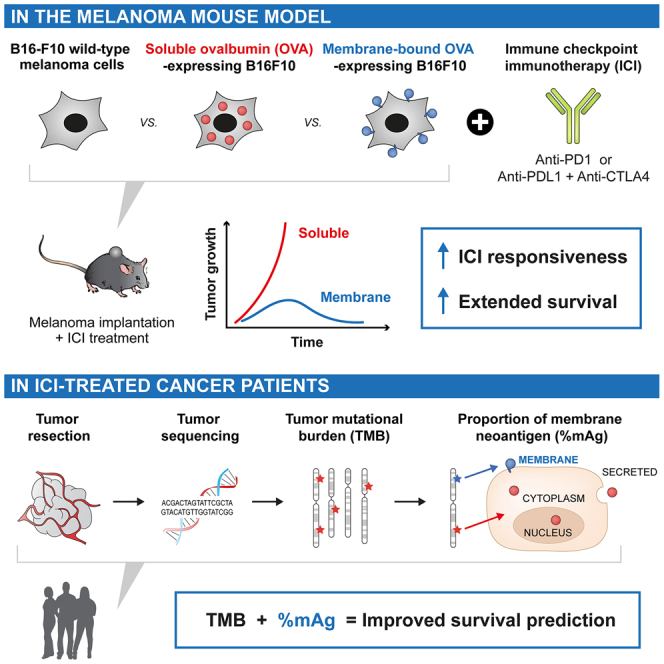
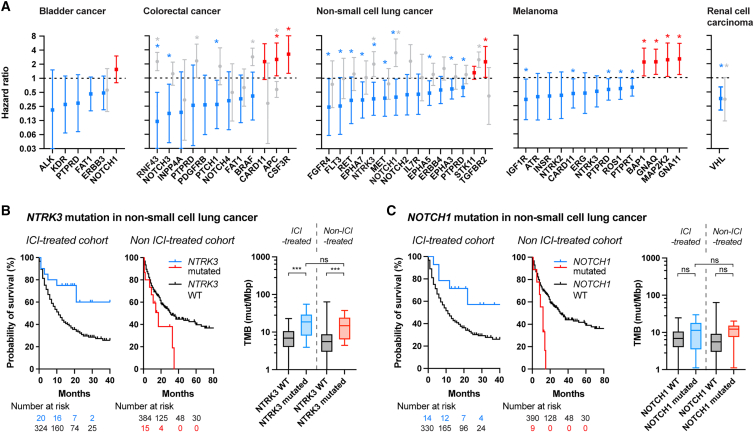
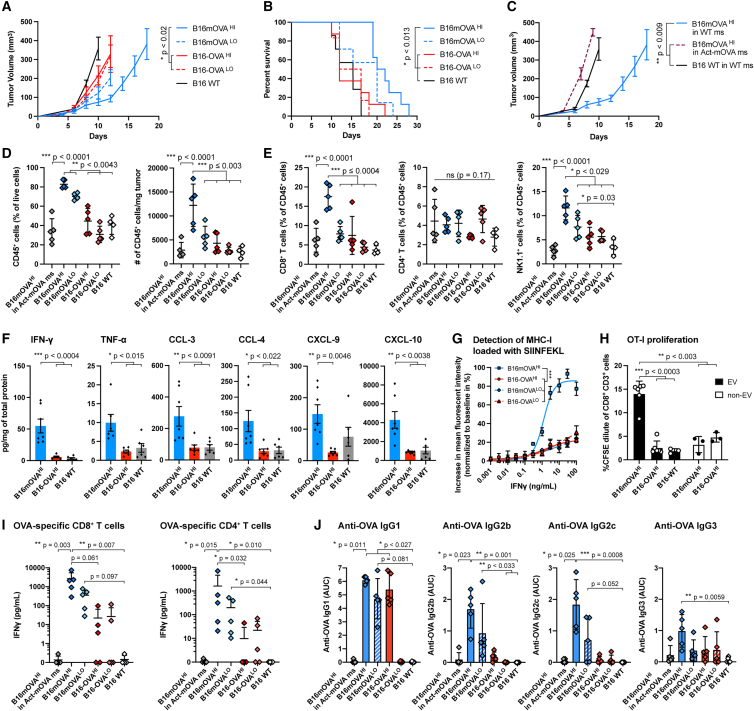
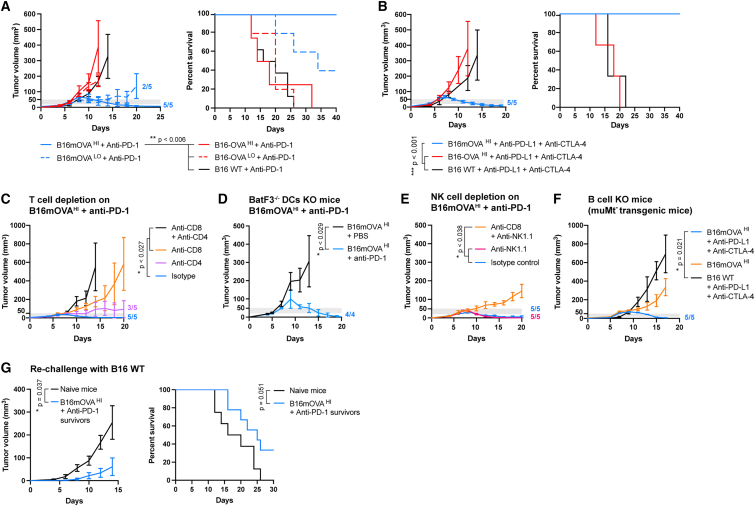
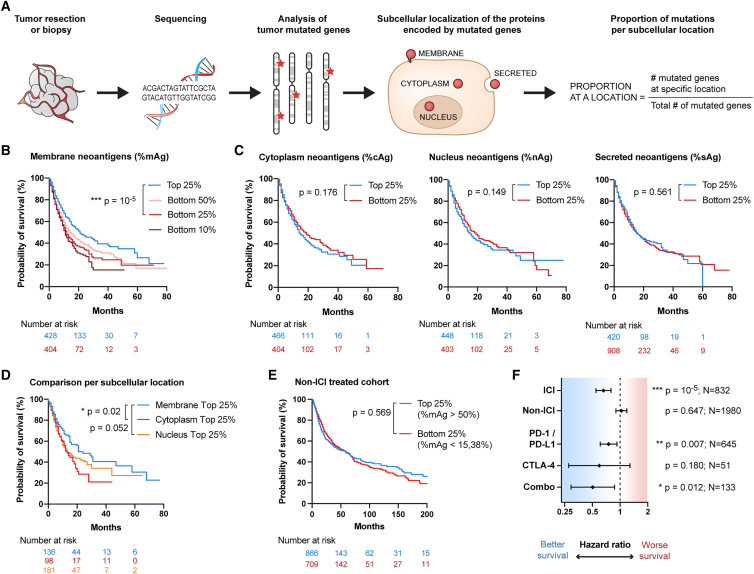
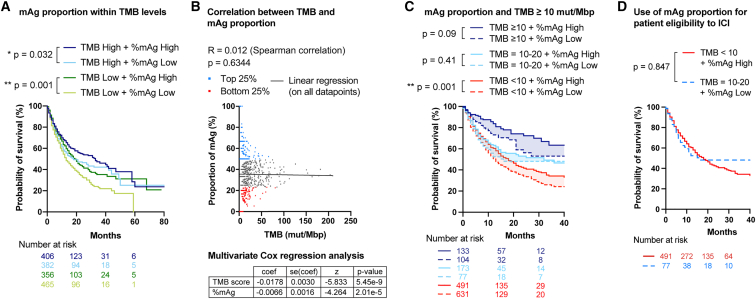
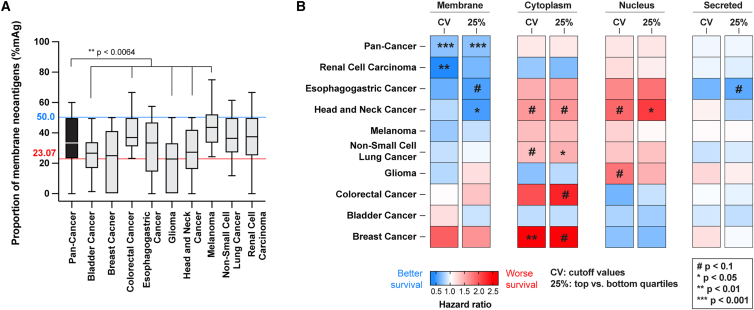
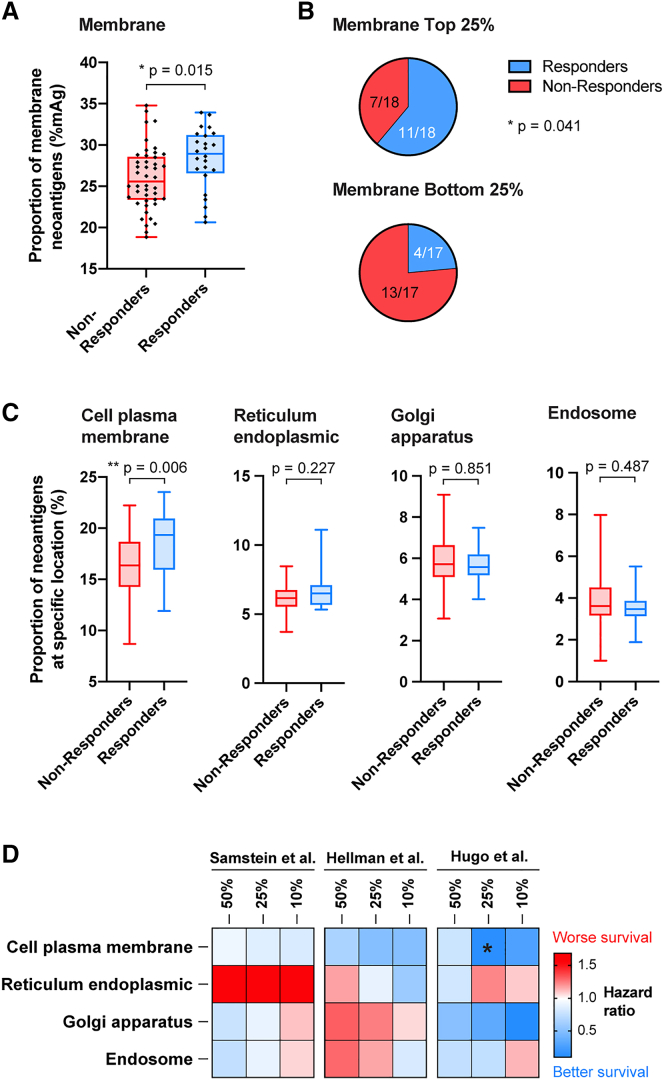
Immune checkpoint immunotherapy (ICI) can re-activate immune reactions against neoantigens, leading to remarkable remission in cancer patients. Nevertheless, only a minority of patients are responsive to ICI, and approaches for prediction of responsiveness are needed to improve the success of cancer treatments. While the tumor mutational burden (TMB) correlates positively with responsiveness and survival of patients undergoing ICI, the influence of the subcellular localizations of the neoantigens remains unclear. Here, we demonstrate in both a mouse melanoma model and human clinical datasets of 1,722 ICI-treated patients that a high proportion of membrane-localized neoantigens, particularly at the plasma membrane, correlate with responsiveness to ICI therapy and improved overall survival across multiple cancer types. We further show that combining membrane localization and TMB analyses can enhance the predictability of cancer patient response to ICI. Our results may have important implications for establishing future clinical guidelines to direct the choice of treatment toward ICI.
免疫检查点免疫疗法(ICI)可以重新激活针对新抗原的免疫反应,导致癌症患者显著缓解。然而,只有少数患者对 ICI 有反应,因此需要预测反应性的方法来提高癌症治疗的成功率。虽然肿瘤突变负担(TMB)与接受 ICI 的患者的反应性和生存率呈正相关,但新抗原的亚细胞定位的影响仍不清楚。在这里,我们在一个小鼠黑色素瘤模型和 1722 名接受 ICI 治疗的患者的人类临床数据集均表明,高比例的膜定位新抗原,特别是在质膜上,与对 ICI 治疗的反应性以及多种癌症类型的总生存率提高相关。我们进一步表明,结合膜定位和 TMB 分析可以提高癌症患者对 ICI 反应的可预测性。我们的研究结果可能对制定未来的临床指南以指导治疗选择为 ICI 提供重要依据。