Menghini Paola, Di Martino Luca, Lopetuso Loris R, Corridoni Daniele, Webster Joshua C, Xin Wei, Arseneau Kristen O, Lam Minh, Pizarro Theresa T, Cominelli Fabio
Department of Medicine, Case Western Reserve University, Cleveland, Ohio, United States of America.
Digestive Health Research Institute, Case Western Reserve University, Cleveland, Ohio, United States of America.
PLoS One. 2017 Mar 16;12(3):e0174121. doi: 10.1371/journal.pone.0174121. eCollection 2017.
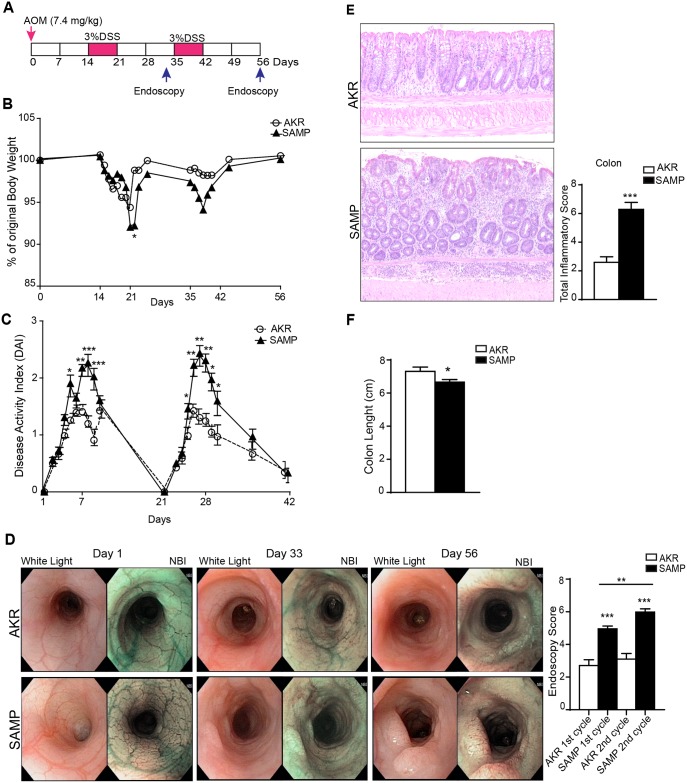
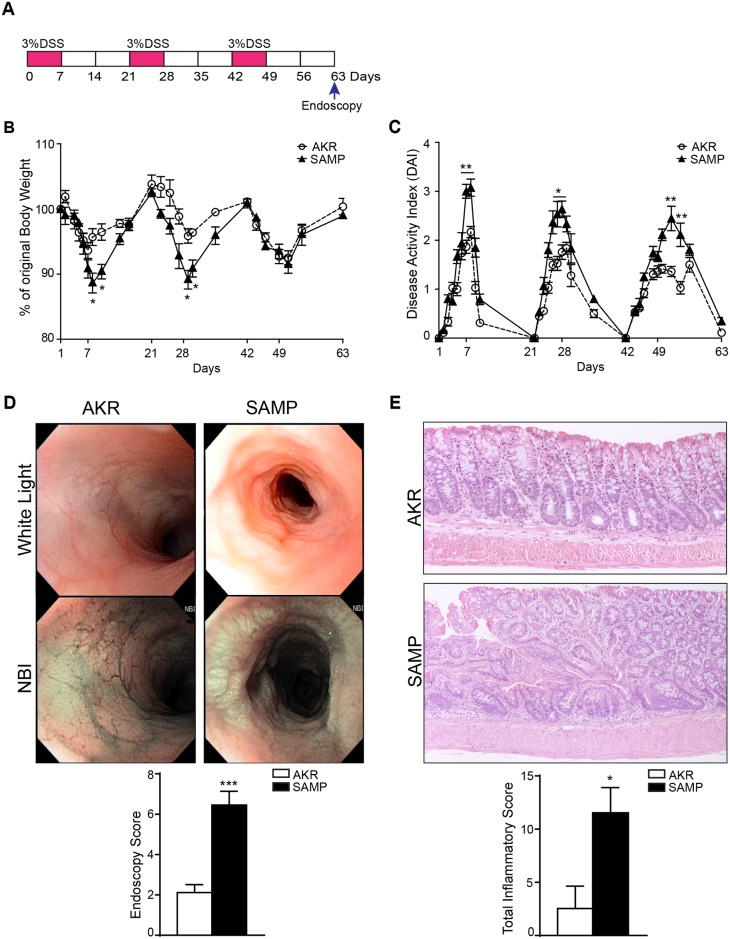
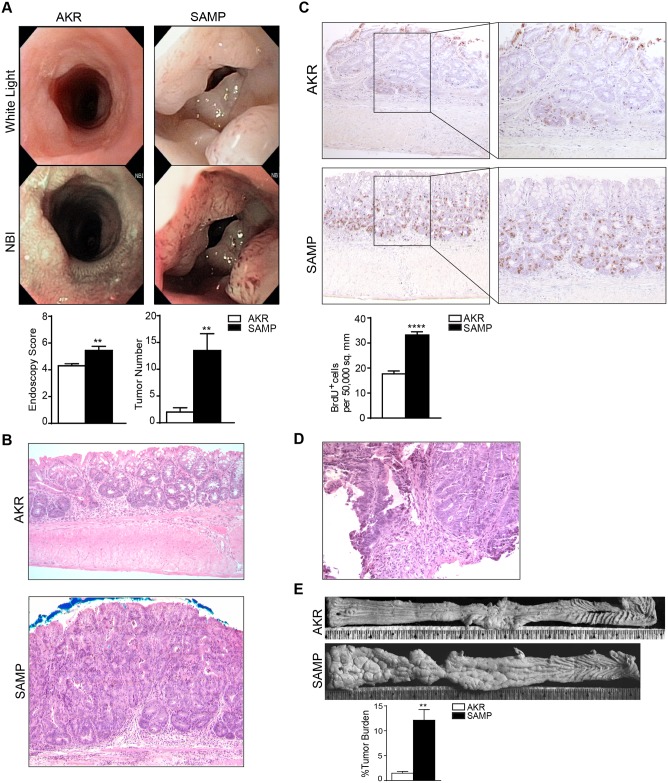
Patients with inflammatory bowel disease (IBD) are at increased risk for developing colorectal cancer. Evidence suggests that colonic dysplasia and colitis-associated cancer (CAC) are often linked to repeated cycles of epithelial cell injury and repair in the context of chronic production of inflammatory cytokines. Several mouse models of CAC have been proposed, including chemical induction through exposure to dextran sulfate sodium (DSS) with the genotoxic agents azoxymethane (AOM), 1,2-dymethylhydrazine (DHM) or targeted genetic mutations. However, such models are usually performed on healthy animals that usually lack the underlying genetic predisposition, immunological dysfunction and dysbiosis characteristic of IBD. We have previously shown that inbred SAMP1/YitFc (SAMP) mice develop a progressive Crohn's disease (CD)-like ileitis in the absence of spontaneous colitis. We hypothesize that SAMP mice may be more susceptible to colonic tumorigenesis due to their predisposition to IBD. To test this hypothesis, we administered AOM/DSS to IBD-prone SAMP and their non-inflamed parental control strain, AKR mice. Our results showed that AOM/DSS treatment enhanced the susceptibility of colitis in SAMP compared to AKR mice, as assessed by endoscopic and histologic inflammatory scores, daily weight loss and disease activity index (DAI), during and after DSS administration. SAMP mice also showed increased colonic tumorigenesis, resulting in the occurrence of intramucosal carcinoma and a higher incidence of high-grade dysplasia and tumor burden. These phenomena occurred even in the absence of AOM and only upon repeated cycles of DSS. Taken together, our data demonstrate a heightened susceptibility to colonic inflammation and tumorigenesis in AOM/DSS-treated SAMP mice with CD-like ileitis. This novel model represents a useful tool to investigate relevant mechanisms of CAC, as well as for pre-clinical testing of potential IBD and colon cancer therapeutics.
炎症性肠病(IBD)患者患结直肠癌的风险增加。有证据表明,结肠发育异常和结肠炎相关癌(CAC)通常与慢性炎症细胞因子产生背景下上皮细胞损伤和修复的反复循环有关。已经提出了几种CAC小鼠模型,包括通过暴露于葡聚糖硫酸钠(DSS)与基因毒性剂偶氮甲烷(AOM)、1,2 - 二甲基肼(DHM)进行化学诱导或靶向基因突变。然而,此类模型通常在健康动物身上进行,这些动物通常缺乏IBD特有的潜在遗传易感性、免疫功能障碍和微生物失调特征。我们之前已经表明,近交系SAMP1/YitFc(SAMP)小鼠在没有自发性结肠炎的情况下会发展为进行性克罗恩病(CD)样回肠炎。我们假设SAMP小鼠由于其IBD易感性可能更容易发生结肠肿瘤发生。为了验证这一假设,我们将AOM/DSS给予易患IBD的SAMP小鼠及其未发炎的亲代对照品系AKR小鼠。我们的结果表明,与AKR小鼠相比,AOM/DSS处理增强了SAMP小鼠的结肠炎易感性,这通过内镜和组织学炎症评分、每日体重减轻和疾病活动指数(DAI)在给予DSS期间和之后进行评估。SAMP小鼠还表现出结肠肿瘤发生增加,导致黏膜内癌的发生以及高级别发育异常和肿瘤负担的更高发生率。这些现象即使在没有AOM的情况下且仅在DSS反复循环后也会发生。综上所述,我们的数据表明,在患有CD样回肠炎的AOM/DSS处理的SAMP小鼠中,对结肠炎症和肿瘤发生的易感性增加。这种新模型是研究CAC相关机制以及潜在IBD和结肠癌治疗药物临床前测试的有用工具。