Tang Hua, Yang Yunchun, Zhang Chunmei, Chen Rong, Huang Po, Duan Chenggang, Zou Ping
Department of Pathophysiology, Southwest Medical University, Luzhou 646000, China.
Department of Anesthesiology, The Affiliated Traditional Chinese Medical Hospital of Southwest Medical University, Luzhou 646000, China.
Biomed Res Int. 2017;2017:3267325. doi: 10.1155/2017/3267325. Epub 2017 Feb 12.
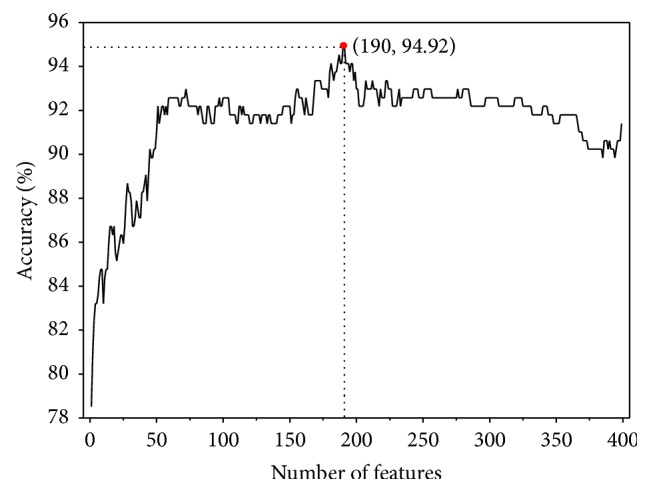
Presynaptic and postsynaptic neurotoxins are proteins which act at the presynaptic and postsynaptic membrane. Correctly predicting presynaptic and postsynaptic neurotoxins will provide important clues for drug-target discovery and drug design. In this study, we developed a theoretical method to discriminate presynaptic neurotoxins from postsynaptic neurotoxins. A strict and objective benchmark dataset was constructed to train and test our proposed model. The dipeptide composition was used to formulate neurotoxin samples. The analysis of variance (ANOVA) was proposed to find out the optimal feature set which can produce the maximum accuracy. In the jackknife cross-validation test, the overall accuracy of 94.9% was achieved. We believe that the proposed model will provide important information to study neurotoxins.
突触前和突触后神经毒素是作用于突触前膜和突触后膜的蛋白质。准确预测突触前和突触后神经毒素将为药物靶点发现和药物设计提供重要线索。在本研究中,我们开发了一种理论方法来区分突触前神经毒素和突触后神经毒素。构建了一个严格且客观的基准数据集来训练和测试我们提出的模型。使用二肽组成来构建神经毒素样本。提出方差分析(ANOVA)以找出能够产生最高准确率的最优特征集。在留一法交叉验证测试中,实现了94.9%的总体准确率。我们相信所提出的模型将为研究神经毒素提供重要信息。