McGuinness Sarah L, O'Toole Joanne E, Boving Thomas B, Forbes Andrew B, Sinclair Martha, Gautam Sumit K, Leder Karin
Department of Epidemiology and Preventive Medicine, Monash University, Melbourne, Victoria, Australia.
Department of Civil and Environmental Engineering and Geosciences, University of Rhode Island, Kingston, Rhode Island, USA.
BMJ Open. 2017 Mar 17;7(3):e015036. doi: 10.1136/bmjopen-2016-015036.
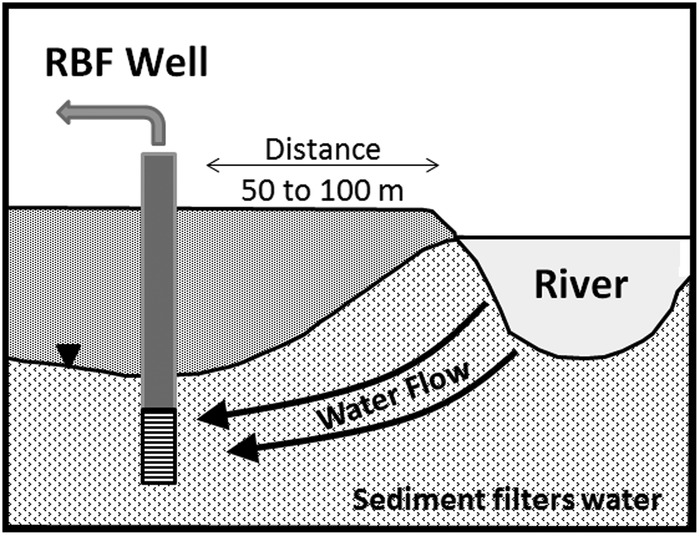
Diarrhoea is a leading cause of death globally, mostly occurring as a result of insufficient or unsafe water supplies, inadequate sanitation and poor hygiene. Our study aims to investigate the impact of a community-level hygiene education program and a water quality intervention using riverbank filtration (RBF) technology on diarrhoeal prevalence.
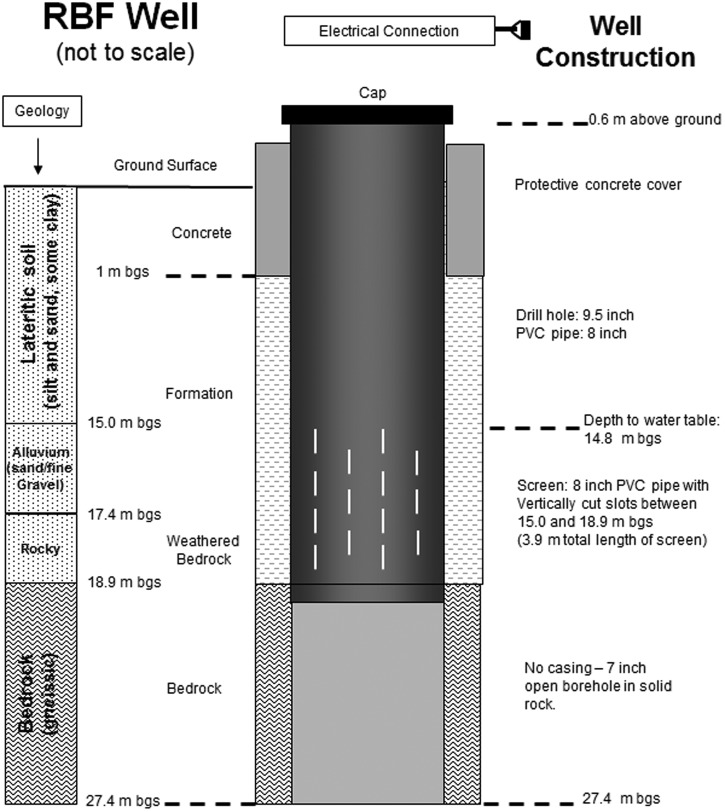
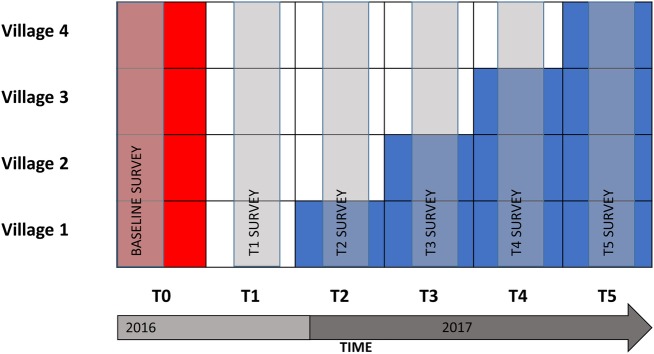
We have designed a stepped wedge cluster randomised trial to estimate the health impacts of our intervention in 4 rural villages in Karnataka, India. At baseline, surveys will be conducted in all villages, and householders will receive hygiene education. New pipelines, water storage tanks and taps will then be installed at accessible locations in each village and untreated piped river water will be supplied. A subsequent survey will evaluate the impact of hygiene education combined with improved access to greater water volumes for hygiene and drinking purposes (improved water quantity). Villages will then be randomly ordered and RBF-treated water (improved water quality) will be sequentially introduced into the 4 villages in a stepwise manner, with administration of surveys at each time point. The primary outcome is a 7-day period prevalence of self-reported diarrhoea. Secondary outcomes include self-reported respiratory and skin infections, and reported changes in hygiene practices, household water usage and water supply preference. River, tank and tap water from each village, and stored water from a subset of households, will be sampled to assess microbial and chemical quality.
Ethics approval was obtained from the Monash University Human Research Ethics Committee in Australia and The Energy and Resources Institute Institutional Ethics Committee in India. The results of the trial will be presented at conferences, published in peer-reviewed journals and disseminated to relevant stakeholders. This study is funded by an Australian National Health and Medical Research Council (NHMRC) project grant.
ACTRN12616001286437; pre-results.
腹泻是全球主要死因之一,主要因供水不足或不安全、卫生设施不完善以及卫生习惯不良所致。我们的研究旨在调查社区层面的卫生教育项目以及采用河岸过滤(RBF)技术的水质干预措施对腹泻患病率的影响。
我们设计了一项阶梯式楔形整群随机试验,以评估在印度卡纳塔克邦4个乡村实施干预措施对健康的影响。在基线阶段,将对所有村庄进行调查,住户将接受卫生教育。随后,将在每个村庄的便利地点安装新的管道、储水箱和水龙头,并供应未经处理的管道河水。后续调查将评估卫生教育与增加用于卫生和饮用的水量(改善水量)相结合的影响。然后将村庄随机排序,并逐步将经过RBF处理的水(改善水质)依次引入4个村庄,在每个时间点进行调查。主要结局是自我报告腹泻的7天患病率。次要结局包括自我报告的呼吸道和皮肤感染,以及报告的卫生习惯、家庭用水和供水偏好的变化。将对每个村庄的河水、水箱水和自来水,以及一部分住户储存的水进行采样,以评估微生物和化学质量。
已获得澳大利亚莫纳什大学人类研究伦理委员会和印度能源与资源研究所机构伦理委员会的伦理批准。试验结果将在会议上展示,发表在同行评审期刊上,并分发给相关利益攸关方。本研究由澳大利亚国家卫生与医学研究委员会(NHMRC)项目资助。
ACTRN12616001286437;预结果。