Departamento de Psicología Social y de las Organizaciones, Universidad Nacional de Educación a Distancia (UNED), 28040 Madrid, Spain.
Departamento de Microbiología, Universidad de Málaga, 29071 Málaga, Spain.
Nutrients. 2024 Oct 20;16(20):3559. doi: 10.3390/nu16203559.
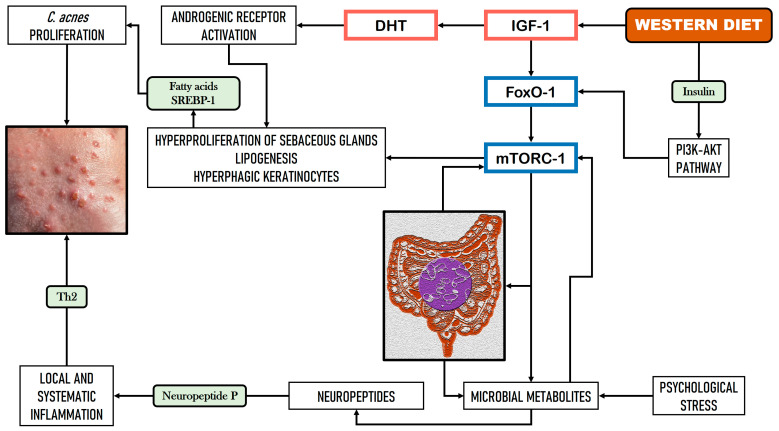
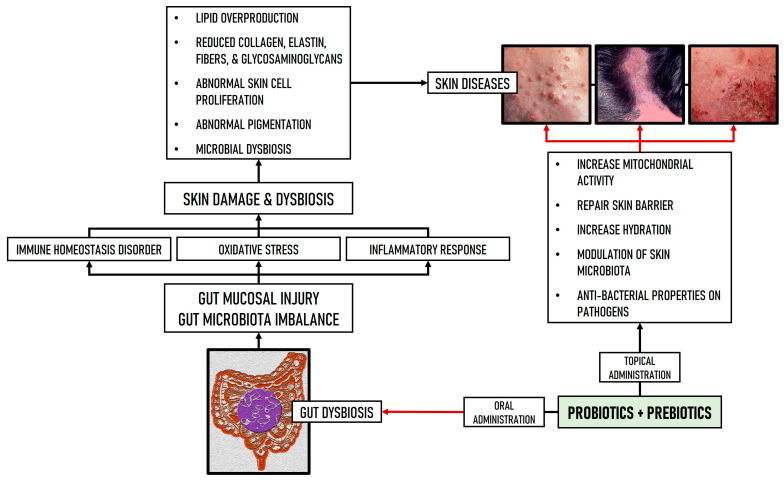
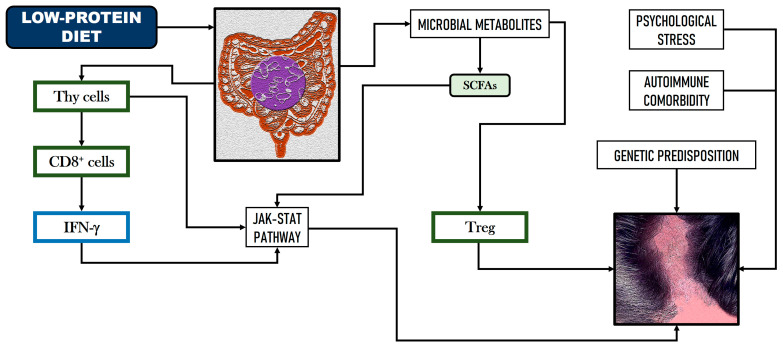
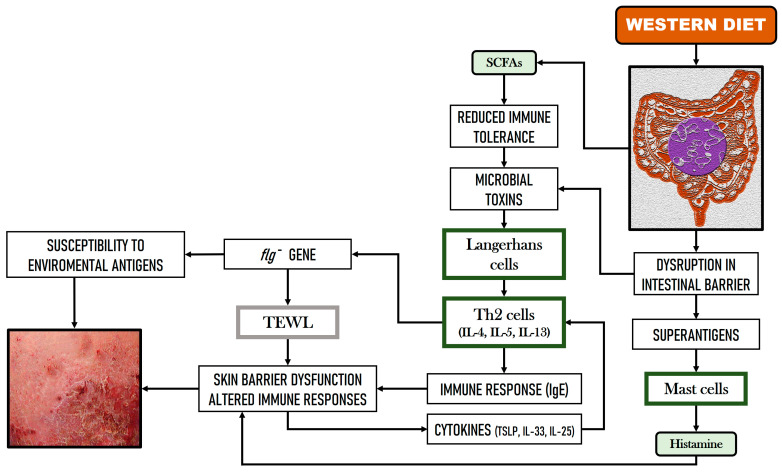
BACKGROUND/OBJECTIVES: Diet is one of the major determinants of the composition and function of the gut microbiome, and diverse studies have established directional connections between gut microbiome dysbiosis and skin dyshomeostasis. Furthermore, a significant link between the gut and certain skin-related disorders has been reported. This work reviews the mechanisms underlying the relationship between nutritional factors, gut microbiome, and certain skin diseases such as acne vulgaris, alopecia, and atopic dermatitis. In addition, it explores how the modulation of the gut microbiome and human skin through diet and various microbial strategies, including probiotics, synbiotics, postbiotics, and fecal microbiota transplantation, may serve as future treatments for skin diseases, possibly replacing traditional methods such as antibiotic, topical corticosteroid, and laser therapies.
The adequate intake of certain foods can promote a balanced gut microbiome, potentially reducing skin inflammation and improving overall skin health, while poor dietary choices may lead to worse outcomes by disrupting gut homeostasis. In this regard, diets high in antioxidants, fiber, and phytonutrients appear to be beneficial for enhancing skin health and preventing associated comorbidities. In addition, the administration of probiotics, synbiotics, and postbiotics in the treatment of cutaneous diseases has been shown to restore skin dyshomeostasis and to improve the symptoms of the reviewed skin conditions.
Consuming a healthy, plant-based diet can reduce skin inflammation and enhance overall skin health. Although the application of probiotics, synbiotics, and postbiotics has demonstrated promise in modulating inflammation, enhancing tissue regeneration, and inhibiting pathogenic colonization, further research is required.
背景/目的:饮食是肠道微生物组组成和功能的主要决定因素之一,许多研究已经建立了肠道微生物组失调与皮肤失调之间的定向联系。此外,还报道了肠道与某些皮肤相关疾病之间存在显著联系。本综述探讨了营养因素、肠道微生物组与寻常痤疮、脱发和特应性皮炎等某些皮肤病之间关系的潜在机制。此外,还探讨了通过饮食以及各种微生物策略(包括益生菌、合生菌、后生元和粪便微生物移植)调节肠道微生物组和人类皮肤如何可能成为皮肤病的未来治疗方法,可能取代抗生素、局部皮质类固醇和激光治疗等传统方法。
某些食物的充足摄入可以促进肠道微生物组的平衡,从而可能减少皮肤炎症并改善整体皮肤健康,而不良的饮食选择可能通过破坏肠道内稳态而导致更差的结果。在这方面,富含抗氧化剂、纤维和植物营养素的饮食似乎有益于增强皮肤健康和预防相关合并症。此外,益生菌、合生菌和后生菌在皮肤病治疗中的应用已被证明可以恢复皮肤失调并改善所综述的皮肤状况的症状。
食用健康的植物性饮食可以减少皮肤炎症并增强整体皮肤健康。尽管益生菌、合生菌和后生菌的应用已显示出在调节炎症、增强组织再生和抑制致病定植方面的潜力,但仍需要进一步的研究。