Schulz Manon D, Atay Ciğdem, Heringer Jessica, Romrig Franziska K, Schwitalla Sarah, Aydin Begüm, Ziegler Paul K, Varga Julia, Reindl Wolfgang, Pommerenke Claudia, Salinas-Riester Gabriela, Böck Andreas, Alpert Carl, Blaut Michael, Polson Sara C, Brandl Lydia, Kirchner Thomas, Greten Florian R, Polson Shawn W, Arkan Melek C
1] Institute of Molecular Immunology, Klinikum rechts der Isar, Technical University Munich, 81675 Munich, Germany [2].
Institute of Molecular Immunology, Klinikum rechts der Isar, Technical University Munich, 81675 Munich, Germany.
Nature. 2014 Oct 23;514(7523):508-12. doi: 10.1038/nature13398. Epub 2014 Aug 31.
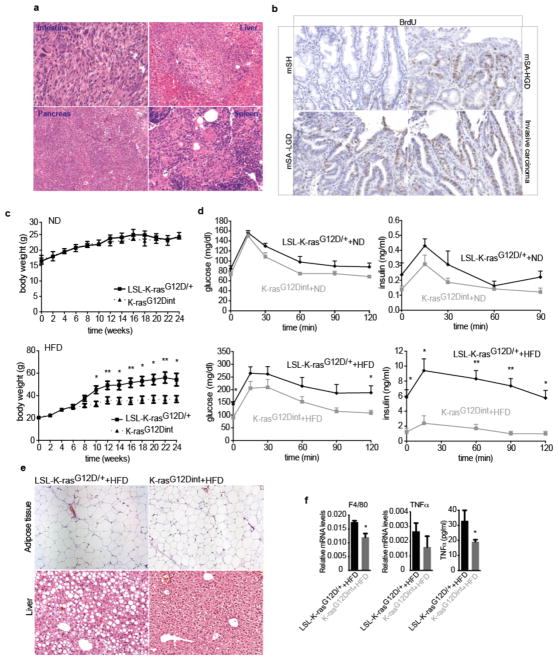
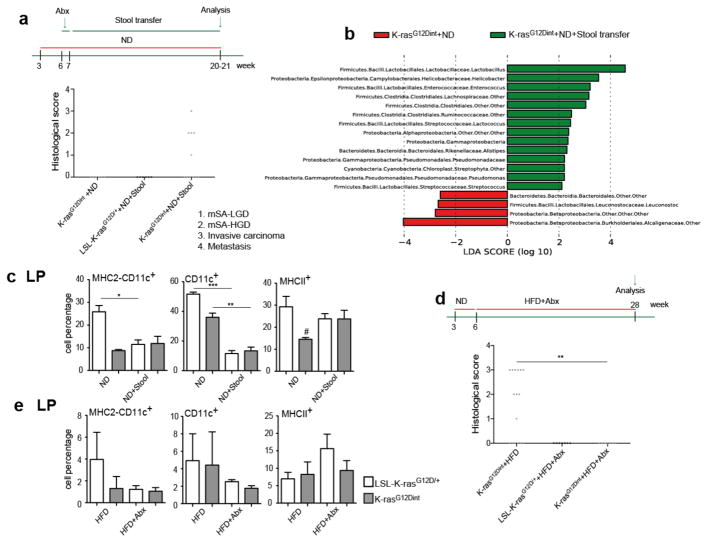
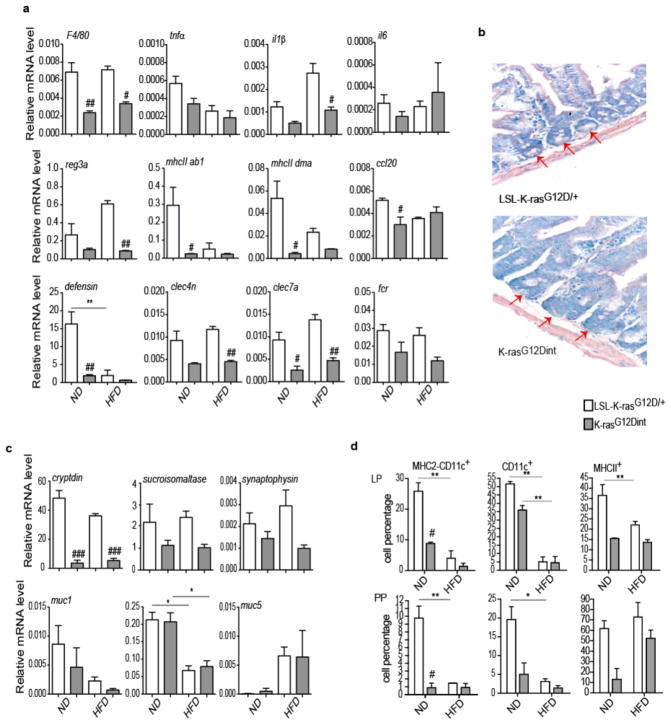
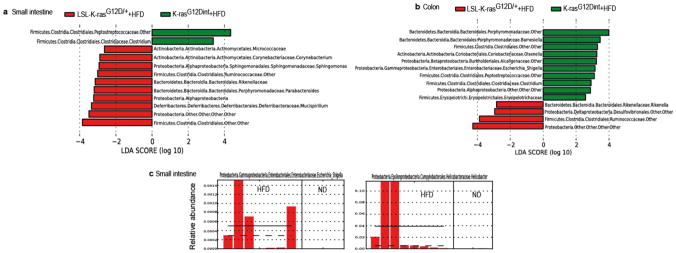
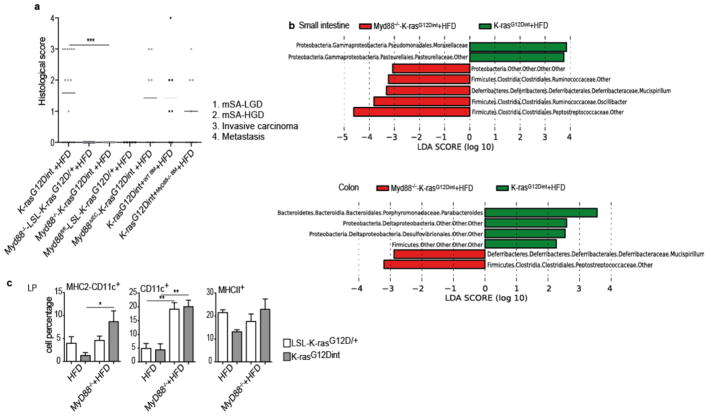
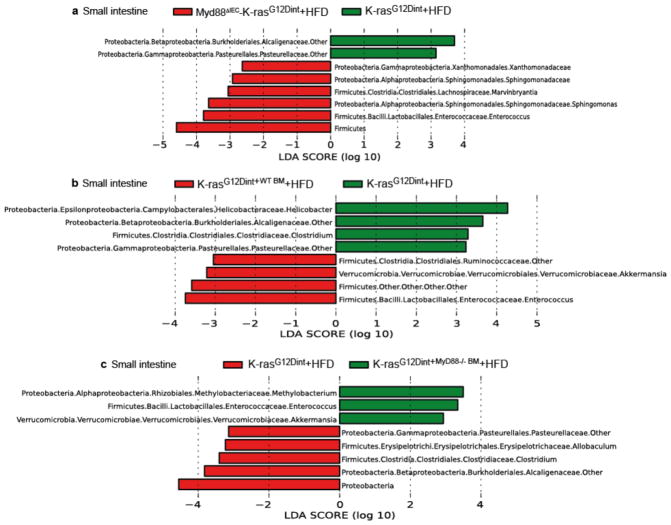
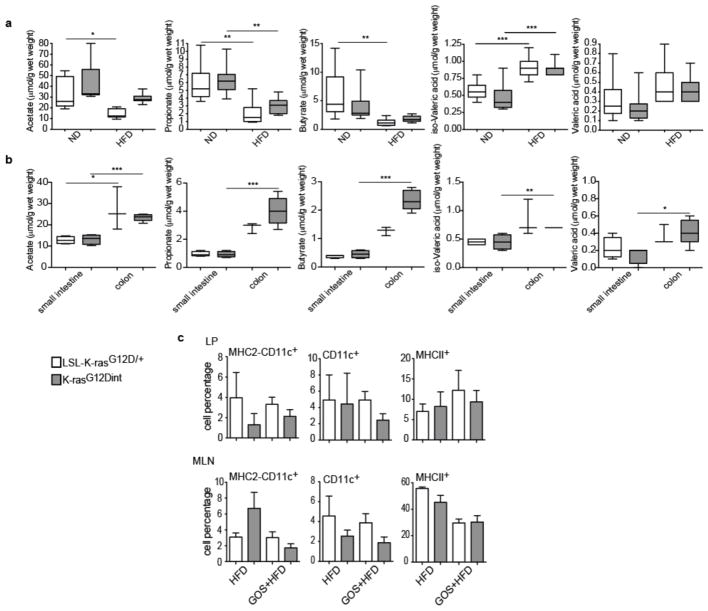
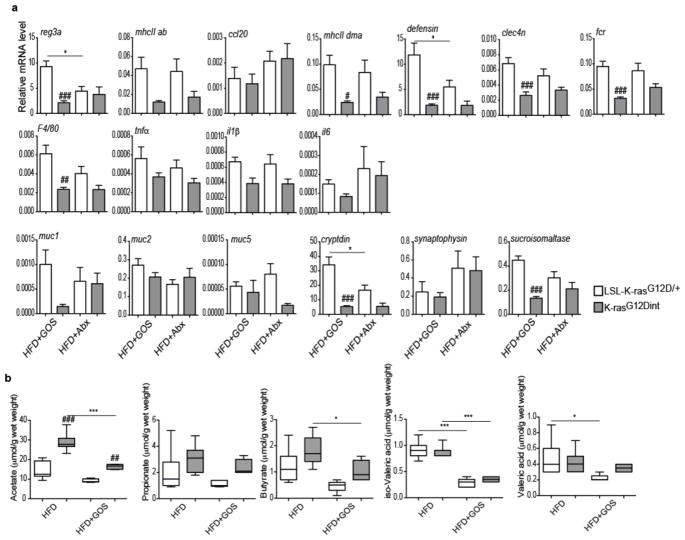
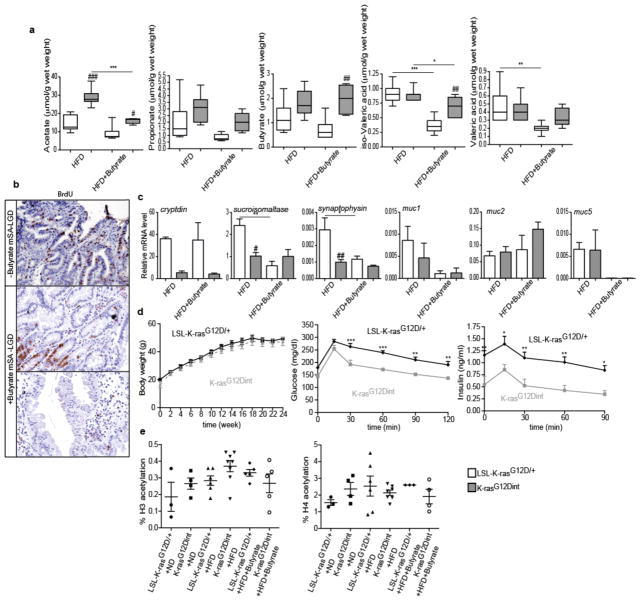
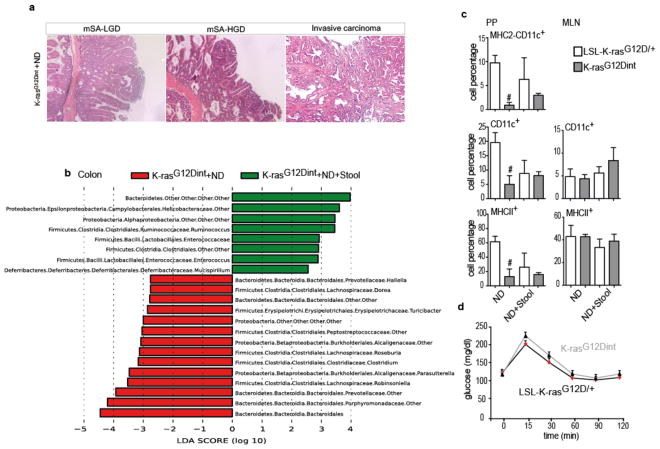
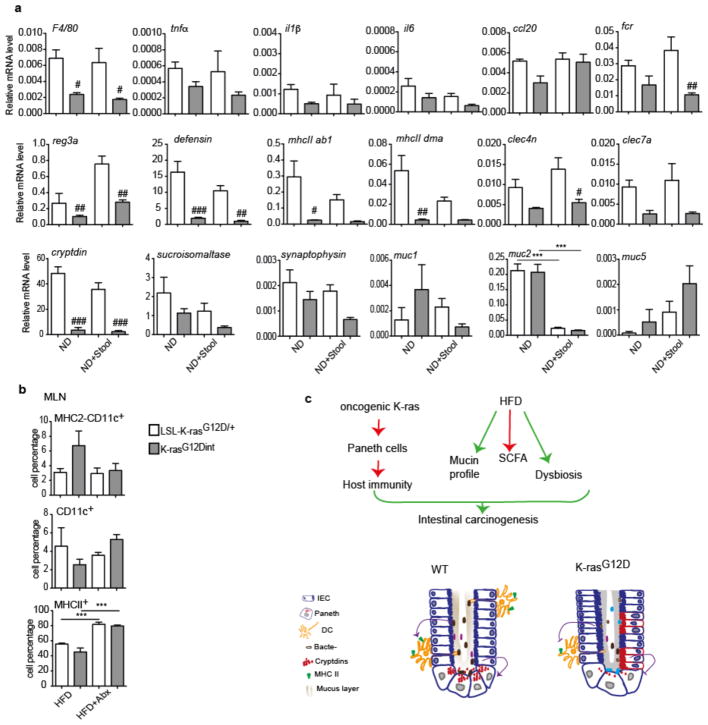
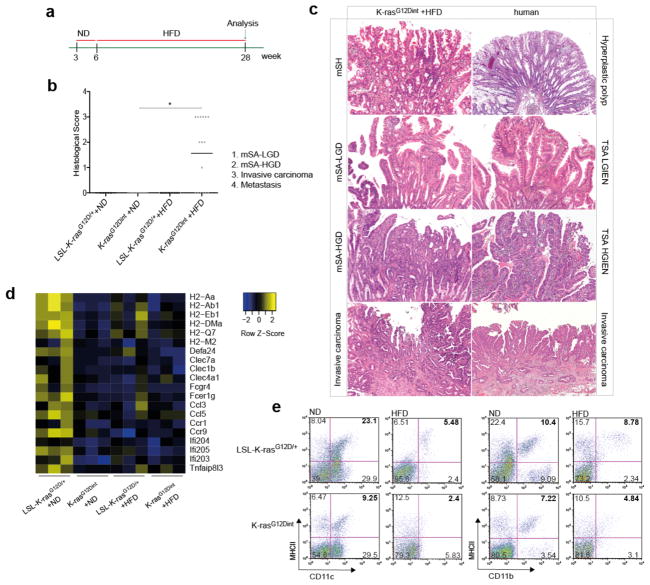
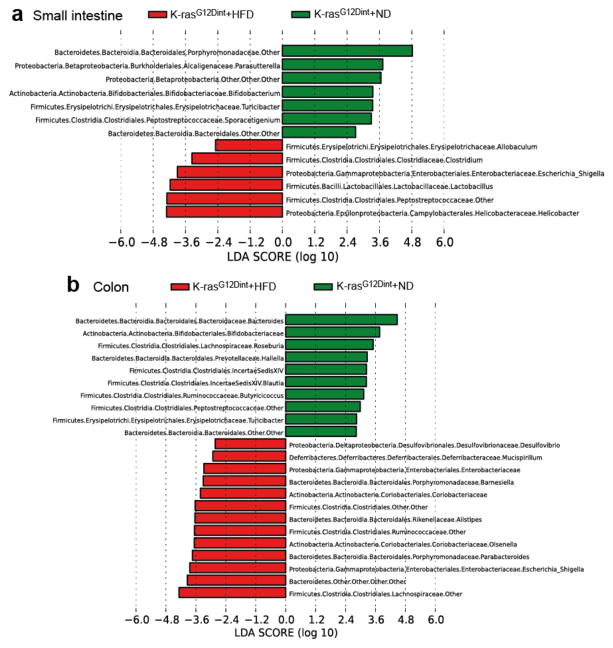
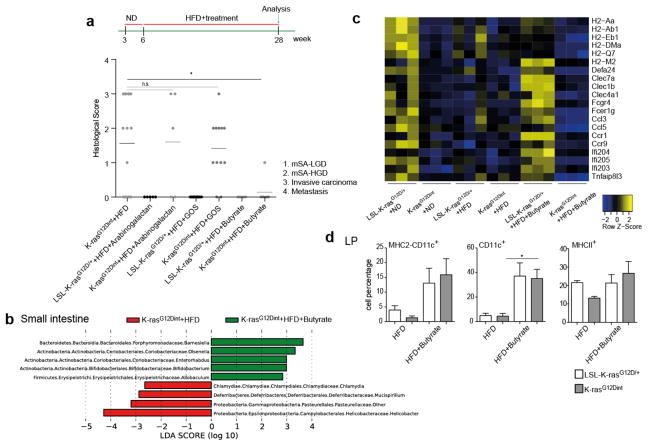
Several features common to a Western lifestyle, including obesity and low levels of physical activity, are known risk factors for gastrointestinal cancers. There is substantial evidence suggesting that diet markedly affects the composition of the intestinal microbiota. Moreover, there is now unequivocal evidence linking dysbiosis to cancer development. However, the mechanisms by which high-fat diet (HFD)-mediated changes in the microbial community affect the severity of tumorigenesis in the gut remain to be determined. Here we demonstrate that an HFD promotes tumour progression in the small intestine of genetically susceptible, K-ras(G12Dint), mice independently of obesity. HFD consumption, in conjunction with K-ras mutation, mediated a shift in the composition of the gut microbiota, and this shift was associated with a decrease in Paneth-cell-mediated antimicrobial host defence that compromised dendritic cell recruitment and MHC class II molecule presentation in the gut-associated lymphoid tissues. When butyrate was administered to HFD-fed K-ras(G12Dint) mice, dendritic cell recruitment in the gut-associated lymphoid tissues was normalized, and tumour progression was attenuated. Importantly, deficiency in MYD88, a signalling adaptor for pattern recognition receptors and Toll-like receptors, blocked tumour progression. The transfer of faecal samples from HFD-fed mice with intestinal tumours to healthy adult K-ras(G12Dint) mice was sufficient to transmit disease in the absence of an HFD. Furthermore, treatment with antibiotics completely blocked HFD-induced tumour progression, suggesting that distinct shifts in the microbiota have a pivotal role in aggravating disease. Collectively, these data underscore the importance of the reciprocal interaction between host and environmental factors in selecting a microbiota that favours carcinogenesis, and they suggest that tumorigenesis is transmissible among genetically predisposed individuals.
西方生活方式的几个共同特征,包括肥胖和体力活动水平低,都是已知的胃肠道癌症风险因素。有大量证据表明,饮食会显著影响肠道微生物群的组成。此外,现在有明确的证据将生态失调与癌症发展联系起来。然而,高脂饮食(HFD)介导的微生物群落变化影响肠道肿瘤发生严重程度的机制仍有待确定。在这里,我们证明高脂饮食在不依赖肥胖的情况下促进了基因易感的K-ras(G12Dint)小鼠小肠中的肿瘤进展。食用高脂饮食并结合K-ras突变,介导了肠道微生物群组成的改变,这种改变与潘氏细胞介导的抗菌宿主防御功能下降有关,而这种防御功能的下降损害了肠道相关淋巴组织中树突状细胞的募集和MHC II类分子的呈递。当向喂食高脂饮食的K-ras(G12Dint)小鼠施用丁酸盐时,肠道相关淋巴组织中的树突状细胞募集恢复正常,肿瘤进展减缓。重要的是,MYD88(一种模式识别受体和Toll样受体的信号衔接子)的缺陷阻止了肿瘤进展。将患有肠道肿瘤的喂食高脂饮食小鼠的粪便样本转移到健康的成年K-ras(G12Dint)小鼠中,足以在没有高脂饮食的情况下传播疾病。此外,抗生素治疗完全阻断了高脂饮食诱导的肿瘤进展,这表明微生物群的明显变化在加重疾病方面起关键作用。总的来说,这些数据强调了宿主和环境因素之间相互作用在选择有利于致癌的微生物群方面的重要性,并且表明肿瘤发生在遗传易感性个体之间是可传播的。